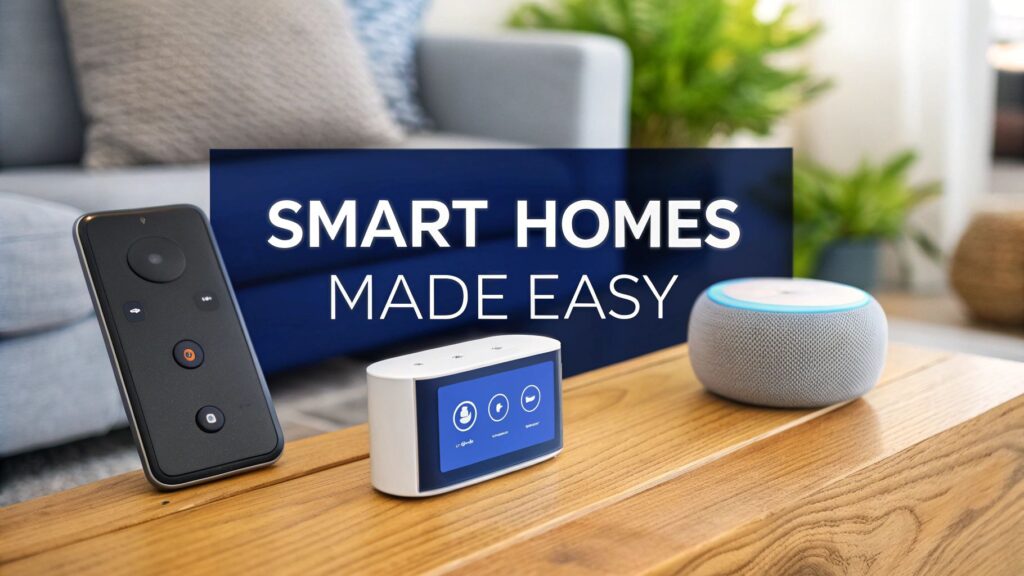
Let's be honest, the term "smart home" can sound a bit like something out of a sci-fi movie, maybe even a little intimidating. But when you get down to it, a smarthome for living is far more practical than you might think. At its core, it’s really just about giving your home a bit of a brain to make your everyday life easier, safer, and a little lighter on the wallet.
Making Your Aussie Home Work for You
Picture this: it’s a hectic Tuesday morning in your Sydney terrace. You're juggling school lunches, hunting for a missing shoe, and trying to remember if you fed the dog, all while the clock ticks closer to that dreaded M1 traffic.
Now, imagine in a smart home, as you shout "Goodbye!", the lights all switch off, the thermostat dials back, the garage door closes, and you get a little ping on your phone confirming the front door is locked. That’s not futuristic magic; it's just a simple, automated routine making your morning rush a bit smoother.
Think of it as your home’s personal assistant. Instead of you running around doing a dozen little things, your house just takes care of them. It’s all about creating a living space that anticipates what you need, whether you're in a sprawling place in the Hunter Valley or a cosy apartment on the Central Coast.
So, What Does a Smart Home Actually Do?
At its heart, a smart home connects different devices in your house to the internet and to each other. This lets you control them from one central spot, like your phone or a smart speaker. But the real cleverness comes from automation—getting these devices to work together without you even having to think about it.
This connected way of living offers some genuine perks, especially for busy households:
- Ultimate Convenience: You can automate all those repetitive daily tasks, like turning lights on and off, adjusting the blinds, or even starting the coffee machine.
- Real Savings: Smart thermostats and lighting can seriously slash your energy bills. They make sure you’re only using power when you actually need it.
- Peace of Mind: Check in on your home from anywhere with security cameras, get alerts if a door is left open, and control your locks right from your phone.
A smart home isn't about filling your house with gadgets just for the sake of it. It’s about solving real, everyday problems and giving you back more time to actually enjoy your life.
And the idea is catching on fast. The Australian smart home market was valued at around $5.8 billion AUD in 2024 and is tipped to rocket to nearly $17.6 billion AUD by 2033. This growth is being driven by our love for convenience and better internet, making smarthomes for living more accessible than ever. You can find more insights on this growing market over at imarcgroup.com.
In the end, it’s about that little touch of magic when your house just knows what you need, making life that little bit less hectic.
The Three Pillars of a Great Smart Home
So, what separates a truly intelligent home from a bunch of flashy gadgets? When you strip away all the tech talk, a great smart home really boils down to three things that make a genuine difference in your day-to-day life. These are the foundations of a connected home that actually helps you out: convenience, security, and efficiency.
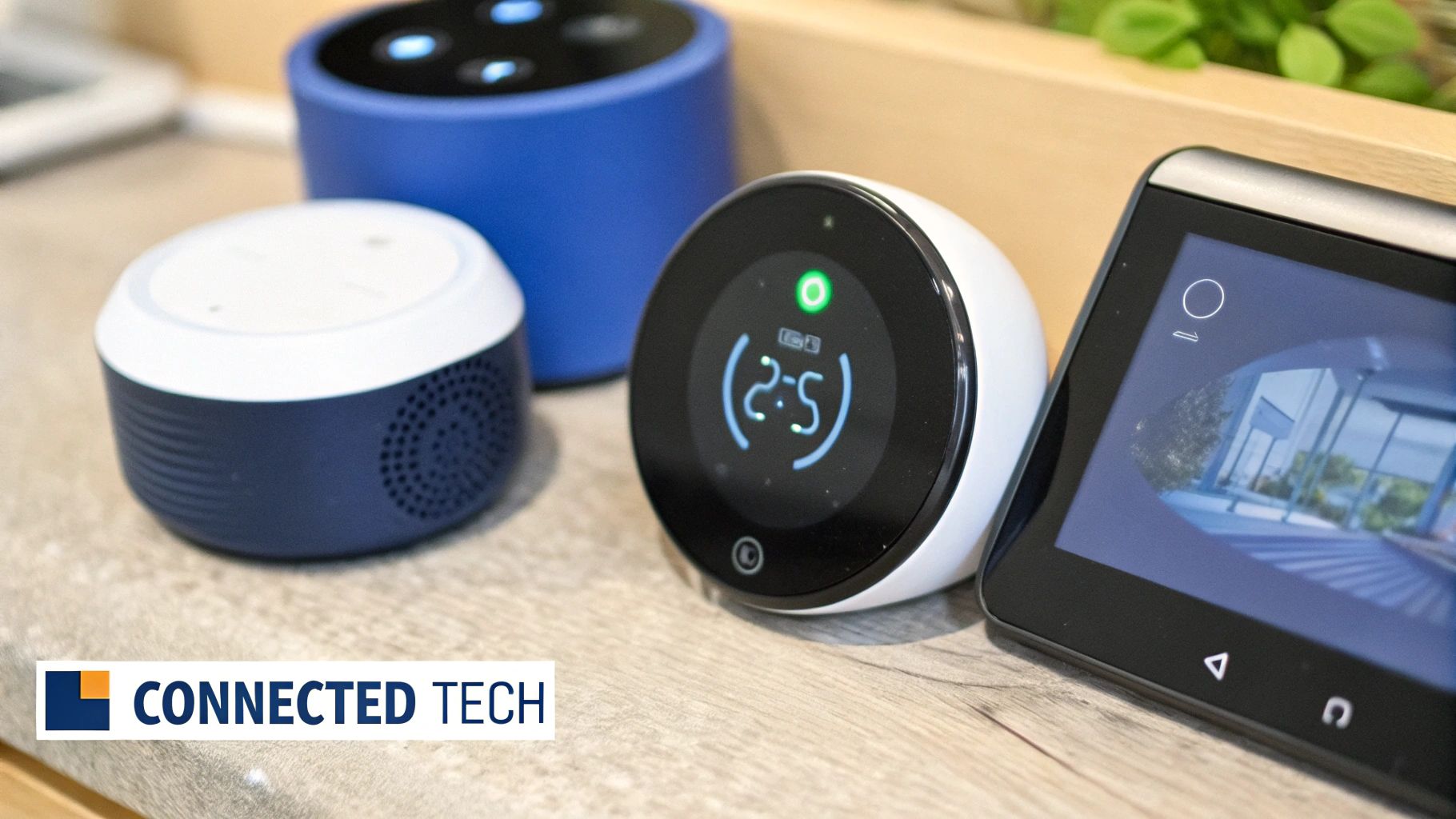
Let’s get real about what these pillars look like in practice, whether you're living on the quiet Central Coast or in the middle of Sydney. It’s all about solving everyday headaches and just making life a bit smoother.
Pillar 1: Convenience – The Morning Routine, Sorted
Picture a young couple in Gosford. The alarm buzzes at 6:30 am, but instead of a mad scramble, a whole sequence of events kicks off on its own. The blinds slowly rise to let the sun in, their favourite breakfast show starts playing from a speaker in the kitchen, and the coffee machine begins to brew its first pot.
This isn't science fiction; it's the pillar of convenience at work. It’s about taking all those small, repetitive tasks off your plate so you don't have to think about them. By the time our Gosford couple gets out of bed, the house is already awake, making their morning feel less like a frantic rush and more like a calm start to the day.
Pillar 2: Security – Peace of Mind While You're Away
Now, let's pop up to Newcastle, where a family is on a much-needed holiday. A few years back, leaving the house empty for two weeks would have been a source of constant, nagging worry. Not anymore. With their smart security setup, they've got total peace of mind right in their pocket.
From their hotel room, they can pull up a live feed from their security cameras just to check in. They get an instant notification on their phone the moment the neighbour stops by to water the plants, and they can even use the two-way audio to have a quick chat. If a courier shows up unexpectedly, they can unlock the front door for a second and lock it right back up again, all from an app.
This is the security pillar doing its job. It’s more than just a noisy alarm; it’s about feeling connected and in control of your home’s safety, no matter where you are.
Of course, a connected home means your Wi-Fi network needs to be rock-solid. If you want to beef up your digital defences, you can learn more about how to secure your WiFi network and keep everything protected.
Pillar 3: Efficiency – Winning the War on Bills
Finally, let’s head down to Sydney to meet a homeowner who was getting tired of seeing their power bills climb higher and higher. They decided to fight back with smart technology, tapping into that third pillar: efficiency. Using a simple app linked to smart plugs and their meter, they could suddenly see exactly where their energy was going in real-time.
It didn't take long to spot the culprits. That old fridge in the garage? An absolute power guzzler. The TV on standby? Still silently draining electricity. By setting up schedules for appliances to switch off and running the dishwasher during off-peak hours, they managed to cut their quarterly bill down significantly. This is where a smart home starts paying for itself, turning data into real savings in your bank account.
4. Your Smart Home Starter Kit: Where to Begin
Dipping your toes into the world of smart home tech can feel a bit overwhelming at first. There are just so many gadgets, brands, and ecosystems. But you don't need a degree in IT to get started. The secret is to begin with a few key pieces that offer the biggest bang for your buck right away.
Think of it like building with LEGO. You need to lay down that first solid baseplate before you can start creating something amazing. For your smart home, that baseplate is your Wi-Fi network and a central 'brain' to control everything. Once that's sorted, you can add the first few essential bricks that bring the whole thing to life.
This guide cuts through the noise. We're not talking about filling your house with every gadget under the sun. Instead, we'll focus on the three absolute essentials that will make a real difference in your Aussie home.
H3: Start with a Smart Speaker: The Brain of the Operation
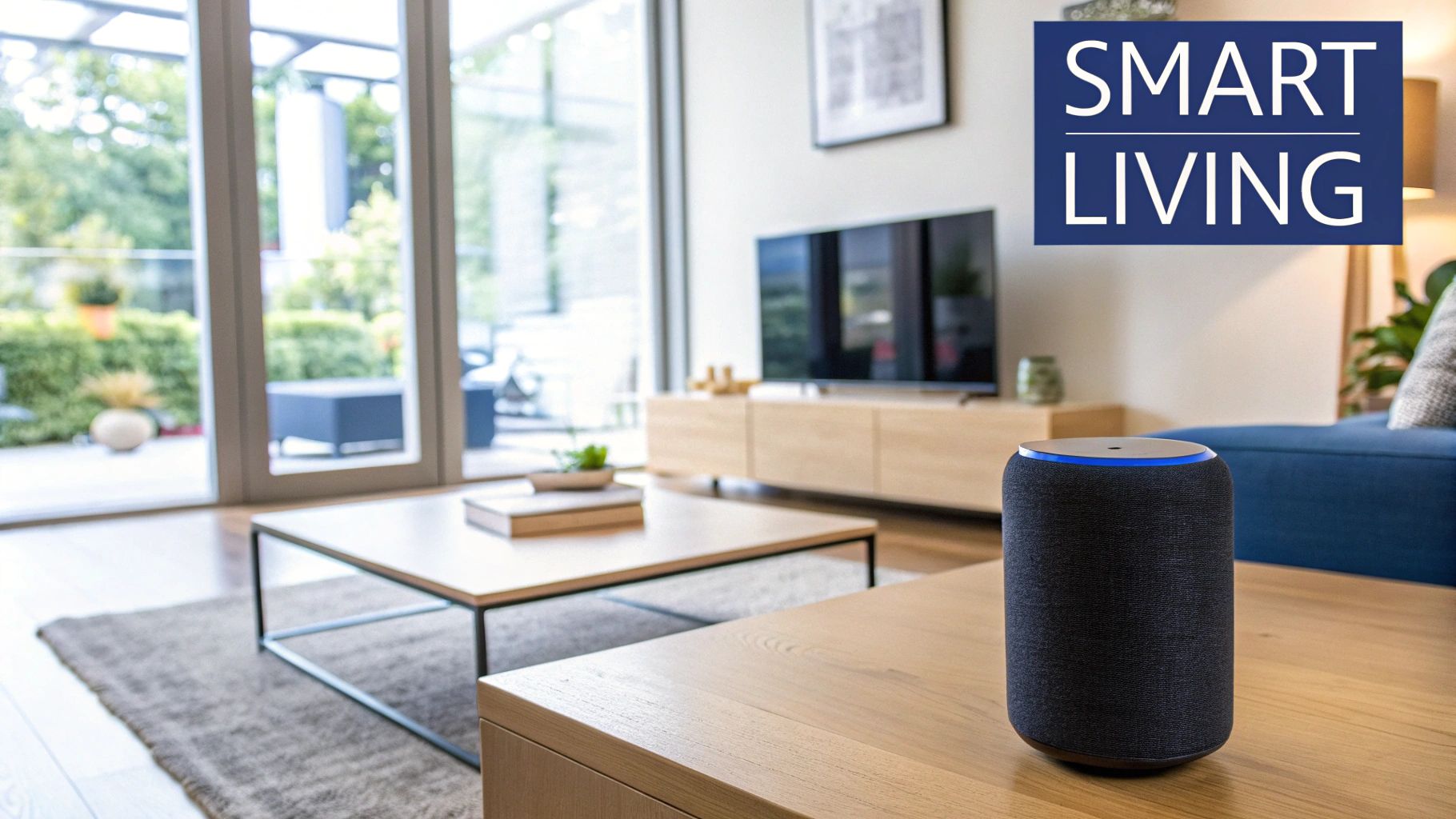
Your very first purchase should be a smart speaker, like a Google Nest or an Amazon Echo. This isn't just for playing your favourite tunes; it's the command centre for your entire smart home. This is the device you'll talk to when you want to turn on the lights, check the weather, or set a timer without lifting a finger.
Imagine walking in with your arms full of groceries and just saying, "Hey Google, turn on the kitchen lights." That simple command is where the magic begins, and it all starts here. Choosing a speaker also means you're picking an 'ecosystem' (like Google, Amazon, or Apple), which will guide your future purchases, so go with the one that feels most natural for you.
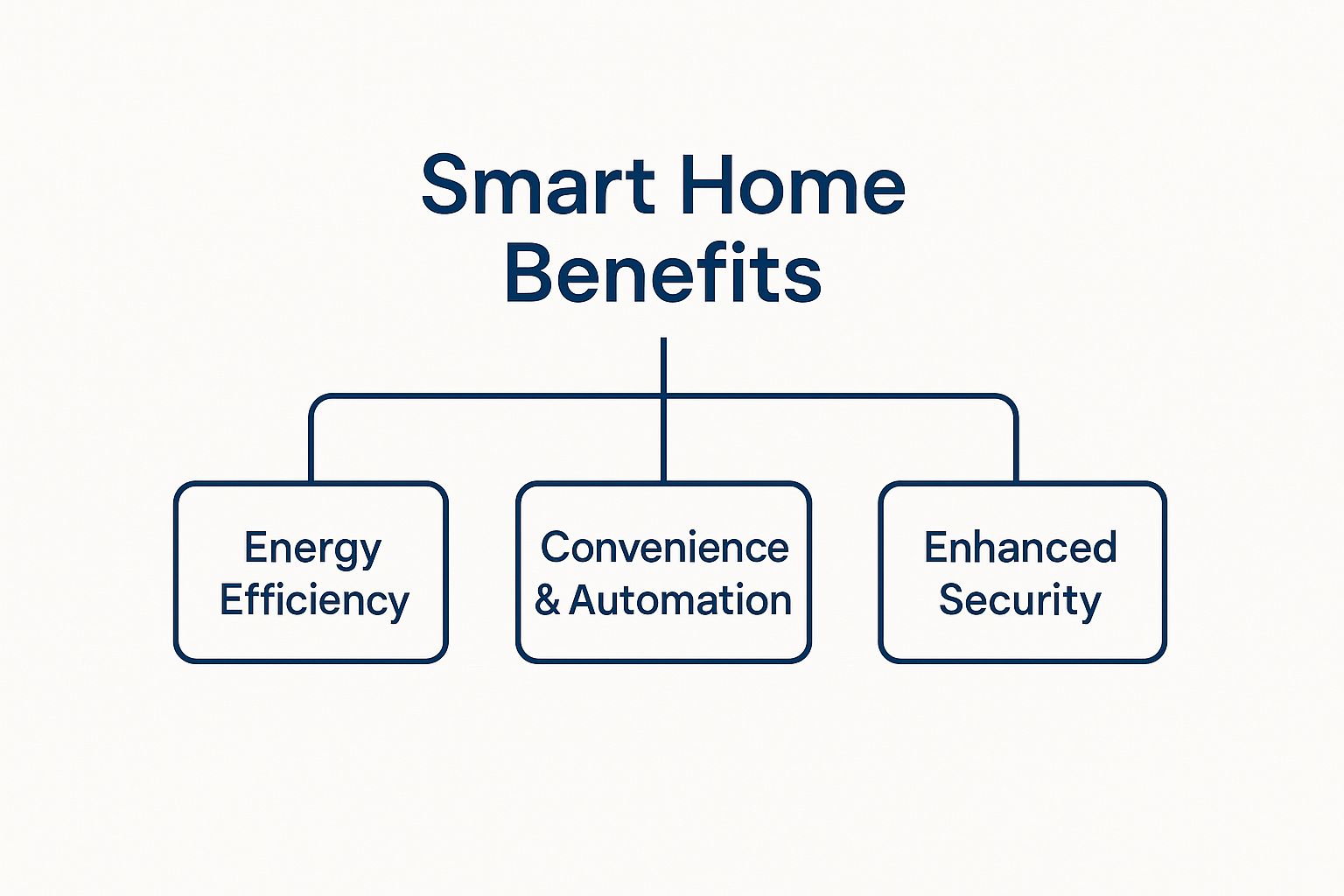
As you can see, a smart home is really built on three pillars: saving energy, making life more convenient, and boosting your security. They all work together to create a home that’s more responsive and efficient.
H3: Add Smart Lighting: The Easiest Big Win
Once your speaker is set up, smart lighting is the next logical step. Honestly, it’s one of the most satisfying and noticeable upgrades you can make. With just a few smart bulbs, you can completely change the vibe of a room, schedule lights to turn on before you get home, or have them dim automatically for movie night.
For example, you could create a "Good Morning" routine where your bedroom lights slowly brighten to mimic the sunrise, helping you wake up more naturally. Or a "Goodnight" command that turns off every single light in the house at once. It’s a game-changer for convenience and can even help trim your power bill.
The real beauty of a smart home isn't just about remote control. It's about automation. It's about your home anticipating your needs and taking care of the little things for you, so you have one less thing to worry about.
H3: Finish with Smart Plugs: The Ultimate All-Rounder
Finally, grab a few smart plugs. These clever little devices are the secret to making almost any 'dumb' appliance smart. Got a favourite old lamp you love? A fan? Your coffee machine? Plug it into a smart plug, and suddenly you can control it from your phone or with your voice.
This is perfect for those appliances you always forget to turn off. You can set a schedule for the heater in your home office to switch off at 5 pm sharp, or use your phone to check if you left the iron on after leaving the house. They’re incredibly versatile, affordable, and a brilliant way to expand your smart home's reach without replacing all your existing stuff.
H3: Your First Smart Home Shopping List
To make it even easier, here’s a simple shopping list to get you started. These three items work together seamlessly and give you a real taste of what a smart home can do.
| Device Type | What It Does (In Plain English) | Perfect For… | Typical Price (AUD) |
|---|---|---|---|
| Smart Speaker | A voice-controlled speaker that acts as your central hub. Play music, ask questions, and control other smart devices. | Anyone wanting to start their smart home journey. It’s the non-negotiable first step. | $50 – $150 for entry-level models. |
| Smart Light Bulbs | Wi-Fi connected light bulbs that you can control from your phone or with your voice. Change colour, brightness, and set schedules. | Creating atmosphere, adding convenience, and waking up more gently. | $20 – $80 per bulb, depending on features. |
| Smart Plugs | A small adapter that plugs into any standard wall outlet, letting you turn 'dumb' appliances on or off remotely. | Making old appliances smart, like fans, lamps, and coffee makers. Also great for peace of mind. | $15 – $30 per plug. |
This simple trio—a speaker, a few lights, and a couple of plugs—is your perfect starter kit. They give you an immediate sense of the convenience and control that makes smart home living so practical.
Of course, all this awesome connectivity relies on a solid home network. If you’re building a new place or doing a major reno, planning ahead with a professional data cabling installation can make all the difference for a reliable and frustration-free experience down the track.
How Smart Tech Can Slash Your Power Bills
Let's be brutally honest: with power bills across NSW looking like they're trying to set new high scores, this is the part everyone really cares about. The idea of a smart home is great for convenience, but the real magic happens when you see those numbers on your energy bill start to drop. This isn't some far-off futuristic dream; it's about using clever, practical tech to keep more of your hard-earned cash in your pocket.
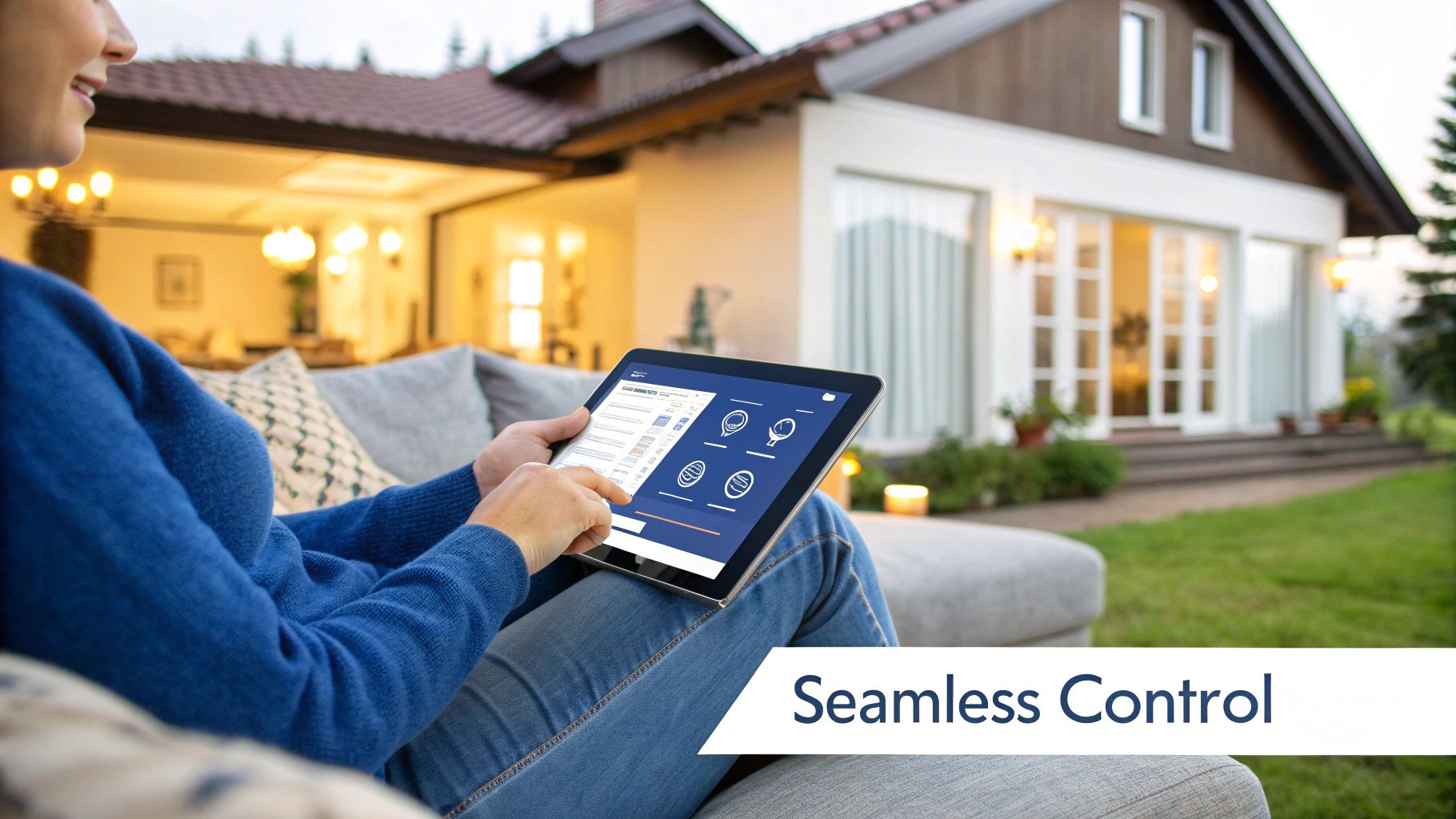
This shift towards energy saving isn't just a niche interest anymore. With rising costs hitting home, it’s become a major focus for Aussie households. In 2023, almost 75% of households saw their electricity bills climb, which has definitely sped up the move towards smarter, more efficient appliances. For many, saving energy is a key reason to upgrade, with about 28% of homes now using smart solutions to manage their power usage and shrink their environmental footprint.
Taming the Thermostat and Conquering the Sun
One of the biggest energy hogs in any home is heating and cooling. A smart thermostat, like a Nest or Ecobee, is your first line of defence. It learns your family's routine—when you're home, when you're out, when you're tucked up in bed—and adjusts the temperature automatically. No more pointlessly heating or cooling an empty house.
But the real genius is when you pair it with other smart devices. Think automated blinds. On a scorching summer arvo in Western Sydney, your blinds can automatically close to block out the sun, giving your air con a much-needed break. In winter, they can do the opposite, opening up to let that beautiful Central Coast sunshine warm your living room naturally.
Hunting Down the Power Vampires
Let’s talk about 'Dave from Davistown'. For years, Dave couldn't figure out why his power bills were so high. He’d switched to LED lights and was careful about turning things off, but the bills just kept climbing. So, he invested in a few smart plugs with energy monitoring.
Within a week, he had his culprits. That second beer fridge in the garage? It was chewing through nearly $250 a year all on its own. The collection of chargers and the TV left on standby were silently sucking down power 24/7. These sneaky appliances are often called ‘power vampires’ because they drain electricity even when they're not actively being used. By using the app to track usage and set automatic 'off' schedules for these devices, Dave saved hundreds of dollars in his first year.
Smart plugs don't just give you remote control; they give you information. And that information is power—the power to see exactly where your money is going and stop the waste.
Creating Your Money-Saving Routines
The best part of a smart home is getting devices to work together. You can set up simple routines that make saving money effortless.
-
The "Goodbye" Routine: This is a classic. As you're rushing out the door, one simple voice command or a tap on your phone can turn off every light in the house, switch off non-essential smart plugs (bye-bye, power vampires), and adjust the thermostat to an energy-saving mode.
-
The "Off-Peak" Routine: Many energy providers offer cheaper electricity rates during off-peak hours, usually overnight. You can schedule your biggest energy users—like the dishwasher, washing machine, or even your electric vehicle charger—to run automatically during these cheaper periods.
These automated actions do more than just save a few cents here and there; they build consistent energy-saving habits into the fabric of your home. It’s a set-and-forget system that continuously works to lower your bills. And when you combine these energy smarts with other features, like a solid smart home security system, you start to see how a truly integrated home isn't just efficient, but safe and secure too.
Why Smart Homes Are for Everyone
If you reckon this whole smart home caper is just for young tech-heads glued to their phones, you’re not alone. But that’s a myth we’re here to bust. The truth is, some of the most practical and life-changing benefits of smarthomes for living are being discovered by older Aussies who want to live independently and safely in their own homes for longer.
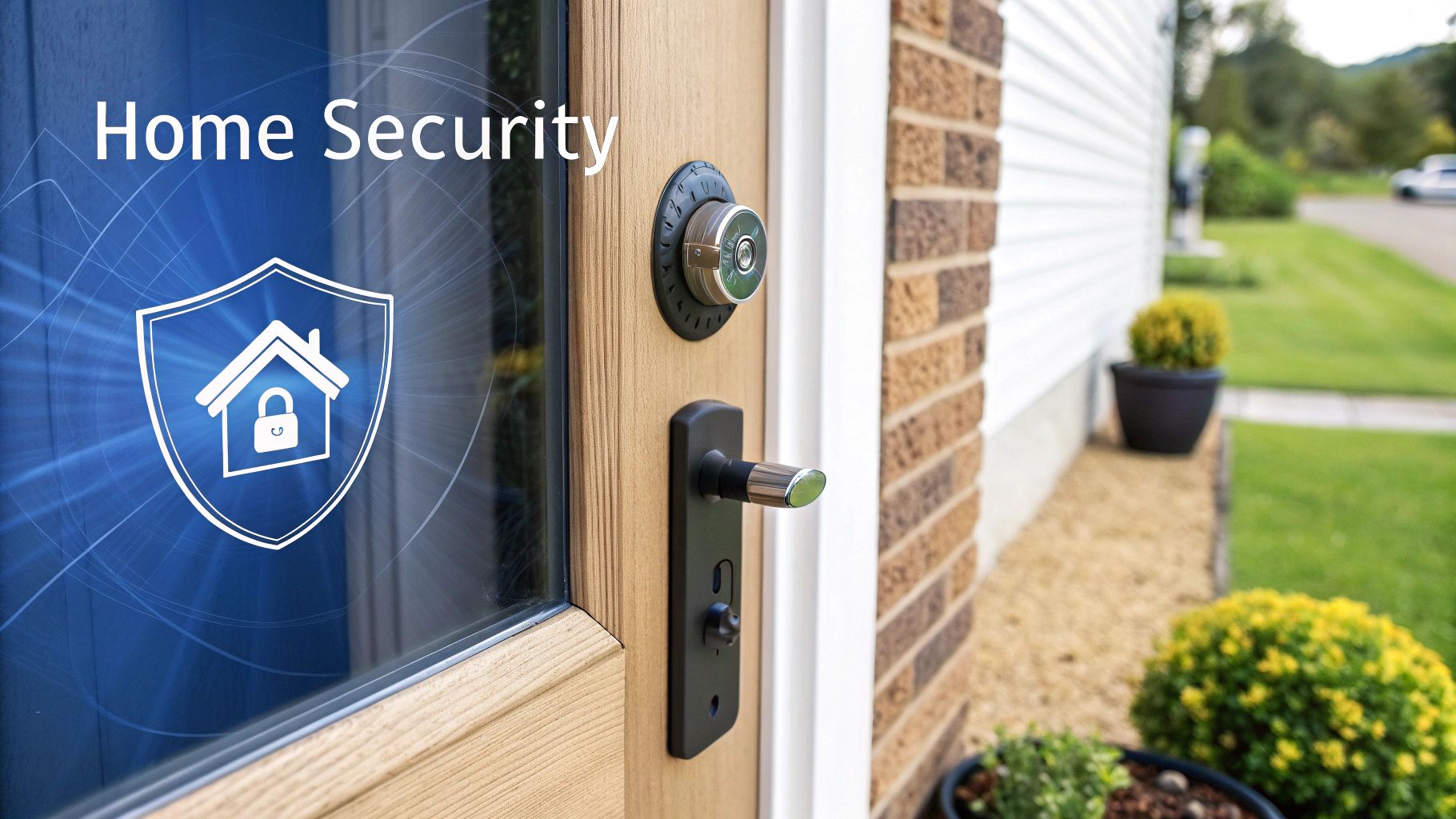
This isn’t about complicated gadgets; it’s about simple solutions that make a real difference. It’s about peace of mind for them and their families, too.
A Story from the Hunter Valley
Let’s talk about Helen and Barry, a retired couple living just outside Cessnock. They love their home, but as they’ve gotten older, some daily tasks have become a bit of a worry. Their kids, who live down on the Central Coast, were starting to get concerned, so they helped install a few simple smart devices.
And honestly, it’s completely changed their lives for the better.
- Seeing Who’s at the Door: A smart video doorbell means they can see and talk to whoever is at the front door from their tablet, without having to rush to answer it.
- Preventing Falls: Automated night lights in the hallway and bathroom now gently turn on when they detect movement, making those late-night trips much safer.
- Staying Connected: A smart speaker in the living room lets them make hands-free calls to their kids and grandkids with a simple voice command. No more fumbling with small phone screens.
- Managing Medications: They even have a smart pill dispenser that sends a friendly reminder when it’s time for their medication and notifies their daughter if a dose is missed.
For Helen and Barry, this technology isn’t about being flashy. It’s about maintaining their independence, staying connected to family, and feeling secure in the home they love.
Busting the “Too Complicated” Myth
The biggest worry for many seniors is that the technology will be too hard to use. But modern smart home systems are designed to be incredibly user-friendly.
Voice control has been a total game-changer. Instead of navigating complex apps, you can just speak your commands out loud. Asking a speaker to “call Sarah” or “turn off the bedroom light” is as easy as having a conversation.
This growing trend is backed by some surprising numbers. Recent research shows that nearly half (48%) of Australians in the baby boomer and senior age groups already own smart home devices, with security being a top priority. In fact, a whopping 75% of them have purchased smart security products to feel safer at home. You can learn more about these smart home adoption trends and see how older Aussies are embracing the tech.
These security devices, from cameras to smart locks, provide an invaluable sense of security. Many are even embracing new solutions like solar-powered security camera systems for reliable surveillance without the wiring fuss. Ultimately, smart technology empowers everyone, regardless of age, to live more safely and confidently.
Right then, you're sold on the idea and ready to dive into the world of smart homes for living. Good on ya! But where do you actually start? It can feel like a massive task, but the secret is you don't need a team of tech gurus or a week off work. You can get the basics sorted in a single weekend.
Think of it like setting up for a barbie—a bit of prep, some assembly, and then you get to enjoy the good stuff. We'll walk you through it, step-by-step, like a mate giving you a hand. No jargon, no stress. Just a simple plan to get your first smart home setup humming by Sunday arvo.
Friday Arvo and Night: The Unboxing Ceremony
The weekend kicks off the moment you get home with your new toys. Don't try to do everything at once. Tonight is all about the prep work.
- Unbox Everything: Lay out your smart speaker, smart lights, and maybe a smart plug. Get rid of the packaging and check you have all the bits and pieces.
- Charge It Up: If any of your devices need charging before setup, now’s the time to plug them in. Let them juice up overnight so they're ready for action tomorrow.
- Download the Apps: While they’re charging, grab your phone and download the necessary apps (like Google Home or Amazon Alexa). Create your accounts so you’re not faffing about with it in the morning.
That's it for Friday. Seriously. Go and relax, you’ve earned it.
Saturday Morning: The Installation Phase
Okay, it's go-time. With a coffee in hand, let's get the hardware in place. This part should only take an hour or two.
First, find a good spot for your smart speaker. The living room or kitchen is usually best—somewhere central where you'll use it most. Plug it in and follow the app's instructions to connect it to your Wi-Fi.
Next, tackle the smart lights. Simply swap out your old light bulbs for the new smart ones in a couple of key lamps or fixtures. A lamp in the living room and one in the bedroom is a great start. Turn the power back on and use the app to find and connect them.
The goal today isn't to automate your entire house. It’s about getting a couple of key wins on the board to see how easy it can be. Nail these first few steps, and you'll build the confidence to do more later.
Saturday Arvo: Let’s Get Smart
Now for the fun part! With everything connected, it's time to teach your new system some tricks. This is where you create routines—simple commands that trigger multiple actions.
Start with a classic "Good Morning" routine. In your app, you can set it up so that when you say, "Hey Google, good morning," your bedroom light slowly fades on, and the speaker tells you the weather forecast for Newcastle.
Then, create a "Movie Night" scene. This could dim the living room light to 30% brightness and turn off other lights in the room. It’s these simple automations that make your home feel genuinely smart.
Sunday: The Play Day
You’ve done the hard yards. Sunday is all about experimenting and getting used to your new setup. Try out different voice commands and see what works. If you bought a smart plug, now's the time to connect it to your kettle or a lamp.
By the end of the weekend, you'll have a basic but brilliant smart home running. You’ve laid the foundation, and now you can add new devices whenever you feel like it. See? Not so scary after all.
A Few Common Smart Home Questions
Still have a few questions floating around? Don't worry, you’re not the only one. Dipping your toes into the world of smart homes can feel a bit overwhelming at first, but it's usually simpler than you think.
We’ve pulled together the most common queries we hear from folks across the Central Coast and Sydney to give you some straight-up, simple answers. Let's clear up a few things so you can get started with confidence.
Is My Wi-Fi Good Enough for a Smart Home?
This is probably the number one question we get, and it’s a good one. For the most part, a standard NBN plan has plenty of grunt to handle a basic smart home setup. The real issue isn't always raw speed, but coverage.
If you've got those annoying Wi-Fi dead spots in your house—you know, that back bedroom where Netflix constantly buffers—your smart devices are going to struggle there, too. A mesh Wi-Fi system is a brilliant fix for this, blanketing every nook and cranny of your home with a strong, reliable signal. It's like putting a smart Wi-Fi extender in every room.
Do I Have to Replace All My Appliances?
Absolutely not! This is a common misconception that holds a lot of people back. One of the easiest and most affordable ways to get started is with a humble smart plug.
You can plug any 'dumb' appliance into one—a lamp, a fan, your kettle—and instantly control it from your phone or with your voice. It's the perfect way to ease into home automation without forking out thousands on new appliances.
Are Smart Homes Secure and Private?
That’s a fair question. When you start connecting devices to the internet in your home, it's natural to think about security. The good news is that reputable brands invest a lot in keeping their gear secure, but you've got a role to play as well.
Keeping your devices and their software updated is the first step. For total peace of mind, it’s worth looking into proper home security. You can find some great information on choosing the best security cameras for your home to make sure everything is locked down tight. Using strong, unique passwords and turning on two-factor authentication on your accounts adds another critical layer of protection against any unwanted digital visitors.
Ready to bring smart, secure, and simple technology into your home? The team at Advanced Comtech has been helping homeowners on the Central Coast, in Sydney, and Newcastle for decades. We handle everything from the initial design to the final installation, ensuring your smart home just works, stress-free.
Get in touch with us today for a chat about your project at https://advancedcomtech.com.au.