Ever left for a weekend trip to Sydney and been hit with that nagging feeling you forgot to lock the back door? Or maybe you’re stuck on the M1, already late for a meeting in Newy, and you can’t remember if you shut the garage? A smart home security system is the modern-day answer to that exact problem. Think of it as a connected, intelligent guardian for your home that you can check on and control right from your smartphone, no matter where you are.
What Are Smart Home Security Systems Anyway?
Let’s be honest, the old-school home alarm—the one that would screech bloody murder if a moth flew past it the wrong way—had its limits. It was loud, sure, but it wasn’t exactly clever. Smart home security is the natural evolution of that concept; it’s the classic alarm system finally getting with the program.
Instead of just a noisy box on the wall, you get an interconnected web of devices. We’re talking cameras, sensors, and smart locks that all communicate with each other and, crucially, with you through an app on your phone. This means you’re not just reacting to a siren; you’re proactively in the driver’s seat.
More Than Just a Loud Noise
The real game-changer is the ‘smart’ part. It’s about getting a ping on your phone when a parcel is delivered to your doorstep in Gosford, or being able to pull up a live video feed of your driveway when you hear a strange noise in the middle of the night. It’s about letting a tradie in remotely without having to leave your desk in Newcastle.
This move from reactive alarms to proactive control is precisely why these systems are taking off. It’s really no surprise that the Australian smart home security market is booming, projected to more than double from $1.26B in 2024 to over $3.33B by 2030. That massive growth shows just how many Aussies are embracing this new level of peace of mind.
Meet Your Home Security Dream Team
Putting together a great smart security system is a bit like picking your dream footy team. It’s not just about having one star player; it’s about having a full squad where everyone knows their position and works together to defend your home turf.
Let’s run through the starting lineup and introduce the key players on your home security dream team. Each component has a specific job, from keeping an eye on the front gate to making sure the back door is locked tight. Think of it less as complicated tech and more as a group of reliable teammates looking out for you.
Your Smart Security Starting Lineup
Here’s a quick look at the core components of a smart security system and what they do for your Central Coast home.
| Component (The Player) | Primary Job (Their Position) | Best For… |
|---|---|---|
| Smart Cameras | The tireless lookouts, keeping an eye on key areas 24/7. | Monitoring driveways, backyards, and main living spaces. |
| Video Doorbells | The friendly gatekeeper who sees and talks to anyone at your door. | Screening visitors, confirming deliveries, and deterring porch pirates. |
| Contact Sensors | The diligent guards on every door and window. | Getting instant alerts for any unexpected opening or breach. |
| Motion Detectors | The roaming patrol that covers wide-open spaces. | Securing large rooms, hallways, or outdoor areas after hours. |
| Smart Locks | The versatile utility player that manages access. | Keyless entry, remote locking/unlocking, and granting temporary access. |
| Central Hub / App | The team captain and coach calling all the plays. | Connecting all devices and giving you total control from your phone. |
Each of these players brings something unique to the field, but their real power comes from working together as a connected team.
The Eyes and Ears: Cameras, Doorbells, and Sensors
First up, you’ve got your lookouts: smart cameras and video doorbells. These are your eyes on the ground, constantly watching the perimeter. They’re the ones who give you a heads-up when someone’s coming up the driveway, whether it’s the postie dropping off a package or an uninvited guest snooping around.
Imagine you’re stuck in traffic on Pennant Hills Road, and you get a notification on your phone. With a quick tap, you can see a live feed of who’s at your front door back on the Coast and even have a chat with them through the doorbell’s two-way audio. It’s like being in two places at once.
Working alongside them are your most reliable defenders: contact sensors. These are the unsung heroes of your system. Placed on doors and windows, their job is simple but critical—they let you know the second a potential entry point is breached. An instant alert if a window is opened unexpectedly in the middle of the night gives you that crucial early warning.
The Brains of the Operation
Of course, every team needs a captain, and in a smart home security system, that role is filled by the central hub or smartphone app. This is the brains of the entire operation, the coach that calls the plays. It’s where all the information from your cameras, sensors, and locks comes together.
This central command centre is what makes the system truly ‘smart’. It allows all the individual components to communicate with each other and, most importantly, with you.
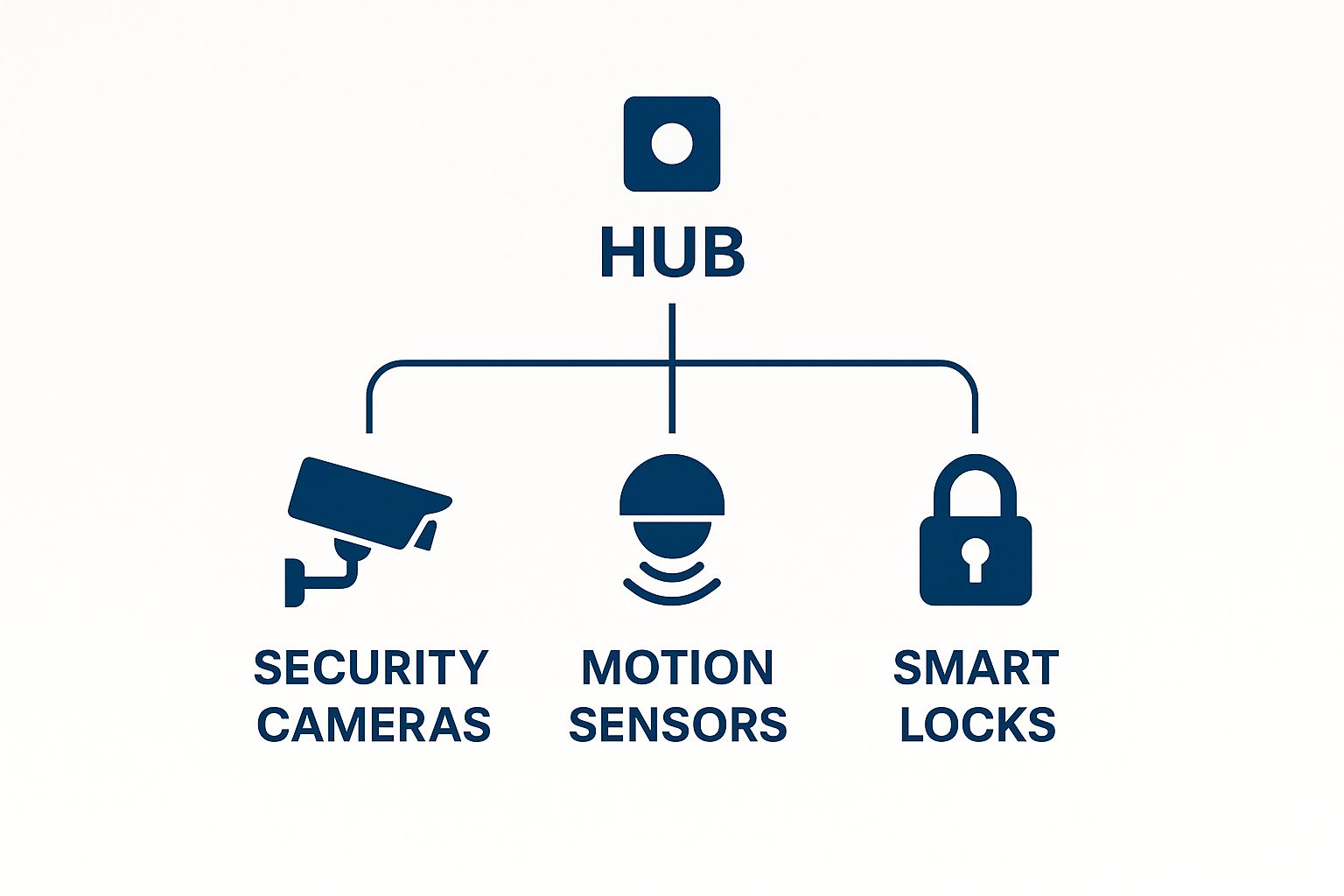
As you can see, the hub acts as the core, connecting and managing your security devices into one cohesive unit that you control right from your pocket.
The Game-Changing Utility Players
Next, we have the roaming patrols—your trusty motion detectors. These devices are brilliant at covering larger areas like a living room, hallway, or backyard. They use infrared technology to detect movement, sending an alert when they sense activity where there shouldn’t be any.
Finally, let’s talk about one of the most convenient players on the team: the smart lock. This device can genuinely change your daily routine. Ever had that sinking feeling on the M1, wondering if you locked the front door? With a smart lock, you just check your app and lock it remotely. Problem solved.
It’s the ultimate ‘forget your keys’ solution. You can grant temporary access to a tradie working at your place in Gosford or let a family member in without having to leave a key under the mat. It’s a small change that delivers a massive amount of convenience and security.
When these components work together, they create a formidable defence that makes your home safer and your life a whole lot easier.
Getting All Your Smart Devices Talking
Having a top-notch smart security team is brilliant, but the real magic kicks in when all your gadgets start talking to each other. This is where your security system stops being a standalone guardian and becomes the central nervous system for your entire home. It’s all about integration—getting different devices to work together in clever, automated ways.
Picture this: it’s 2 AM and a smoke alarm goes off. Instead of just beeping loudly, it’s already telling your other devices what to do. Your smart locks click open for a quick escape, the hallway lights flick on to show you the way, and your smart blinds roll up. This isn’t science fiction; it’s a practical, life-saving example of what a truly connected home can do.
This web of connected gadgets is what people call the Internet of Things (IoT). It might sound a bit technical, but it’s really just the idea that everyday things, from your lights to your security cameras, can connect to the internet and to one another. When your security system is part of this network, it makes it dramatically more effective and convenient for you.
Bringing Voice Assistants into the Mix
One of the simplest ways to get your devices on speaking terms is to add a voice assistant like Amazon Alexa or Google Assistant. Think of them as the friendly translator for your entire smart home. Instead of fiddling with your phone, you can just speak.
Walking in with your hands full of groceries from Woolies? “Hey Google, lock the front door.” Hear a weird noise in the backyard while you’re settled on the sofa watching the Knights play? “Alexa, show me the back garden camera.” These assistants turn complicated tasks into simple conversations, making your security feel like a natural extension of your home.
This kind of convenience is a big reason why Australia’s smart home market is booming. It’s on track to become a US$10.15 billion industry by 2033, all thanks to tech that makes our homes smarter and more efficient. You can discover more about Australia’s smart home market growth on renub.com.
A Clever Newcastle Story of ‘Mockupancy’
Let’s look at a real-world example. We had a client in Merewether, let’s call him Dave, who was heading overseas for a few weeks to watch the Ashes. He was understandably nervous about leaving his house empty. He had a great security system, but he wanted to take things up a notch.
By linking his security cameras with his smart lighting, he created what we call a ‘mockupancy’ mode. Here’s how it worked:
- At Dusk: His system automatically turned on the living room and kitchen lights, just like his family would on a normal evening.
- Later On: Around 10 PM, those lights would go off, and a bedroom light would switch on for an hour or so.
- During the Day: The blinds would open in the morning and close in the evening, all on schedule.
From the outside, it looked exactly like someone was home. This simple integration transformed his security system from a reactive alarm into a proactive deterrent, making his place a much less tempting target for any would-be burglars checking out the street.
Of course, this seamless connection all relies on a strong and secure home network. All these smart devices are chatting over your Wi-Fi, so making sure that connection is rock-solid is non-negotiable. Our guide on how to secure your Wi-Fi network has some great tips to ensure your smart home’s communication lines are properly locked down. After all, a secure network is the foundation of a reliable smart home.
Unexpected Perks of a Smarter Home
When most people think about getting a smart home security system, their mind immediately goes to one thing: security. And that makes sense. You want to feel confident your home is protected from intruders, whether you’re asleep in bed or off enjoying a weekend in the Hunter Valley.
But here’s what often catches people by surprise: the biggest benefits often have little to do with stopping burglars.
The real magic is the way these systems quietly weave convenience into your daily routine. It’s all about the small, everyday moments that make you look back and wonder how you ever got by without it. This isn’t just a grudge purchase; it’s a genuine lifestyle upgrade.
Peace of Mind in Your Pocket
Have you ever been out for dinner on Darby Street and felt that sudden, sinking feeling—did I close the garage door? Instead of letting that worry spoil your night, you can just pull out your phone, check its status, and tap to close it. The relief is instant.
This kind of peace of mind applies to so much more. You can check in on your pets during the workday to make sure they haven’t decided the new sofa is a chew toy. Or get a notification the instant your kids arrive home from school, so you know they’re back safe and sound without having to text them.
We recently worked with a Central Coast family who got a system after a nearby break-in. But they told us its real value was in managing their hectic family life. They used it to see that the dog walker arrived on time and to keep an eye on the kids playing in the backyard while they were cooking dinner.
It’s these little reassurances that really add up. It’s no wonder these systems are becoming central to modern living, with the Australian market valued at around USD 3.8 billion in 2024 and projected to hit USD 11.5 billion by 2033. You can read the full analysis of the Australian smart homes market on imarcgroup.com.
More Than Just Security, It’s a Lifestyle Upgrade
Smart security also smooths out the friction of daily errands. Expecting a delivery but you’re stuck in a meeting in the CBD? No worries. When the courier presses your video doorbell, you can speak to them through your phone and unlock the door remotely to let them leave the package safely inside.
This ability to manage access is a game-changer:
- Tradies and Cleaners: Forget leaving a key under the doormat. Just give them a temporary access code or unlock the door from your phone when they arrive.
- Family and Friends: If a relative drops by unexpectedly while you’re out, you can let them in without having to race home.
Of course, all of this handy remote access depends on having a solid Wi-Fi signal that reaches every corner of your property. If you’re not sure your network is up to the task, have a look at our guide on choosing between a Wi-Fi extender vs a mesh network.
There’s one last benefit that might surprise you: potential savings on your home insurance. Many Australian insurers offer discounts for homes with monitored security systems because they see them as a lower risk. It’s well worth a call to your provider to see if your smart setup could lower your premium. It’s just another way a smarter home pays for itself.
How to Choose the Right System for Your Home

Alright, so you’re sold on the idea of smart security. Smart move. But now for the tricky part: which system is actually the right fit for your place? After all, a sprawling property overlooking the water in Terrigal has vastly different needs to a trendy terrace in Newcastle or a family home in a quiet Central Coast suburb.
Picking the right smart home security system can feel a bit overwhelming, kind of like ordering a coffee when you’re faced with a million different milk and syrup options. Don’t stress. We’re going to break it down into a few key decisions that will make the whole process much clearer.
DIY vs. Professional Installation
The first major fork in the road is deciding whether to go the Do-It-Yourself (DIY) route or call in the professionals. There’s no single right answer here; it’s all about what suits your skills, budget, and how much time you’ve got up your sleeve.
- The DIY Approach: Think of this as the “weekend warrior” option. You grab a kit-in-a-box from Bunnings, unbox it, and follow the instructions. The big win here is the lower upfront cost and that little bit of satisfaction from setting it all up yourself. But remember, you’re the one responsible for getting it right – placing sensors correctly, angling cameras perfectly, and troubleshooting any glitches. If your Wi-Fi is a bit dodgy, you’ll need to sort that out first.
- The Professional Install: This is the “sit back and let the experts handle it” choice. A team of pros will come to your home, assess your property’s unique weak spots, and install a system that’s custom-designed for it. You’re paying for their experience, which guarantees everything is placed for optimal performance. While the initial investment is higher, you get serious peace of mind knowing it’s done right the first time.
A professional install can spot vulnerabilities you’d never even think of. They might notice, for instance, that a downstairs window is perfectly hidden from the street by a big bottlebrush tree, making it a prime target that a standard DIY setup might easily miss.
To Monitor or Not to Monitor
Next up, you need to decide how your system will be monitored. This choice is all about what happens when an alarm actually gets triggered. Do you want to be the first responder, or would you rather have a dedicated team on standby 24/7?
Self-Monitoring means you’re the boss. When a sensor is tripped, you get an alert sent straight to your phone. From there, it’s on you to check your camera feeds and decide whether to call the police or just tell the neighbour’s cat to clear off. It’s a fantastic, cost-effective option with no ongoing monthly fees.
Professional Back-to-Base Monitoring is basically like having a security guard on call around the clock. If an alarm goes off, the signal is sent to a monitoring centre where trained professionals assess the situation. They can verify if it’s a real threat, contact you, and dispatch emergency services if needed. This offers the highest level of protection, especially when you’re on holiday or can’t get to your phone.
A Checklist for Your Central Coast Home
Feeling a bit clearer? Good. To help you lock in your decision, grab a cuppa and have a think about these questions. Your answers will point you towards the perfect system for your lifestyle.
- How tech-savvy am I, really? Be honest. Do you love setting up new gadgets, or does the thought of configuring a Wi-Fi network make you break out in a cold sweat? If it’s the latter, a professional install will save you a world of headaches. A solid network is the backbone of any smart system, so it’s worth getting your home network installation sorted by an expert.
- What’s my budget? Work out what you’re comfortable spending upfront versus what you can manage monthly. DIY systems have a lower initial cost but you’re on your own, while monitored systems have ongoing fees for that 24/7 peace of mind.
- Am I renting or do I own? If you’re renting, a wireless DIY system is often the best choice. You can easily install it without drilling holes everywhere and just pack it up when you move. Homeowners have more flexibility to go for hardwired systems, which offer rock-solid reliability.
By walking through these key decisions, you can go from feeling overwhelmed to feeling confident. You’ll be able to choose a smart home security system that truly fits your home, your budget, and the way you live.
Busting Common Smart Security Myths
Let’s clear the air and have a yarn about some of the tall tales floating around about smart home security systems. If you’ve been on the fence about getting one, you’ve probably heard a few whispers that gave you pause. “It’s too complicated,” “It’ll cost an arm and a leg,” or the big one, “What happens if the Wi-Fi dies?”
These worries are completely understandable, but thankfully, most of them are based on outdated ideas. It’s time we played myth-busters and separated the facts from the fiction, so you can feel confident about your decision.
Myth 1: They Cost a Fortune
This is probably the biggest one holding people back. A decade ago, yeah, this kind of tech was definitely a top-shelf expense, usually reserved for flash new builds down in Sydney. But things have changed—a lot. The technology has become so much more common, which has made it way more affordable.
Sure, you can still go all-out with a system that has more cameras than a reality TV show, but you absolutely don’t have to. You can easily start small with a video doorbell and a couple of sensors for a surprisingly reasonable price. Most modern smart home security systems are modular, which is great because it means you can add more bits and pieces later as your budget allows.
Myth 2: You Need a PhD in IT to Use Them
Another classic concern is that you need to be some sort of tech wizard to figure it all out. Honestly, if you can scroll through Facebook or order a pizza from an app on your phone, you already have all the skills you need. These systems are designed for everyday people, not IT gurus.
The apps are incredibly user-friendly, with simple buttons like ‘Arm’, ‘Disarm’, and ‘View Live Feed’. It’s all designed to be as straightforward as possible, taking the guesswork out of protecting your home.
Everything is visual and intuitive. You get notifications in plain English, and controlling your system is just a few taps away, whether you’re at home in Gosford or on holiday up the coast.
Myth 3: If the Wi-Fi or Power Goes Down, You’re Exposed
This is a massive one, especially with the wild weather we sometimes get on the Central Coast. “My internet drops out all the time—won’t my security system be useless?” It’s a fair question, but any decent system has solid backup plans.
Most quality security setups come with two crucial features to tackle this exact problem:
- Battery Backup: If the power cuts out, an internal battery immediately kicks in, keeping your main hub and sensors running for hours.
- Cellular Backup: This is the clever part. If your NBN connection drops, the system automatically switches over to a mobile network, just like your phone does. It ensures your system stays connected to the monitoring service, so you’re never left in the dark.
So, even if a storm knocks out your power and internet, your security system just keeps on ticking, keeping your home safe and sound.
Your Smart Security Questions Answered
Still got a few questions rattling around in your head? No worries, you’re not alone. Taking the plunge into smart security always brings up a few queries. Here are the most common ones we hear from people right here on the Central Coast, and up to Newcastle and down to Sydney.
What Happens to My Footage? Is It Private?
This is a brilliant question, and frankly, one you should always ask. Where your video footage ends up really depends on the system you choose. Some store it locally on a physical hard drive in your home, while others send it up to a secure cloud server.
Good, reputable brands use powerful encryption—the same stuff your bank uses to protect your money online—to scramble the data as it travels and while it’s stored. Think of it like sending a valuable package in an armoured truck to a high-security vault. You should always be the one in control of who has access, which is why setting up two-factor authentication is a great idea for that extra lock on your account.
How Much Internet Bandwidth Do I Need?
Smart cameras, especially the high-definition ones, can be a little thirsty for internet bandwidth. A single HD camera usually needs about 2-4 Mbps of upload speed to stream clear video without any hiccups. Once you start adding multiple cameras, you’ll want a decent NBN plan to make sure your security system isn’t fighting with your Netflix binge for bandwidth.
If you’re in an area where the internet can be a bit hit-and-miss, like some parts of the Central Coast hinterland, getting a professional to take a look is a smart move. We can suss out whether your current network can handle the load or if you might need a bit of a boost to keep everything running smoothly.
Can I Add More Devices to My System Later On?
Absolutely! That’s one of the best things about modern smart security. Most systems are designed to be modular, which is just a fancy way of saying you can start with a few key pieces and add more later.
You might kick things off with a video doorbell and a couple of cameras covering the front and back doors. A few months down the track, you could easily add contact sensors to your windows or a smart lock to the garage. It’s a completely flexible approach that lets your security grow with you.
Are These Systems Pet-Friendly?
Yep, they sure are. There’s nothing worse than your phone blowing up with alerts, only to find out it’s the dog wandering into the kitchen for a midnight snack. Many of today’s motion sensors have clever ‘pet-friendly’ settings. They can be adjusted to ignore movement from smaller animals (usually anything under 20 kilos), so your furry family members can roam free without constantly triggering false alarms.
Ready to find a smart security solution that’s just right for your home or business? The team at Advanced Comtech has the local knowledge and hands-on experience to build a system that fits your needs perfectly. Get in touch with us today for honest advice and a stress-free installation.