Ever had one of those moments? You’ve just spent the weekend on a DIY project, feeling pretty chuffed with yourself. You flick the switch on the new downlights you installed, and… it’s a shemozzle. One corner of the room is lit up like the Sydney Cricket Ground on game night, while the other is so dim you can barely see the sofa.
It’s a classic story, and one we hear all the time from homeowners across the Central Coast.
Bad lighting can make even the most stunning home feel… off. It causes annoying glare on the TV screen, leaves your kitchen benchtops in shadow right where you need to chop the veggies, and can turn a cosy living room into something that feels more like an interrogation suite. It’s a total mood killer.
This is exactly where a professional lighting installation service changes the game. It’s not just about getting a tradie in to run a few cables. Think of it as an investment in your home’s atmosphere, safety, and even its future value.
Why Your Home's Lighting Deserves a Professional Touch
A professional electrician is part lighting designer, part safety expert. They don’t just see a blank ceiling; they see a canvas. A proper installation is all about crafting an environment that perfectly suits how you actually live your life.
More Than Just Flicking a Switch
Getting the lighting right is a subtle art, and a pro knows all the tricks.
- Creating the Right Vibe: They understand how to layer different types of light to make a space feel warm and inviting for a movie night, but also bright and functional when you need to read or work from home.
- Safety First, Always: Let’s be blunt: dodgy wiring is a serious risk. A licensed sparkie makes sure every single connection is secure and compliant with strict Australian Standards, protecting your home and your family.
- Boosting Your Home’s Value: You’d be amazed at what a difference good lighting makes. It’s a huge selling point that makes rooms feel bigger, highlights your home’s best features, and gives the whole property a polished, premium finish.
A Smart Investment for Modern Living
Life in Sydney, Newcastle, and the Gosford area is busy enough without adding electrical dramas to your to-do list. Hiring a professional service means the job gets done right the first time—no flickering lights or weird buzzing sounds to drive you crazy. It’s about getting that flawless finish that makes your home feel truly complete.
The goal isn't just to illuminate a room; it's to enhance the way you experience it. From automated evening scenes to perfectly positioned task lighting, a thoughtful installation makes daily life easier and more enjoyable.
Ultimately, it’s about turning your house into a home that is both beautiful and functional. As our homes get smarter, integrating lighting into a bigger ecosystem is the next step. For those looking ahead, understanding how this fits into the world of smart homes for living is key. It’s not just about lights anymore; it’s about creating a more responsive and intelligent environment.
Understanding Your Lighting Options
Stepping into a lighting shop can feel a bit overwhelming, can't it? Suddenly you're drowning in a sea of lumens, kelvins, and watts. It’s enough to make anyone want to go back to using candles. But don't stress—it's actually much simpler than it looks.
Think of lighting your home like setting the stage for a play. You wouldn't just blast the whole stage with one giant, harsh light, would you? Of course not. You need different lights to do different jobs, all working together to create the perfect scene. This is called layering, and it's the secret to brilliant home lighting.
The Three Layers of Light
Every well-lit room, from a cosy nook in a Terrigal cafe to a slick apartment in Newcastle, uses a combination of three basic lighting types. Mastering this trio is key to creating a space that’s both functional and beautiful.
- Ambient Lighting: This is your main character, the general, all-over light that fills the room. It’s the baseline glow that lets you walk around without tripping over the dog. Think downlights, ceiling fixtures, or pendant lights.
- Task Lighting: This is your supporting actor, focused and practical. It’s the bright, direct light you need for specific jobs—chopping veggies on the kitchen bench, reading a book, or putting on makeup. Think under-cabinet strips, desk lamps, or vanity lights.
- Accent Lighting: This is the dramatic flair, the spotlight that adds a bit of 'wow'. It’s used to highlight interesting features like a piece of art, a textured wall, or a beautiful plant. Think track lighting, wall-mounted spotlights, or uplights.
When you bring these three layers together, you get a space that feels dynamic and complete. You can switch between a bright, energising environment for daytime activities and a soft, moody atmosphere for relaxing in the evening.
Demystifying the Tech Jargon
Once you've got the layering concept down, the next hurdle is picking the right globes. For years, halogen was the go-to, but now there’s a clear winner that’s taken over Aussie homes.
The big shift is all about performance and efficiency. It’s not just about what looks good anymore; it’s about what makes long-term financial sense and is better for the planet.
LEDs (Light Emitting Diodes) are the undisputed champions. They use up to 85% less energy than old-school incandescent globes and can last for tens of thousands of hours. That means fewer trips up the ladder to change a blown globe and a much friendlier power bill.
This transition is a huge part of why the Australian lighting market is growing so rapidly, with the LED segment alone expected to reach around AUD $3.78 billion by 2033.
This infographic shows how choosing the right lighting—particularly energy-efficient LEDs—directly impacts your household savings over time.
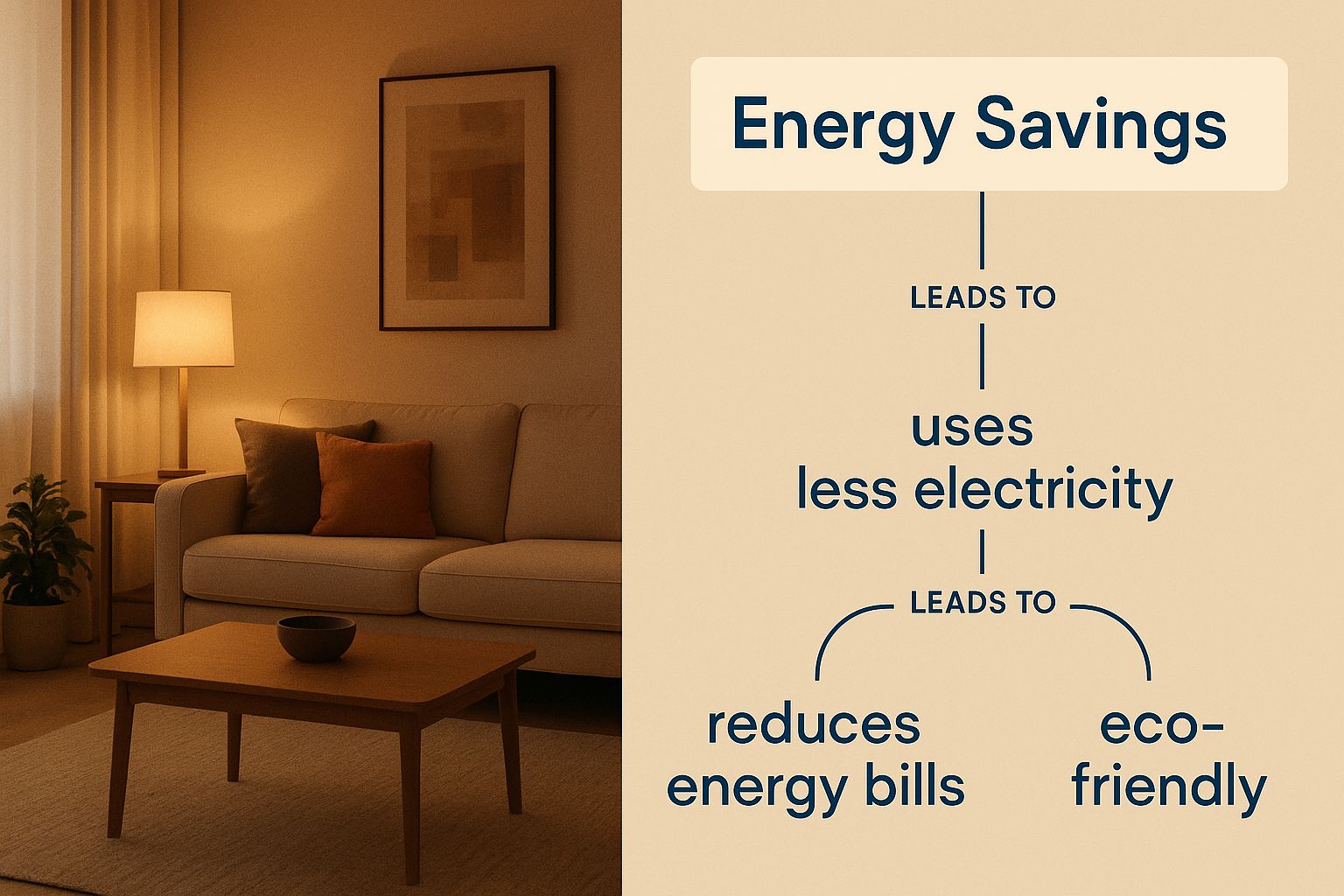
The takeaway is clear: while the initial cost might be slightly higher, the long-term energy savings make LEDs a smart investment for any homeowner.
A Quick Look at Common Lighting Technologies
Here's a straightforward comparison to help you choose the best lighting technology for your home and budget.
| Feature | LED Lights | Halogen Lights | Smart Lights (IoT) |
|---|---|---|---|
| Energy Efficiency | Excellent | Poor | Excellent (as they're LED-based) |
| Lifespan | 25,000+ hours | 2,000-4,000 hours | 25,000+ hours |
| Upfront Cost | Moderate | Low | High |
| Control Features | Standard on/off | Standard on/off | App, voice, scheduling, colour-changing |
| Best For | General, task, and accent lighting | Areas needing bright, focused light | Whole-home customisation and automation |
Ultimately, LEDs offer the best all-around value, but smart lights take things to a whole new level if you're looking for ultimate control and convenience.
The Rise of Smart Lighting
Now, let's add another layer of cleverness to the mix. Smart lighting takes the efficiency and flexibility of LEDs and puts control right in the palm of your hand. Connected to your home’s Wi-Fi, these systems let you adjust brightness, change colours, and set schedules all from your phone or a voice assistant.
Imagine telling Google or Alexa to dim the lights for movie night, or having your lights automatically turn on to a soft glow to wake you up gently in the morning. It's not just a cool gimmick; it's about making your home's lighting work perfectly for your lifestyle.
This level of control is where a professional lighting installation service really shines. They can integrate these systems seamlessly, ensuring everything works flawlessly. If you're curious about taking that next step, you can learn more about what's possible with our guide to home automation control systems. It's the ultimate way to get the perfect light for every moment, without even leaving the sofa.
The Real Benefits of Hiring a Professional Electrician
We’ve all been there. You watch a few YouTube tutorials and suddenly feel like a seasoned pro. How hard can it be to swap out a light fitting or two? This brings me to the cautionary tale of 'DIY Dave' from Woy Woy, a mate who thought he'd save a few quid by tackling his own lighting upgrade one Saturday arvo.
Armed with a new set of downlights and what he called "healthy optimism," Dave got to work. A few hours, a mysterious fizzing sound, and one very confused-looking circuit breaker later, half his house was plunged into darkness. The moral of the story? Some jobs are just best left to the experts.
Tempted to follow in Dave's footsteps? Let's press pause for a moment. Bringing in a professional lighting installation service isn't just about sidestepping a minor disaster; it’s about unlocking a whole range of benefits that you simply can't get from a DIY job.
Safety and Compliance You Can Trust
This is the big one. Electrical work isn't like painting a wall—a small mistake can have devastating consequences. Licensed electricians, or 'sparkies' as we affectionately call them, spend years training to understand the intricate details of wiring, load calculations, and safety protocols.
They make sure every part of your installation is up to snuff with the strict AS/NZS 3000 Electrical Installations standard, also known as the Wiring Rules. This isn't just bureaucratic red tape; it's a critical safety net designed to prevent electrical fires and shocks.
A professional installation is your guarantee that the job is done right, protecting your property and, more importantly, your family. It’s also a non-negotiable for keeping your home insurance valid.
Beyond that, a qualified sparkie can spot potential problems you’d never notice, like old, degraded wiring or an overloaded circuit that's a ticking time bomb. This foresight alone is worth every cent.
Expertise That Goes Beyond the Wires
A great electrician is more than just a technician; they're a lighting consultant. They bring a wealth of practical, hands-on experience that helps you get the best possible outcome for your space.
Here are just a few of the hidden perks:
- Perfect Placement Advice: They know that shifting a downlight just 30 centimetres can be the difference between a beautifully lit kitchen bench and one covered in annoying shadows. They help you map out a layout that’s both functional and stylish.
- Access to Trade-Quality Products: The light fittings you find at a big-box hardware store often can't compare to the quality available to the trade. An electrician can source more durable, reliable, and higher-performing products built to last, often with better warranties.
- Future-Proofing Your Home: A pro thinks about your future needs. They can lay the groundwork to easily accommodate smart home features later on, or ensure your wiring supports modern tech. For a deeper dive, our guide on home networking installation services explains why this is so crucial in today's homes.
The Priceless Value of Peace of Mind
At the end of the day, hiring a professional for your lighting installation buys you something invaluable: peace of mind. You don't have to spend your weekend wrestling with wires in a dusty ceiling cavity, second-guessing if you’ve connected everything correctly.
Instead, you can relax, knowing the job is being handled safely and efficiently by someone who does this every single day. The result is a flawless, professional finish that enhances your home’s atmosphere and value for years to come—no fizzing sounds included.
How to Create a Simple Lighting Plan
Amazing lighting is never an accident. It’s the result of some clever thinking and a solid plan before the sparkie even shows up. The good news? You don’t need to be an interior designer to get the ball rolling. Creating a simple plan yourself empowers you to have a much more productive chat with your electrician, ensuring you get an outcome you’ll absolutely love.
Think of it like planning a road trip from the Central Coast up to Newcastle. You wouldn't just jump in the car and hope for the best, would you? Of course not. You’d check the map, decide on a few key stops, and have a general idea of your route. A lighting plan is simply your roadmap to a beautifully lit home.
It all starts with a simple walkthrough. Go room by room and think about how you actually use the space. A living room isn't just a living room; it's a place for reading, watching the footy with mates, and having cosy movie nights. Each of those activities needs a different kind of light.
Thinking Like a Lighting Designer
Before you even start looking at fittings or bulbs, just ask yourself a few basic questions for each room. Grab a notepad or your phone and jot down the answers—this will be gold for your electrician later on.
- What’s the main purpose of this room? Is it for work, relaxation, cooking, or entertaining?
- What specific jobs happen in here? Think about reading, chopping veggies, putting on makeup, or the kids doing their homework. These are your 'task' areas.
- Is there anything you want to show off? This could be a great piece of art, a textured feature wall, or some cool architectural details.
- What’s the current vibe, and what do you want it to be? Are you after bright and energetic, or warm and relaxing?
- Where are the dark spots? Notice any gloomy corners or annoying glare on screens that you'd love to fix.
This little exercise helps you move beyond just thinking "I need a light here" and start thinking about why you need it and what job it has to do.
The Art of Layering Light
Once you know what each room needs, you can start using that 'layering' technique we touched on earlier. A great lighting plan mixes ambient, task, and accent lighting to create a space that’s both functional and full of character.
A well-lit room is all about flexibility. The goal is to create different 'scenes' you can switch between, whether it's full brightness for cleaning or a soft, intimate glow for a quiet evening in.
Let’s take the kitchen as an example:
- Ambient: You’ll want bright, even overhead light from downlights to fill the whole space so you can see what you’re doing.
- Task: This is non-negotiable. Under-cabinet LED strips are a total game-changer, lighting up your benchtops without you casting a shadow over your own work.
- Accent: A couple of stylish pendant lights over the island bench can add a touch of personality and create a focal point for when friends are over.
This layered approach makes sure every part of the room is covered, giving you complete control over how it works and how it feels.
Creating a Realistic Budget
Alright, let's get to the pointy end of the stick: the budget. Talking about money can feel a bit awkward, but being upfront about what you want to spend is one of the best things you can do. A good electrician will always respect your budget and help you get the most bang for your buck.
A smart budget isn't about finding the absolute cheapest option for everything. It's about knowing where to invest your money and where you can easily save.
- Invest Here: Spend a bit more on high-quality fittings in busy areas like the kitchen and living room. Good quality LEDs will last longer and give off much better light. Most importantly, always prioritise professional installation—it's not the place to be cutting corners.
- Save Here: In less-used spaces like a hallway or laundry, you probably don’t need top-of-the-line designer fittings. You can also save by choosing standard white fittings over premium finishes like brushed brass or matte black.
Having a clear plan and a budget in mind turns your conversation with a lighting installation service from a vague idea into a productive collaboration. It ensures everyone is on the same page, leading to a smoother project and a result that perfectly matches your vision and your wallet. This same planning principle applies to other technical home installations, too, like mapping out where you need connections for your internet. You can learn more about planning for this in our guide to data points installation.
Choosing the Right Electrician for Your Project
Alright, you've got your lighting plan sorted and you’re ready to bring it to life. Now for the crucial part: finding a reliable sparkie. Let’s be honest, trying to find a good tradie can feel a bit like playing the lottery. We’ve all heard horror stories from mates about electricians who never show up, leave a mess behind, or whose work is just plain shoddy.
But picking the right person for your lighting installation service doesn’t have to be a game of chance. With a bit of know-how, you can easily spot the pros from the cowboys and find someone who will do a brilliant job and make the whole process a breeze. It's not about finding the cheapest quote; it's about finding the best value.
The Non-Negotiable Checklist
Before you even start talking about downlights and dimmers, there are a few absolute essentials you need to tick off. Think of this as your first line of defence against dodgy operators. A reputable electrician will have all of this sorted, but it never hurts to double-check.
- Licensing is a Must: In NSW, any electrician working on your home must hold a valid contractor licence. You can easily verify this on the Service NSW website. No licence? No deal. It’s that simple.
- Insurance is Your Safety Net: Ask for proof of their public liability insurance. This is what protects you and your property if something unexpected goes wrong during the job.
- A Solid Reputation: Jump online and check their reviews on Google or local community pages. Look for consistent positive feedback and pay attention to how they handle any negative comments—it says a lot about their professionalism.
Nailing these basics weeds out the amateurs straight away, leaving you with a solid shortlist of genuine pros.
Reading Between the Lines: The Green Flags
Once the essentials are covered, it's time to find a sparkie who's a great fit for your specific project. A top-notch electrician does more than just connect wires; they become a collaborator. They’re the ones who add real value through their expertise and proactive approach.
The best electricians don't just ask what you want; they ask why you want it. They dig deeper to understand your lifestyle and suggest clever solutions you might not have even thought of.
A fantastic sign is when they start asking thoughtful questions about your lighting plan. They might suggest a different type of dimmer for your living room to create a better atmosphere, or recommend a specific beam angle for your kitchen downlights to kill any shadows on the benchtops. This shows they’re genuinely engaged and thinking about the best possible outcome for you.
They should also provide a clear, itemised quote that breaks down all the costs—labour, materials, and any other charges. A vague, one-line quote is a major red flag. You want total transparency so you know exactly what you’re paying for, with no nasty surprises when the bill arrives.
The Bigger Picture of the Local Industry
It’s also helpful to understand what’s happening in the local industry. The Australian electric lighting manufacturing sector has seen some major shifts lately, with revenue dipping to around $1.1 billion due to a construction slowdown. However, with government initiatives boosting new housing and infrastructure, demand for skilled lighting installation services is set to bounce back strong. A good electrician stays on top of these trends, knowing which new products offer the best performance and value. You can get more details on these industry shifts from IBISWorld.com.
Ultimately, choosing an electrician is about finding a skilled tradesperson you can trust in your home. This same principle of seeking out trust and expertise applies when you need a professional data cable installer or any other technical specialist. Look for someone with a proven track record, clear communication, and a genuine interest in delivering a quality result.
What's a Lighting Installation Really Going to Cost?
Let's talk money. It's the big question on everyone's mind when they start thinking about professional lighting: "What's the damage going to be?" And the honest answer, without a shred of jargon, is… it really depends.
Trying to give a single price for a lighting installation is a bit like guessing the cost of a car without knowing if it's a hatchback or a sports car. A simple job, like swapping out a few old fixtures, is a completely different ball game to wiring up a brand-new kitchen extension or tackling a tricky rewire in a heritage home.
The Big Things That Shape Your Quote
Your final quote is really a mix of a few key ingredients. Once you know what they are, you can understand any price you're given and make sure you're comparing apples with apples when looking at different offers.
- How many lights and what kind? This is the most straightforward factor. Putting in ten LED downlights is obviously going to cost more than hanging a single pendant light over your dining table. The fittings themselves can also range from budget-friendly choices to fancy designer pieces that cost a pretty penny.
- How tricky is the job? Is it a straightforward installation in a new build where the walls are open and access is a breeze? Or are we talking about a retrofit in an older house with solid brick walls and a tight roof space? The more complicated the access, the more time and labour it will take.
- What's your current wiring like? Sometimes, a sparkie gets in and discovers the wiring is a throwback to a bygone era. If it doesn't meet today's safety standards, it will need to be brought up to code, which will add to the final cost.
- Where are you located? Labour rates can differ slightly depending on where you are, so your postcode can play a small part in the overall price.
So, Give Me a Ballpark Figure!
Okay, while a fixed price is impossible without a proper on-site inspection, I can give you a rough guide for your budget. For a standard LED downlight installation, you can typically expect to pay somewhere between $70 to $150 per light. This usually covers both a standard quality fitting and the labour to get it installed and working.
It helps to think of this as an investment, not just a line item on your expenses. Great lighting doesn't just make your home look amazing; it genuinely adds to its market value and street appeal.
Looking Past the Initial Price Tag
It's so easy to get fixated on that upfront number, but that's only seeing part of the picture. The true value of a professional job really shines through when you consider the long-term savings.
Think of it like this: making the switch from old, power-guzzling halogen lights to super-efficient LEDs can cut the lighting part of your electricity bill by up to 85%. Over a few years, those savings really stack up and can often pay for the entire installation. You’re not just buying lights; you’re investing in smaller power bills for years to come.
When you add in the peace of mind from improved safety, the boost to your home's value, and the simple daily joy of living in a beautifully lit space, it quickly becomes one of the smartest upgrades you can make.
Got Questions About Your Lighting Install? We've Got Answers
We hear these questions all the time, so we figured we'd put the answers in one place for you. Here’s the rundown on the most common things people ask when they're thinking about upgrading their lights.
How Long Will the Installation Actually Take?
Honestly, it really depends on the job. A straightforward swap-out, like replacing a handful of old downlights with shiny new LEDs in a standard ceiling, could be all wrapped up in just a couple of hours.
But if we're talking about a full home fit-out with brand new wiring, especially in an older property with a few quirks, it could easily stretch over a few days. The good news is, your electrician will always spell out a clear timeline in their quote, so you're never left in the dark about how long it'll take.
Can I Just Buy My Own Light Fittings?
Yep, most sparkies are fine with installing fittings you've bought yourself. The key is to have a quick chat with them before you buy anything.
They'll give you the nod on whether the quality is up to scratch and, most importantly, confirm they meet Australia's strict safety standards. It's also worth remembering that electricians often have access to trade-quality gear that’s built to last, sometimes at a better price than you’d find at a big-box retailer.
What's the Deal with Smart Lighting? Is It Worth It?
Smart lighting is a total game-changer for how you live in your home. It’s so much more than just switching lights on and off with your phone. Think creating automated "scenes" for movie nights, adjusting the brightness and colour to suit your mood, and seriously cutting down on your energy bills.
The popularity of Internet of Things (IoT) lighting is soaring in Australia as more of us look for that extra layer of control and efficiency. You can dive deeper into this trend by checking out the latest research on the Australian lighting market.
Ready to transform your home with a professional lighting installation service that’s done right the first time? The team at Advanced Comtech has the expertise to design and install the perfect lighting solution for your Central Coast, Sydney, or Newcastle home. https://advancedcomtech.com.au