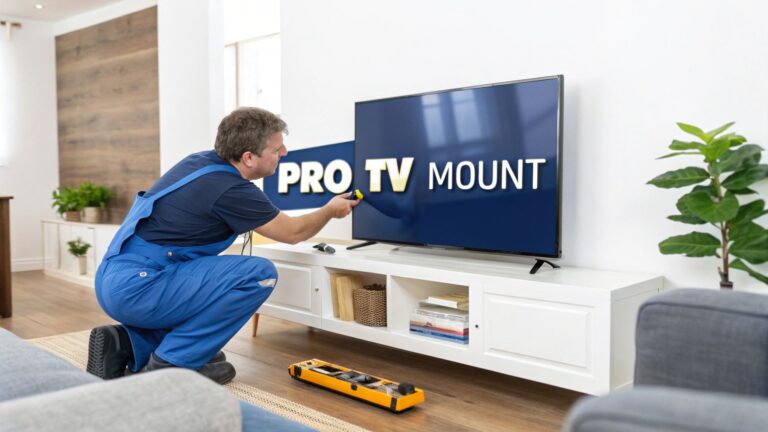
So, what’s the real cost to get a TV mounted on the wall? In short, you’re probably looking at a bill somewhere between $250 and $500 for a professional job here in Australia. The final figure really comes down to how big your telly is, the type of bracket you go for, and a few other little details we’ll get into.
How Much Does TV Wall Mounting Really Cost?
Right then, let’s get down to brass tacks. You’ve just unboxed a beautiful new TV, and the last thing you want is for it to sit on a clunky old cabinet, taking up space. You’re dreaming of that sleek, floating look, but what’s it actually going to set you back?
Imagine a guy like ‘Dave’ from the Central Coast. He just wanted his new 65-inch screen up in time for the footy finals, with no messy cables in sight. He wasn’t after anything too tricky—just a solid, professional job that looked schmick. For a standard installation like Dave’s, the cost is fairly predictable.
To give you a clearer picture, here’s a quick guide to what you can expect to pay for different setups.
Quick Guide to TV Mounting Costs in Australia
This table breaks down the estimated costs for different TV mounting options to give you a quick idea of the budget required.
| Mount Type | Estimated Total Cost (Including Labour) | Best For |
|---|---|---|
| Fixed Mount | $250 – $350 | Getting your TV flush against the wall for a clean, minimalist look in a fixed viewing position. |
| Tilting Mount | $300 – $450 | Reducing glare from windows or lights, as it allows you to angle the screen up or down. Great for bedrooms or mounting above a fireplace. |
| Full-Motion Mount | $400 – $500+ | Maximum flexibility. Perfect for open-plan living areas or tricky corners where you need to swing the TV out and angle it. |
As you can see, a simple fixed mount is your most budget-friendly option, while a full-motion bracket that lets you swing the screen around will cost a bit more.
Across Australia, the price for a professional job generally falls within that $250 to $500 range. This can shift depending on the bracket you choose, the size of your TV, what your walls are made of (plasterboard is different to brick!), and how complex the cable concealment is.
Getting your TV mounted is often just one piece of the puzzle when creating a smarter, more streamlined home. Many people start thinking about their home’s safety and connectivity at the same time. If that sounds like you, it might be worth checking out our guide on smart home security systems. It’s all about integrating your tech to make your home safer and easier to manage.
Cracking the Code on Your TV Mounting Quote
Ever wondered why your mate in Newcastle paid a flat $250 while your cousin down in Hornsby was quoted almost double for what looked like the same job? It’s a common story, and the answer, as they say, is always in the details.
The final price to get a TV mounted on the wall isn’t just one simple number; it’s a combination of a few key things that can really change the scope of the work.
Once you understand what goes into a professional’s quote, you can see exactly where your money is going. No nasty surprises, just a clear picture of why one job might be a bit more complex than another.
The Big Things That Shape the Price
Think of it like ordering a coffee. A standard long black is one price, but as soon as you add oat milk, a shot of vanilla, and an extra espresso, the cost starts to climb. TV mounting works on a similar principle. Here’s what any good tradie is looking at:
- What Your Wall is Made Of: Is it standard plasterboard or are you dealing with solid double brick? A plasterboard wall means we need to find the timber studs to get a secure fixing. Brick, on the other hand, requires heavy-duty masonry anchors and a bit more grunt work. The difference in tools, time, and technique all plays into the final price.
- The TV’s Size and Weight: A lightweight 42-inch TV is usually a straightforward one-person job. But an 85-inch monster that weighs a tonne? That’s definitely a two-person lift and needs a much beefier bracket to hold it safely, which adds to the labour costs.
- The Type of Bracket You Want: A simple fixed bracket that holds the TV flat against the wall is the quickest to install. A tilting mount adds a little more complexity, and a full-motion articulating bracket needs some serious precision to make sure it’s perfectly level and moves without a hitch.
- Hiding the Cables: This is often the biggest variable in the quote. Do you want that super clean, wireless look with all the cables hidden inside the wall? That takes a lot more time and skill than just tucking them into a plastic conduit that runs down the wall.
A professional quote isn’t just a number pulled from thin air. It’s a calculated breakdown of the labour, materials, and unique challenges of your space, all to ensure the job is done safely and looks fantastic.
Getting your TV mounted securely gives you great peace of mind, and while you’re upgrading your home tech, it’s a good time to think about overall security. You might find our guide on wireless home alarm systems helpful for protecting your whole setup.
Choosing the Right Bracket for Your Room
Picking a TV bracket isn’t just about sticking your telly to the wall; it’s the secret sauce for the perfect viewing experience. Think of it like choosing a car seat for a long road trip. You’ve got the standard seat, one that reclines a bit, and the fancy one that swivels around so you can chat with everyone. Each one has its place.
The Strong, Silent Type: Fixed Brackets
First up is the fixed bracket. This is the strong, silent type—no fuss, no movement. It sits your TV flush against the wall, giving you that super clean, picture-frame look. It’s the perfect choice for a dedicated media room or lounge where you know exactly where you’ll be sitting every time you watch the footy.
The main benefit here is its simplicity and sturdiness. Because there are no moving parts, it’s generally the most affordable option. The type of TV mount, including fixed mounts priced between $20 and $100, influences the total expense apart from installation labour. This makes it a great starting point for your budget. You can learn more about how installation costs are broken down to get a clearer picture.
The Glare Buster: Tilting Brackets
Next, we have the tilting bracket. This one is a smart choice if you’ve ever battled the afternoon sun glare during a crucial movie scene. It allows you to angle your screen down (or up), making it ideal for bedrooms where the TV might be mounted higher than your eye line, or even above a fireplace. It’s the simple recliner for your TV, offering that bit of extra comfort and practicality.
This infographic breaks down the choice between tackling the job yourself or calling in the pros, highlighting the time and cost involved.
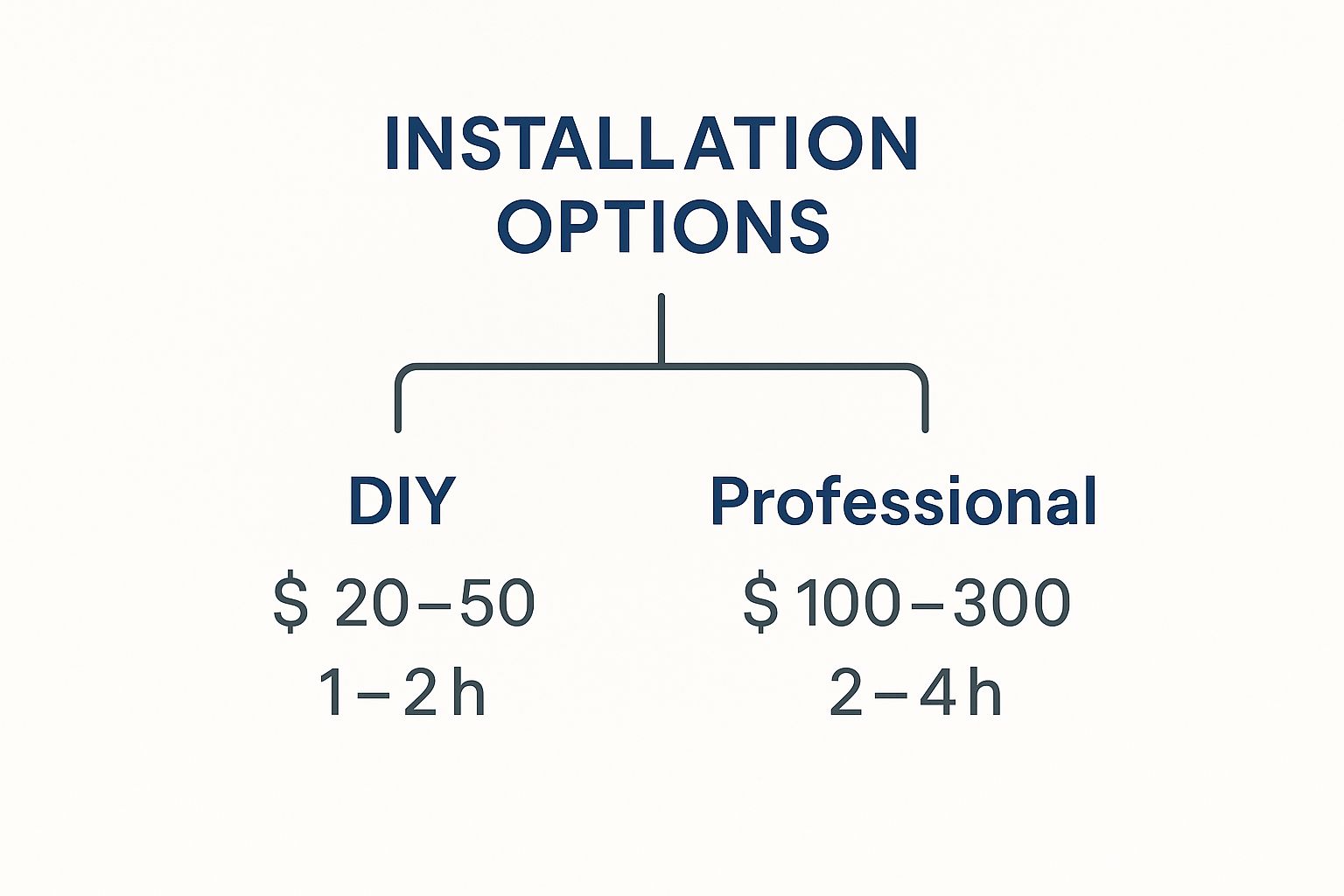
As the diagram shows, a professional installation costs more upfront but saves you time and potential headaches down the track.
The All-Rounder: Full-Motion Brackets
Finally, there’s the full-motion bracket—the all-singing, all-dancing option. This is the swivel seat of the TV world. It lets you pull the TV out from the wall, tilt it, and angle it left or right. It’s the ultimate solution for open-plan living areas or awkward corners, ensuring you get the perfect view from the kitchen, the dining table, or the couch.
The DIY Dream vs. a Costly Disaster
We all love a bit of DIY—a Saturday morning at Bunnings is practically a national sport. But when it comes to your brand-new, multi-thousand-dollar TV, is it really the time to just ‘give it a crack’? It’s tempting to think you’ll save a few bucks, but the risks can quickly outweigh the rewards.
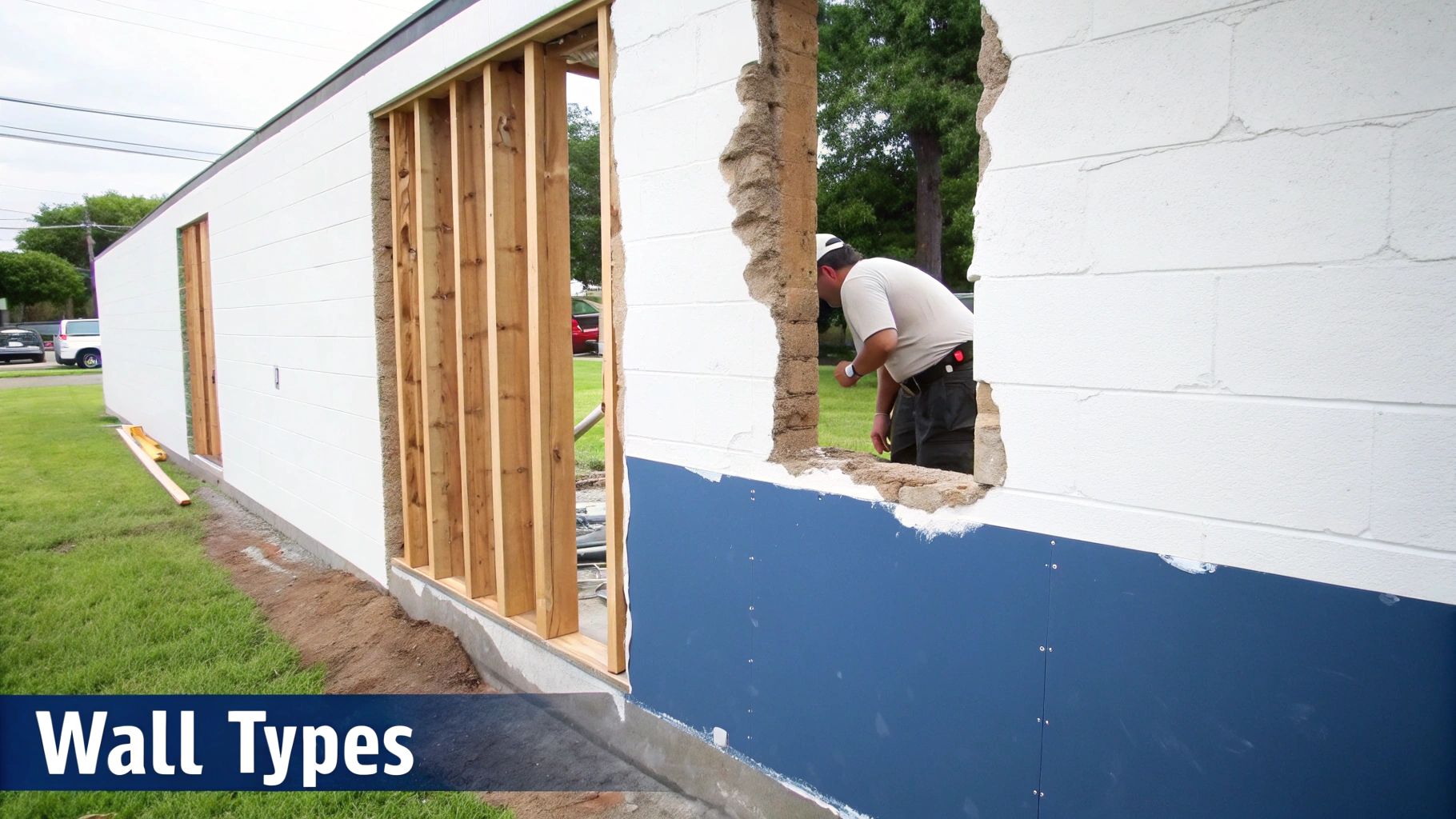
Let’s talk about Sharon from Chatswood. Full of confidence, she bought a stud finder and a bracket, ready to create that floating TV look herself. An hour later, she had a TV on the floor, a massive hole in her plasterboard, and a very close call with an electrical wire. Her attempt to save $300 ended up costing over a grand in wall repairs, not to mention the potential for a new TV.
Weighing Your Options
Doing it yourself might seem cheaper on the surface, but the real cost isn’t just about buying a bracket. You need the right tools and, more importantly, the right know-how for your specific walls.
- DIY Risks: It’s frighteningly easy to hit electrical wires or plumbing pipes hiding in the wall cavity. Miss the studs entirely, and you’re just hanging a heavy, expensive screen on a weak bit of plasterboard. One wrong move and the whole thing comes crashing down.
- Professional Peace of Mind: A pro turns up with experience, the correct tools for every wall type, and, crucially, insurance. They know exactly how to locate studs, conceal cables neatly, and make sure your telly is perfectly level and secure for good.
Ultimately, getting a professional in is about more than just convenience; it’s about protecting your home and your new gear from becoming a cautionary tale. Just like knowing how to properly install security cameras requires specific expertise, so does mounting a heavy screen.
Don’t let your DIY dream turn into a costly disaster.
Budgeting for Those Sneaky Extra Costs
Alright, so you’ve worked out the basic cost to get your TV on the wall. You’ve factored in the bracket and the labour for the install. But don’t close the wallet just yet.
The difference between a “good enough” job and a truly schmick, professional-looking setup often comes down to the extras. These are the little details that can easily catch you by surprise on the final invoice if you haven’t planned for them.
Think of it like buying a new suit. The jacket and pants are the main cost, sure, but it’s the perfectly matched tie, the pocket square, and the polished shoes that pull the whole look together. It’s the exact same principle for your TV setup.
What Are These Sneaky Extras?
The number one add-on people ask for is professional cable concealment. This is what makes all those ugly cords vanish into the wall, giving you that clean, floating screen look. No more black plastic spaghetti dangling down to the power point. For this bit of magic, you can expect to add anywhere from $100 to $200 to the bill, depending on what your walls are made of.
Then you’ve got a few other common requests:
- New Power Point: If the idea of an extension cord running up your wall makes you cringe, you’ll want this. A licensed sparky can install a brand-new power point right behind the TV for a completely seamless finish. This will usually set you back $150 to $250.
- Soundbar Mounting: Got a sleek soundbar to boost your audio? Getting it mounted perfectly level just below the TV will tack on about $80 to $120.
- Device Setup: Need help getting your new Apple TV, PlayStation, and home network all talking to each other and working flawlessly? This all adds to the installer’s time on the job.
While these extras do increase the total cost, they’re often worth every cent. They deliver that clean, professional finish and make sure your entire entertainment system is set up properly and is dead simple to use.
A tidy setup is one thing, but making sure your network is locked down is just as important. You can find out more by reading our guide on how to secure your WiFi network.
Finding a Top-Notch Tradie in Your Area
Let’s be honest, finding a good tradie can sometimes feel like searching for a needle in a haystack. This is especially true when you’re about to hand over your pricey new TV.
Whether you’re on the Central Coast, down in Sydney, or up in Newcastle, knowing who to call makes all the difference. You want someone who’ll get it right the first time, not a cowboy who leaves you with a crooked screen and a bunch of headaches.
The best installers are more than just handy. They’re specialists. They know the ins and outs of different wall types and exactly how to secure a heavy screen so it stays put. This kind of expertise often comes with other technical skills, like the detailed work needed for security and CCTV installations.
What to Look For in a Pro
Before you even get to the cost of mounting a TV on the wall, there are a few must-haves you should look for. Any true professional will be happy to tick these boxes for you.
- Proper Licensing: Check that they hold the right licenses for the job, particularly if it involves any electrical work like adding a new power point behind the TV. This isn’t just a suggestion; it’s essential for safety and compliance.
- Full Insurance: Always ask to see their public liability insurance. This is your safety net, protecting you and your property if something unexpected goes wrong during the job.
- A Solid Reputation: Do a bit of digging. Look up their online reviews, check out photos of their past work, and ask around for local recommendations. A great tradie always leaves a trail of happy customers.
A quote that seems too good to be true usually is. Rock-bottom prices can be a major red flag, often pointing to an uninsured operator, a lack of experience, or someone who’s about to cut corners.
It’s always a good idea to get a couple of different quotes before settling on someone. This gives you a better feel for the fair market rate and lets you compare more than just the price—you can also gauge the professionalism and detail each installer offers.
Ask them exactly what’s included in the price, if they guarantee their work, and how they plan to approach your specific installation. A few questions upfront can save you a world of pain down the track.
Got Questions About TV Mounting? We’ve Got Answers
You’ve got the perfect spot picked out, the new TV is still in its box, and now the questions are starting to pop up. Don’t worry, that’s completely normal. We get asked all the time about the little details that can make or break a TV mounting job.
Let’s walk through some of the most common queries we hear from homeowners, so you can feel confident you’re making the right choices for your space.
What’s the Best Height to Mount a TV?
This is probably the #1 question we get, and the answer isn’t just a number. The goal is comfort. You want the centre of your screen to be right at eye level when you’re sitting in your favourite spot on the couch.
A good rule of thumb is to aim for about 106 cm (42 inches) from the floor to the middle of the TV. But this is just a starting point! If you have a massive reclining armchair or prefer sitting on floor cushions, you’ll need to adjust.
The best way to find your perfect height? Sit where you’ll be watching, look straight ahead at the wall, and have someone mark that spot. That’s your eye-level sweet spot – the centre of your TV should go right there.
Will My Wall Actually Hold a Heavy TV?
It’s a valid concern – nobody wants their brand-new screen taking a nosedive. The good news is, most modern homes are built to handle it, provided you do it right.
- Plasterboard (Gyprock): This is the most common interior wall type in Australian homes. On its own, it’s not strong enough. The key is to locate the solid timber or metal studs behind the plasterboard. Your TV mount must be securely bolted into these studs.
- Brick or Concrete: These walls are rock-solid and more than capable of holding even the heaviest TVs. You’ll just need the right hardware, like masonry anchors (often called Dynabolts), to get a secure grip.
If you’re not sure what kind of walls you have or you can’t find the studs, it’s always best to call in a professional. They have the tools and experience to assess the situation and ensure a safe installation. It’s a small price to pay for peace of mind.
Can You Mount a TV Above a Fireplace?
You absolutely can, and it’s a very popular choice for a clean, centred look. However, there are a couple of important things to think about before you start drilling.
First, heat. Modern fireplaces are generally well-insulated, but you still want to make sure the heat rising from the fire won’t cook your TV’s sensitive electronics. Check your fireplace’s manual for clearance recommendations. A good mantelpiece can also do wonders for deflecting heat away from the screen.
Second, viewing angle. Mounting a TV above a fireplace often places it higher than the ideal eye-level position we talked about earlier. This can lead to neck strain during a long movie night. To solve this, a tilting or full-motion mount is a fantastic idea. It lets you angle the screen downwards for a much more comfortable viewing experience.
How Do I Hide All Those Ugly Cables?
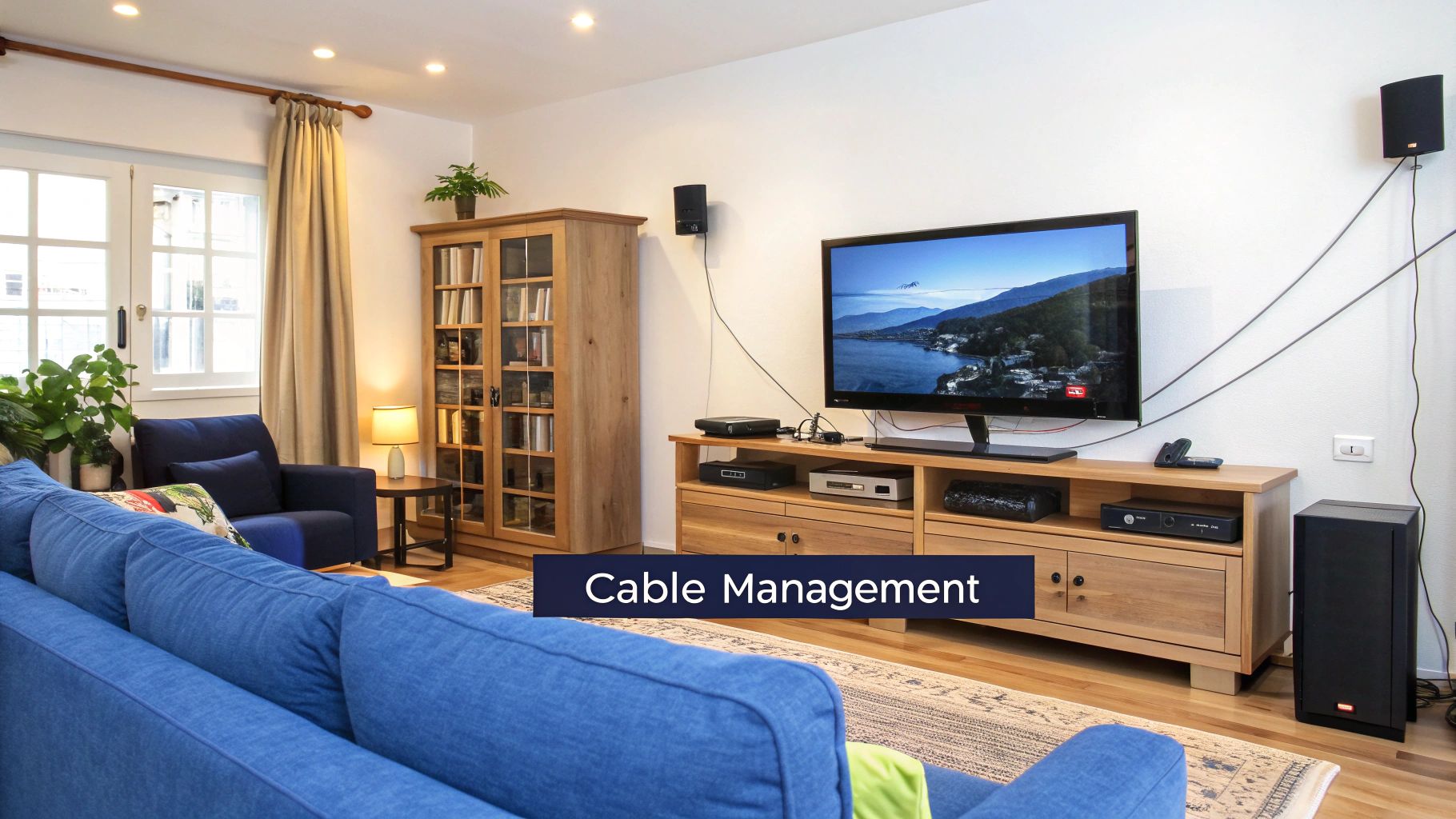
Ah, the classic cable conundrum! A beautifully mounted TV can be instantly ruined by a messy tangle of HDMI, power, and speaker wires dangling down the wall. Thankfully, you have options for achieving that clean, “floating TV” look.
The most professional solution is to have the cables run inside the wall cavity. This involves cutting a small hole behind the TV and another one down near your power point and other devices (like a Foxtel box or gaming console). Specialised wall plates are used to make the entry and exit points look neat and tidy.
Pro Tip: Running cables inside the wall is a job best left to a qualified installer or sparky, especially for the power cord. They’ll ensure it’s done safely and up to code.
If you’re renting or just don’t want to cut into your walls, on-wall cable concealers are a great alternative. These are plastic channels that stick to your wall, hiding the cables inside. You can even paint them to match your wall colour, making them surprisingly discreet.