Ever left the house in a mad rush and had that sinking feeling halfway down the M1, ‘Did I lock the back door? Is everything okay?’ It’s a classic Aussie worry, right up there with forgetting the esky for a barbie. For many of us, that nagging doubt can be a real drag on an otherwise perfect day.
Keeping Your Castle Safe Without Lifting a Finger
Picture this: a typical family on the Central Coast, let's call them the Wilsons. Between the school run, juggling jobs in Newcastle, and weekend sport, their days are absolutely chockers. The last thing they need is that constant, low-level stress about whether their home is secure while they’re out and about. It’s that little voice in the back of their mind, especially when they’re away on a well-deserved holiday.
This is where automatic security systems change the game entirely. They're not some ridiculously complex bit of tech that only a secret agent could figure out. Think of it more like a clever, reliable mate who’s always looking out for your home and family, 24/7, without ever needing a break.
So What Exactly Are They?
At its core, an automatic security system is a network of connected devices—like cameras, sensors, and locks—that work together to protect your property without you having to manually do anything. They’re the digital watchdog that never sleeps, offering a new level of peace of mind.
Instead of just reacting to a break-in, these systems are proactive. They can:
- Send an instant alert to your phone if a door is opened unexpectedly.
- Automatically flick on lights when motion is detected outside, making any would-be troublemakers think twice.
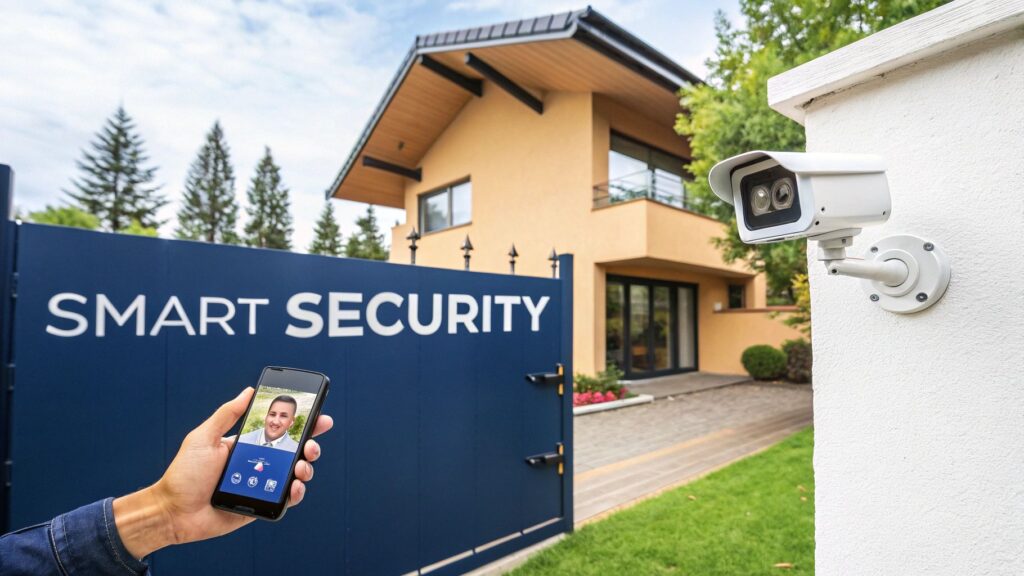
- Let you see who’s at your front door and even buzz a tradie in while you're still at the office.
The real magic of automatic security systems isn't just about catching baddies; it's about reclaiming your mental energy. It’s the freedom of knowing your place is secure, whether you're stuck in traffic, at work, or enjoying a trip up the coast.
More Than Just Alarms and Cameras
Modern systems go far beyond a screeching alarm; they integrate seamlessly into your daily life. For instance, you could have your system automatically arm itself every night at 11 PM or disarm when it detects your phone is back on the property.
Many of these setups can even run on their own power sources, ensuring they keep working during a blackout. To understand how this works for specific components, you can learn more about the benefits of a solar-powered security camera system in our detailed guide. It's this intelligent automation that transforms a bunch of security gadgets into a truly smart and responsive shield for your home or business.
How These Clever Systems Actually Work
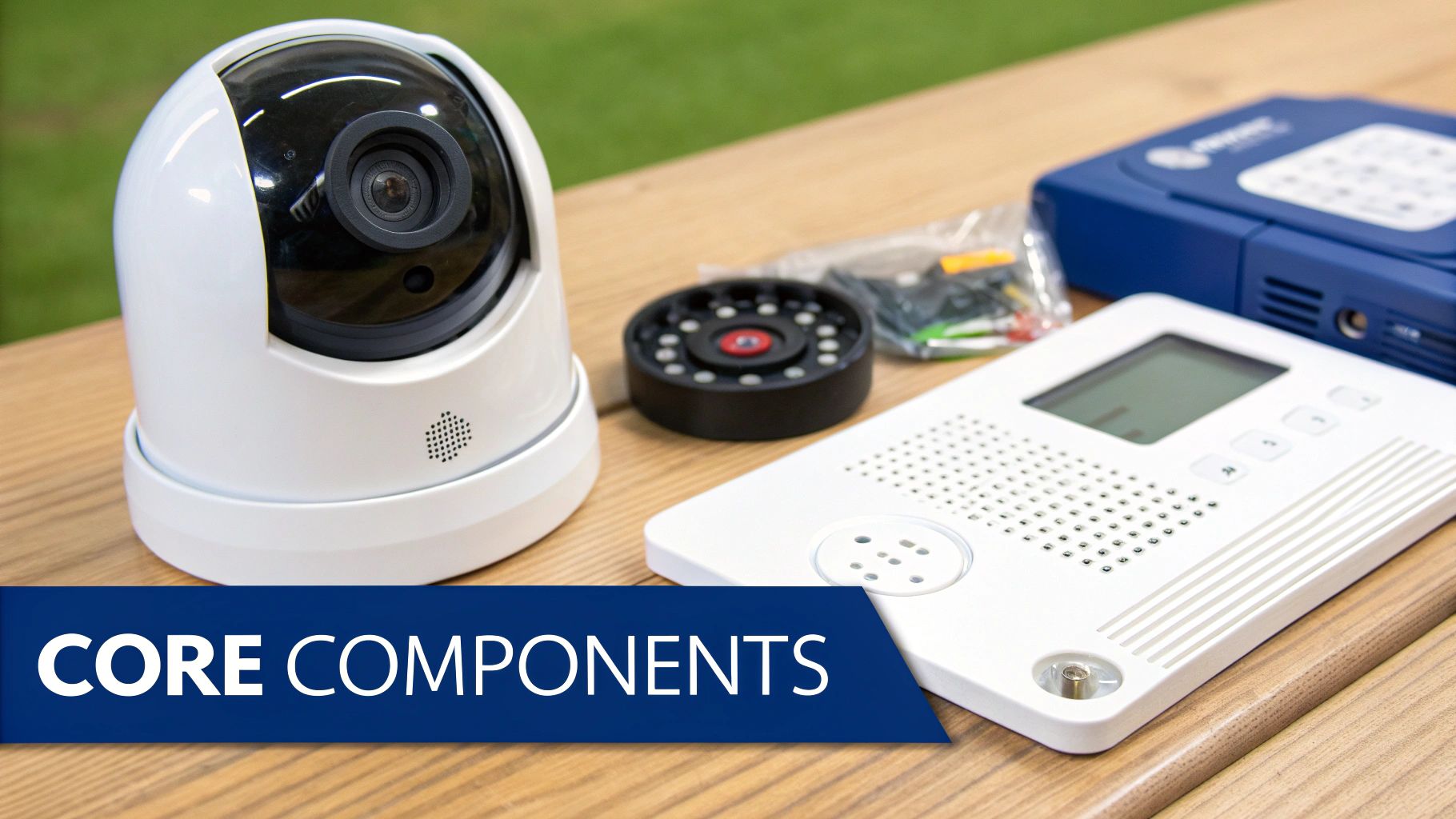
So, how does all this security wizardry actually happen? It’s far less complicated than you might think. The best way to get your head around an automatic security system is to think of it like your body's nervous system—a brilliant, coordinated team that’s always on the job.
You’ve got sensors (your eyes and ears), a central brain that processes everything, and automated responses (like pulling your hand away from a hot barbie plate without even thinking). Your security system works in pretty much the same way. It's not about being a tech guru; it's about simple parts working together for powerful protection.
This coordinated approach is fast becoming the standard for homes and businesses across the country. In fact, the Australian security market is booming, valued at around AUD 4.08 billion in 2024 and projected to nearly double to AUD 8.33 billion by 2034. It's clear that Aussies are taking their security seriously.
The Eyes and Ears of Your System
First up, you have the sensors. Think of these as the "eyes and ears" scattered around your property, constantly keeping watch. They are your frontline troops, gathering intel from the environment.
These sensors come in a few key forms:
- Door and Window Sensors: These are simple magnetic contacts that know when a door or window is opened. It's the digital equivalent of hearing a gate creak open when it shouldn't.
- Motion Detectors: Using infrared tech, these gadgets pick up movement and body heat. They’re fantastic for covering larger areas like a living room or a backyard at your Central Coast home.
- Security Cameras: These are your high-tech eyes, giving you a live view of what’s happening. Modern cameras can even tell the difference between a person, a car, and the neighbour's cat wandering through.
Essentially, these bits and pieces act as your system's nerve endings, firing off immediate signals the moment something is detected.
The Central Brain or Smart Hub
Every signal from those sensors travels to one central place: the "brain" of the operation. This is usually a control panel on a wall or a small, discreet smart hub plugged in somewhere safe.
This brain is where the real intelligence lives. It receives all the incoming data—a tripped door sensor, motion in the hallway, an unfamiliar face on camera—and makes a decision in a split second. Think of it as mission control for your Newcastle business or Sydney home.
It’s this central hub that turns a collection of individual gadgets into a truly automatic security system. It doesn’t just see an open door; it understands the context and knows exactly what to do next based on the rules you’ve set.
The Automatic Actions and Responses
Once the brain decides there’s a potential issue, it triggers the "actions." This is the "pulling your hand away from the heat" part of our analogy. It's the swift, automated response designed to protect your property and get your attention immediately.
These actions are the muscle of your security system. They can include:
- Sounding a loud alarm to scare off intruders and alert the neighbours.
- Flicking on all the lights inside and out to create the impression someone is home.
- Sending an instant notification straight to your phone, often with a video clip.
- Automatically locking all smart doors to secure the premises.
- Notifying a professional monitoring centre to dispatch help if needed.
All these parts communicate seamlessly, usually wirelessly, creating an invisible, intelligent shield around your property. It’s worth understanding the benefits of a wireless setup, and you can learn more about how wireless home alarm systems offer great flexibility and easy installation.
The Core Crew: What's in an Automatic Security System?
Alright, let's pull back the curtain and meet the team that makes your automatic security system tick. Every good setup has its star players, each with a specific job to do. Getting to know the core crew helps you figure out what you actually need for your place, whether it’s a terrace in Sydney or a workshop in Newcastle, without getting bogged down in tech-speak.
Think of it like putting together a footy team. You wouldn’t send a team out with only forwards, right? You need defenders, a solid midfield, and someone who can score. A security system is the same; it's about having the right components working together to cover all the angles.
The Eyes: High-Definition CCTV Cameras
First up are the eyes of your operation: CCTV cameras. We’re not talking about those grainy, blurry images you see on the news where you can't tell if it’s a person or a particularly tall wombat. Modern cameras are seriously sharp, often in high-definition or even 4K. They're capable of spotting a possum pinching your petunias from 20 metres away, even at night.
These cameras are your proactive lookouts. They can:
- Deter intruders: Just the sight of a camera can make a potential thief think twice and move on to an easier target.
- Provide live feeds: You can check in on your property from your phone anytime, anywhere. See if that package arrived or find out what that strange noise in the backyard was.
- Record evidence: If something does happen, you’ll have clear, usable footage to provide to the police, which can be invaluable.
Getting the right cameras and placing them correctly is a bit of an art. For a deeper dive into what to look for, our guide on choosing a house CCTV system can give you some great pointers.
The Voice: Smart Alarm Systems
Next, you need a voice—something loud enough to wake the neighbours and send any uninvited guests packing. That’s the job of a smart alarm system. But unlike the old-school alarms that would go off if a strong gust of wind blew, today's systems are much cleverer.
They use a combination of sensors—on doors, windows, and inside rooms—to detect genuine threats. The "smart" part means they can distinguish between your cat strolling through the living room and a person trying to force a window open. This intelligence drastically cuts down on those annoying false alarms that have you apologising to the whole street at 2 AM.
This is how a professional setup usually unfolds, from the first chat to flicking the 'on' switch.
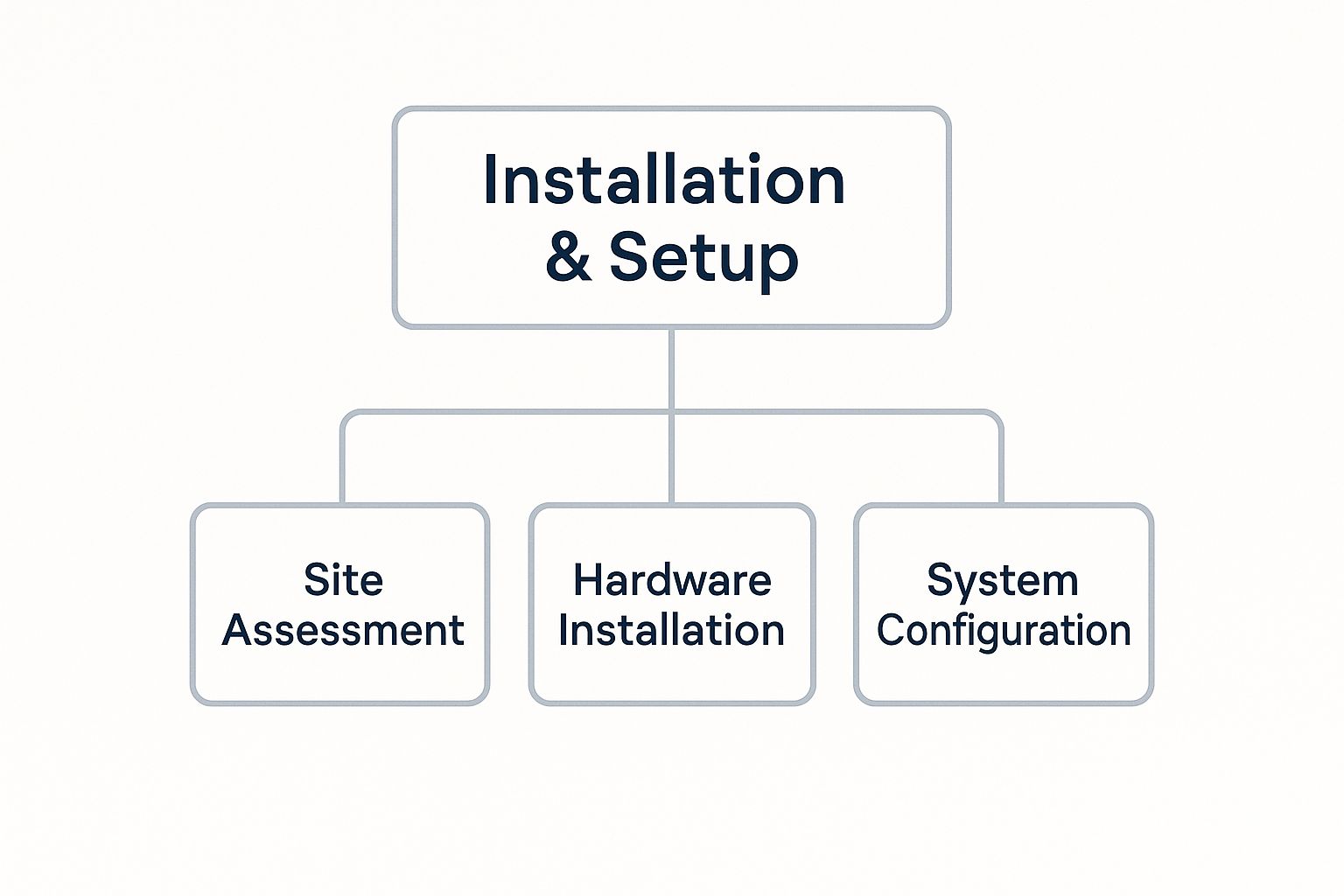
It’s clear that a successful system isn't just about plugging things in. It all starts with a proper assessment to make sure every component is in the right spot to do its job properly.
The Gatekeeper: Automated Access Control
Finally, let's talk about controlling who gets in and out. Automated access control is the modern-day gatekeeper, and it's much more than just a lock and key. This is where your system gets really convenient for you, and incredibly tough for anyone who shouldn't be there.
Just think about these scenarios:
- Smart Locks: Let a tradie in while you're at work, right from your phone. You can even create temporary access codes that expire after they're done.
- Keyless Entry: No more fumbling for keys in the rain. Use a PIN code, a fingerprint, or even your smartphone to unlock your door.
- Automated Gates: Imagine your front gate smoothly opening as you pull into the driveway after a long day battling traffic on the M1. It’s a touch of luxury that also adds a serious layer of security.
These three components—cameras, alarms, and access control—form the holy trinity of a robust automatic security system. Each one is strong on its own, but when they work together, they create a powerful, coordinated defence for your property.
Here's a quick look at how these core components stack up against each other, which can help you decide where to focus your budget.
Core Components of Automatic Security Systems Compared
| Component | What It Does | Best For | Typical Cost Range (AUD) |
|---|---|---|---|
| HD CCTV Cameras | Visually monitors and records activity around your property. | Homeowners and businesses wanting visual deterrence and evidence collection. | $500 – $3,000+ |
| Smart Alarm Systems | Detects unauthorised entry and triggers a loud audible alarm and notifications. | Essential baseline security for any property to scare off intruders. | $800 – $2,500+ |
| Access Control | Manages entry to the property with smart locks, keypads, or automated gates. | Those seeking convenience, keyless living, and control over who enters and when. | $400 – $5,000+ |
Choosing the right mix depends entirely on your needs. A small retail shop in Newcastle might prioritise cameras and an alarm, while a family home on the Central Coast might get the most value from smart locks and an automated gate. The key is to build a team that works for you.
The Real-World Benefits Beyond Just Security
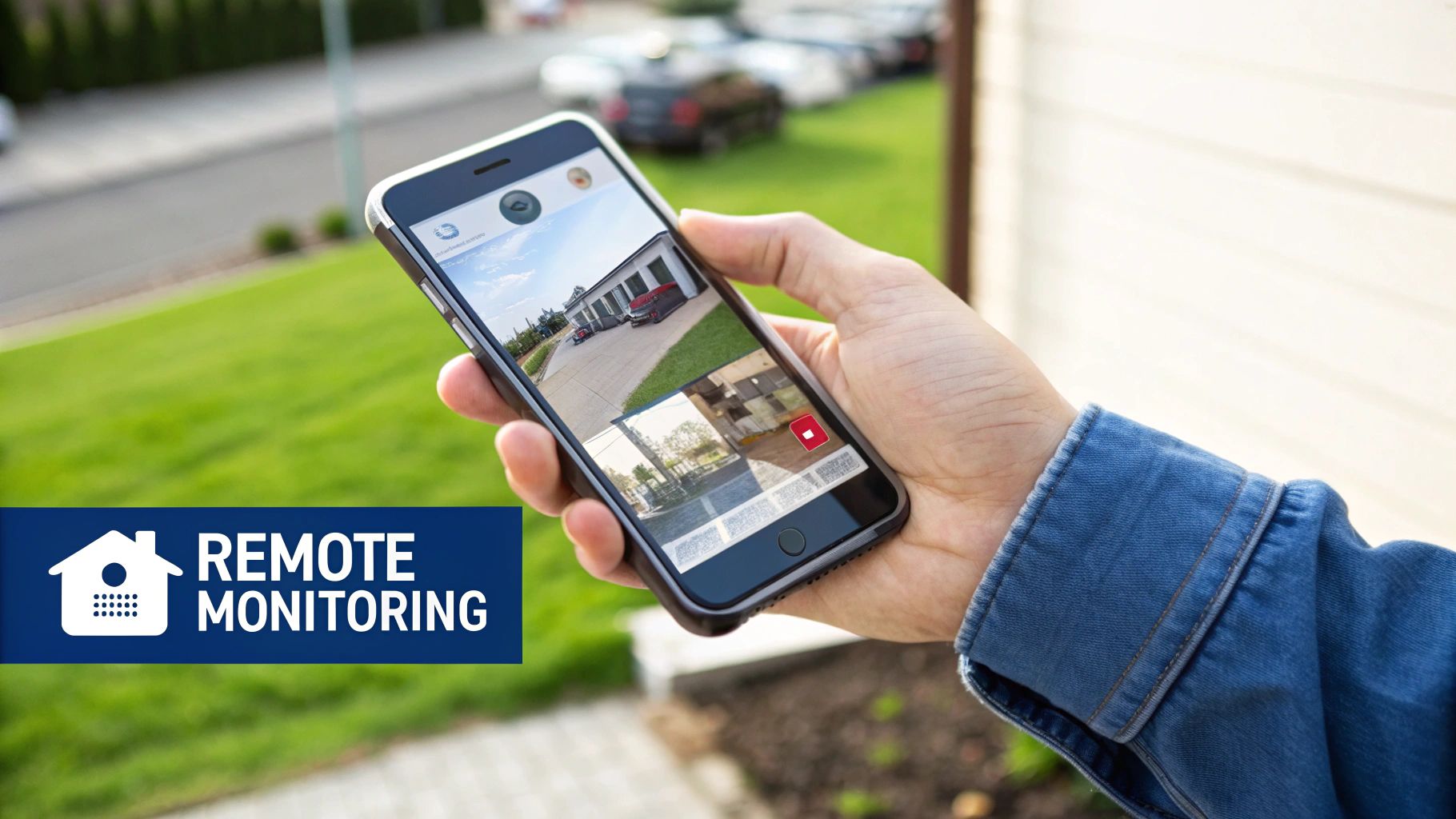
Look, we all know that an automatic security system is brilliant at stopping the baddies. That's its main gig, and it does it well. But if you think that's where the story ends, you're missing out on some of the best perks. The real beauty of these systems is how they slot into your everyday life, making things easier, smarter, and even cheaper.
Let’s be honest, life is hectic enough. Imagine you’re at work in Sydney, and a tradie calls to say they've arrived early at your place on the Central Coast. Instead of dropping everything to battle the M1 traffic, you just tap a button on your phone. The smart lock on your front door clicks open, and you can even watch on camera to make sure they're the right person.
That’s not just security; that’s pure, unadulterated convenience.
More Than Just Peace of Mind
The daily benefits of an automatic security system are all about streamlining the little things that add up. It’s about getting back moments in your day.
Here’s what that looks like in the real world:
- Package Protection: Get an instant notification the second a courier drops a package at your door. You can even have a quick chat with them through your video doorbell to give instructions.
- Checking In: Wondering if the kids got home from school okay? A quick peek at your camera feed gives you immediate reassurance, no texting required.
- Automated Routines: Set your system to automatically arm itself, lock the doors, and switch off the lights every night. It’s one less thing to remember before you hit the hay.
The focus is shifting from just reacting to problems to proactively making life simpler. This shift is a massive driver behind the growth of the security automation market in Australia, which is set for huge expansion. It's forecasted to grow by 13.8% each year between 2025 and 2030, showing just how much Aussies value these integrated solutions.
Hitting the Hip Pocket Savings
Beyond the daily convenience, these systems can actually save you money. It might feel like a big initial outlay, but the long-term financial benefits can be pretty significant.
Your insurance company, for instance, loves to see you taking proactive steps to protect your property. Many insurers offer reduced premiums for homes and businesses with professionally installed and monitored security systems. A quick call to your provider could reveal a decent discount, helping the system pay for itself over time.
But the savings don't stop there. Modern automatic security systems are the heart of a smart home or business, integrating with other devices to cut down on your utility bills.
Think about it: your system knows when you leave because you've armed it. It can then automatically tell your smart thermostat to lower the heating or cooling and instruct your smart lights to turn off. It's a simple, set-and-forget way to ensure you’re not wasting a cent on energy when no one is around.
For a business in a Newcastle industrial park, this operational efficiency is a game-changer, reducing overheads month after month. It's not just about protecting your assets; it's about running a smarter, leaner operation. For homeowners, choosing the best security cameras for your home is the first step towards this more efficient lifestyle.
Choosing the Right Setup for Your Place
Not all homes or businesses are the same, so why should your security be a one-size-fits-all job? A terrace house in Newtown has vastly different needs to a sprawling property in the Hunter Valley. Likewise, a cafe in Gosford requires a different setup than a warehouse in Newcastle.
This is your practical guide to choosing the right automatic security systems for your unique spot.
Figuring this out isn't about becoming a security guru overnight. It's about asking a few straightforward questions to narrow down what you actually need, saving you from paying for bells and whistles you’ll never use. Having a clear idea of your goals will empower you to have a confident chat with a security expert, ensuring you get a solution that provides genuine peace of mind.
What Are You Trying to Protect?
First things first, what’s the main goal?
Are you a homeowner who's mostly worried about what goes bump in the night and keeping an eye on the kids and pets? Or are you a business owner needing to protect valuable stock, manage staff access, and monitor the premises after hours?
Your answer here dramatically changes the kind of system you'll need.
- For Homeowners: Your focus might be on securing entry points like doors and windows, using outdoor surveillance as a deterrent, and maybe adding a video doorbell to handle deliveries. Convenience features like smart locks are also a huge plus.
- For Businesses: You'll likely need a more robust setup. This could mean comprehensive indoor and outdoor camera coverage, sophisticated access control to track who enters secure areas, and back-to-base alarm monitoring for an immediate professional response.
This initial question is your starting line. It helps define the scale and complexity of the job before you even think about specific products.
DIY Kits vs Professional Installation
One of the biggest decisions you'll make is whether to grab an off-the-shelf DIY kit or bring in the professionals. Both have their place, but they offer very different experiences and outcomes.
A DIY kit is tempting. You can pick one up on a Saturday arvo, and they're often cheaper upfront. They're great for smaller homes or renters who need a simple, non-permanent solution. The catch? You're responsible for everything—placement, setup, and troubleshooting. If a camera has a blind spot or a sensor isn't quite right, that's on you to fix.
Professional installation, on the other hand, is about getting it right the first time. An expert will assess your property's unique vulnerabilities, recommend the best gear, and ensure every component is installed for optimal performance and reliability. It costs more initially, but you’re paying for expertise and long-term peace of mind.
For complex properties or businesses with critical assets, professional installation is almost always the smarter investment. This is especially true for critical infrastructure, where the stakes are incredibly high. For instance, Australia’s data centre physical security market, valued at over $78 million AUD in 2024, is projected to soar to over $206 million AUD by 2030, showing just how vital expert-level security is for protecting essential digital assets. You can discover more insights about data centre security trends on mordorintelligence.com.
Monitoring Your System
The final piece of the puzzle is deciding who keeps an eye on things. Do you want to self-monitor, or do you prefer the safety net of professional back-to-base monitoring?
Self-monitoring means alerts from your system go directly to your smartphone. You see the notification, check the camera feed, and decide what to do. It’s a cost-effective option with no ongoing fees and is perfect if you’re confident you can respond quickly.
Professional monitoring means a dedicated team of security pros is watching over your system 24/7. If an alarm is triggered, they’ll attempt to contact you and, if necessary, dispatch emergency services on your behalf. It comes with a monthly fee but offers an unmatched level of protection, especially when you're asleep, on holiday, or can't get to your phone.
Ultimately, choosing the right setup comes down to your property, your budget, and your personal comfort level. By thinking through these key areas, you'll be well-equipped to select an automatic security system that's a perfect fit. For a deeper look into creating a connected and secure home, check out our guide on smart home security systems.
Your Automatic Security System Questions Answered
Still got a few questions rattling around in your head? Don't worry, you're not the only one. When people around Sydney, the Central Coast, and Newcastle start looking into automatic security systems, the same queries tend to pop up.
We've pulled together the most common ones and given them straight, no-fluff answers to help you figure out what’s right for your home or business.
How Much Does a Decent Automatic Security System Cost in Australia?
Honestly, that’s a bit like asking, ‘how much for a car?’—it really depends on what you need! For a basic, off-the-shelf DIY kit with a couple of cameras and sensors, you might be looking at anywhere from $500 to $2,000. It's a great starting point for smaller homes.
But if you’re after a fully integrated, professionally installed system for a bigger home or a business, the price tag naturally climbs. When you start adding things like automated gates, multiple 4K cameras, smart locks, and 24/7 monitoring, the cost can easily range from $3,000 to $10,000 or even more.
The main things that nudge the price up or down are:
- The size of your property: More ground to cover simply means more gear is needed.
- The quality of the components: A 4K camera with fancy AI detection costs more than a standard HD one.
- Professional monitoring: Choosing to have your system watched around the clock usually involves an ongoing monthly fee.
Our best advice? Get a couple of quotes tailored specifically to your place. It’s the only way to get a true picture of the investment required.
Can I Install One of These Systems Myself?
You absolutely can! There are heaps of fantastic DIY systems on the market from big-name brands, all designed for an easy weekend installation. They're often wireless and walk you through the setup step-by-step with an app.
This is a cracking option if you're on a budget and feel comfortable with a bit of tech. You can have a solid system up and running in an afternoon.
However, when you get into more complex automatic security systems—especially those that need to be hardwired or are protecting a business with valuable assets—calling in a licensed professional is the way to go. They’ll make sure everything is positioned for the best coverage, configured correctly, and meets all the relevant Australian standards, which can be a big deal for insurance purposes.
A professional installer doesn't just hang cameras; they see your property through the eyes of an intruder. Their experience in spotting blind spots and vulnerabilities is something you just can't get from a user manual.
What Happens if the Power or My Internet Goes Out?
That’s a classic question, and a really important one. Imagine a big storm rolls through the Central Coast and knocks out the power. The last thing you want is for your security to go down with it.
Thankfully, most modern, professionally installed systems are designed with backups for this exact situation.
They typically have a battery backup that keeps the main control panel and key sensors running for several hours during a power outage. And for internet dropouts, many systems also come with a cellular backup (using the same 4G network as your phone). This means the system can still send alerts to your phone or communicate with the monitoring centre even if your Wi-Fi is on the blink.
When you're shopping for a system, always ask about its power and communication backups. It’s a non-negotiable feature for truly reliable security.
Do I Need Professional Monitoring or Can I Just Watch It Myself?
This one really comes down to personal preference and how much peace of mind you’re after. Both options have their pros and cons.
Self-monitoring is exactly what it sounds like—you get alerts sent straight to your phone. You’re the one responsible for checking the camera feeds and calling the police if you see something suss. It’s the cheaper option because there are no ongoing monthly fees, and for many people, it works just fine.
Professional monitoring, often called 'back-to-base' monitoring, is where a dedicated security company watches over your system 24/7. If an alarm goes off, their team follows a set procedure—usually trying to call you first, and if they can't reach you or you confirm there's an emergency, they will dispatch the authorities.
It costs a monthly fee, typically around $30-$60, but it provides a serious extra layer of protection. It’s especially valuable when you’re on holiday, asleep, or just in a meeting where you can’t get to your phone. It’s like having a security guard on call, all day, every day.
Ready to find the perfect automatic security system for your Central Coast, Sydney, or Newcastle property? The team at Advanced Comtech has the expertise to design and install a solution that’s just right for you. Get in touch today for a stress-free consultation and see how we can keep you smart, secure, and connected.