Righto, let's get straight to the point: what's this actually going to set me back? When you start looking at home security companies in Australia, the numbers can feel like they're all over the shop. But it really boils down to two main paths.
For a basic DIY setup you can knock over on a Saturday arvo, you’re looking at an upfront cost of around $250 to $800. If you want a pro to keep an eye on it for you, that's usually an extra $15 to $30 a month. If you'd rather have the experts handle everything, a fully installed system will typically cost between $800 and $2,500+ for the gear and labour. Professional monitoring for these top-shelf systems usually runs from $30 to $60 per month.
Your Guide to Home Security Costs
Trying to nail down the exact cost of a home security system can feel a bit like herding cats at a Bulldogs game. There are so many moving parts, and the final price tag really depends on your specific situation. Don't stress, though—it’s not as complicated as it seems once you break it down.
Think of it like buying a car. You wouldn't expect a little city runabout to cost the same as a kitted-out LandCruiser ready for a trip to the Cape, right? The same logic applies here. A small apartment in Newcastle might only need a couple of sensors and a camera, keeping costs down. A big house on an acreage block out near Gosford with multiple doors, windows, and a massive backyard will need a lot more gear, which naturally pushes the price up.
So, What Are You Actually Paying For?
The total price you see isn't just one magic number. It's made up of a few different bits and pieces, and understanding them is the key to comparing quotes properly.
You're generally paying for a mix of these three things:
- The Equipment: This is all the physical hardware—the brains of the system (the control panel), the eyes (cameras), and the ears (sensors). This usually makes up the bulk of your initial payment.
- The Installation: If you're not the DIY type who loves a weekend Bunnings trip, you'll pay a one-off fee to have a professional come out and get everything set up perfectly.
- The Monitoring: This is your ongoing subscription. It's a monthly fee that pays for a team of professionals to watch over your system 24/7. If an alarm goes off, they're the ones who check in and call the cops or firies if needed.
The real secret to getting the best value is figuring out the trade-off between upfront and ongoing costs. Do you want to pay more now to own the equipment and have a lower monthly bill, or would you prefer a smaller initial outlay in exchange for a slightly higher subscription? There’s no right or wrong answer—it’s all about what works for your budget.
To give you a clearer picture at a glance, here’s a quick breakdown of what you can expect.
Quick Guide to Home Security Costs in Australia
This table gives you a snapshot of typical upfront and ongoing costs for different types of home security systems.
| System Type | Typical Upfront Cost (AUD) | Typical Monthly Monitoring Fee (AUD) |
|---|---|---|
| DIY System (Self-Monitored) | $250 – $800 | $0 (or optional cloud storage fees) |
| DIY System (Pro-Monitored) | $250 – $800 | $15 – $30 |
| Pro-Installed System | $800 – $2,500+ | $30 – $60+ |
Remember, these are just ballpark figures. The final cost will depend on the brand you choose, how many sensors and cameras you need, and any extra features you add on.
Later on, we’ll get into the nitty-gritty of how specific tech choices and going DIY versus pro really impacts these numbers. For now, you’ve got a solid foundation for understanding what goes into the cost of a home security system.
The Upfront Price vs The Ongoing Bill
When you start digging into home security, you'll quickly realise you're juggling two different numbers: the price you pay today and the bill that keeps showing up every month. It’s the classic showdown between a big upfront investment and a smaller, ongoing subscription. The right choice really just comes down to what works best for your wallet and your peace of mind.
Let's break it down with a couple of scenarios.
Imagine Dave, a fella up in Gosford who loves a good weekend project. He heads down to JB Hi-Fi and drops about $700 on a top-of-the-line DIY security kit with all the bells and whistles. It’s a decent hit to the bank account, for sure, but now he owns all the gear outright. His ongoing cost? A big, fat $0 a month. He's stoked.
Now, think about his neighbour, Sharon, over in Newcastle. She’s flat out with work and kids, and the last thing she wants to do is spend her weekend up a ladder. She finds a professional company offering a fully installed system. Her upfront cost is tiny in comparison, maybe just $199 for the setup. The trade-off is that she pays $45 a month for 24/7 professional monitoring.
Both Dave and Sharon have made their homes safer, but they’ve taken completely different financial paths to get there. This is the first big decision you’ll need to make.
Breaking Down the Upfront Cost Model
Dave’s approach is all about paying more now to save later. This is perfect for anyone who wants full control and absolutely hates the idea of adding another monthly bill to the pile.
When you go down this road, that initial payment is for all the physical hardware. We're talking about everything you can touch and see:
- The Hub or Base Station: This is the brain of the operation, connecting all your devices.
- Cameras: Whether they're for indoors, outdoors, or a video doorbell.
- Sensors: Those little gadgets for your doors and windows that tell you when they’ve been opened.
- Motion Detectors: To catch any unexpected movement inside your place.
The big win here is ownership. The system is Dave's, full stop. If he decides to move house, he can pack it all up and take it with him. The flip side is that he's also the one responsible for everything. If a camera packs it in, it's on him to fix or replace it. He also has to monitor his own alerts. When a sensor is triggered at 2 AM, it’s his phone that buzzes, not a professional monitoring centre.
Understanding the Subscription Model
Sharon’s choice, on the other hand, is all about softening that initial financial blow by paying for a continuous service instead. This is ideal for those who value convenience and want the pros to handle things.
With a subscription plan, that monthly bill is where the real value lies. Here’s what Sharon's $45 a month is likely getting her:
- 24/7 Professional Monitoring: A team of actual people is watching over her home around the clock. If an alarm goes off, they verify the emergency and can dispatch police or firies on her behalf. This is the biggest selling point, hands down.
- Tech Support: If a sensor goes offline, she just makes a call to get it sorted. Some plans even include equipment maintenance and replacements.
- Cellular Backup: What if the NBN goes down? The system uses a mobile signal to stay connected to the monitoring centre, so she’s never left vulnerable.
- Cloud Storage: She gets a certain amount of online storage for her video footage, which she can check from anywhere on her phone.
Think of the subscription model less like buying a product and more like paying for a service. You’re essentially outsourcing the stress of keeping an eye on your home to the experts—which for many busy people is worth every cent.
So, who comes out on top? Neither, really. It’s not about winning. Dave saves money over the long haul but takes on more responsibility. Sharon pays more over time but gets a hassle-free, professionally managed service. Your job is to figure out which person you are before you start looking for quotes.
What Actually Determines The Price Tag?
Ever wondered why your mate in Terrigal got a home security quote that was wildly different from yours in Hornsby, even if your houses seem pretty similar? It’s not just random guesswork; there’s a genuine method to the madness. The final home security company cost is a cocktail of different factors, and each one nudges the price up or down.
Think of it like ordering a pizza. A simple Margherita is always going to be cheaper than one with the lot, right? The same logic applies here. The more you add, the more it costs, but you also get a much more complete solution.
Let's break down exactly what those "toppings" are.
Your Home's Unique Footprint
The single biggest influence on the price is your property itself. It makes sense that a security system for a one-bedroom unit in Newcastle will cost less than one for a sprawling five-bedroom house with a big backyard on the Central Coast. It really is a simple matter of scale.
Here’s what a security company is actually looking at:
- Number of Entry Points: Every single door and ground-floor window is a potential weak spot. The more of these you have, the more sensors you'll need to cover them all.
- Property Size and Layout: A larger home needs more motion detectors to cover key areas and potentially more cameras to keep an eye on the perimeter. If you have a complex layout with multiple levels or separate wings, that can also add to the complexity and cost of the job.
It’s all about creating a protective bubble around your home. A bigger bubble just requires more gear to inflate it properly.
The Level of Tech You Choose
This is where you can really see the price start to swing. Are you after a basic, old-school alarm that just makes a racket, or do you want a system that’s smarter than your average kelpie? The technology you pick plays a massive role in the final quote.
For instance, a standard motion sensor is fairly inexpensive. But if you upgrade to a pet-friendly sensor that can ignore your cat while still spotting an intruder, you'll pay a bit more for that smarts. The same goes for cameras. A standard outdoor camera is one thing; an AI-powered one that can tell the difference between the postie and a lurker is a whole other level of tech.
When you're weighing up tech options, think about what problems you're actually trying to solve. Do you get heaps of deliveries and need to watch your front door? A video doorbell is a no-brainer. Worried about break-ins while you're on holiday? A system with professional monitoring is probably your best bet.
Professional Install vs. A Weekend DIY Project
How the system gets into your home also impacts the bottom line. Are you happy to roll up your sleeves and tackle the installation yourself, or would you rather have a professional handle it from start to finish?
A DIY system saves you the installation fee, which can easily be a few hundred dollars. This is a fantastic option if you're comfortable with a bit of tech and can follow instructions.
However, a professional installation offers its own value. The installer will know the best spots for sensors, how to angle cameras for maximum coverage, and ensure everything is connected and working perfectly from day one. You can get a better idea of what's involved in a professional setup in our guide to planning your house CCTV system. For many homeowners, that peace of mind is well worth the extra cost.
The Power of Professional Monitoring
Finally, one of the most significant ongoing costs is professional monitoring. This is the service where a team of experts keeps an eye on your system 24/7. If an alarm is triggered, they’ll try to contact you, and if they can't, they'll dispatch the police or fire brigade.
This service is the difference between an alarm that just makes noise and one that gets a real response.
The cost for this peace of mind can vary. Basic professional monitoring plans in Australia start from around $15 to $30 per month, covering the essential intrusion alerts. If you want more advanced features like video verification and smart home integration, you could be looking at premium plans that go beyond $60 per month.
Ultimately, customising your system is all about balancing these factors. The goal is to find a setup that protects your home without breaking the bank.
Comparing Different Security Company Costs
Alright, let's get down to brass tacks. When you start getting quotes for a security system, it can feel like you're comparing apples, oranges, and the occasional weird-looking fruit you’ve never seen before.
To cut through the confusion, we're going to break down the different approaches you’ll find from security providers. This isn't about crowning a single "best" company. It's about helping you understand the different ways they charge, so you can confidently pick the right fit for your home and budget.
The infographic below gives you a quick snapshot of the yearly costs you can expect, depending on which route you take.
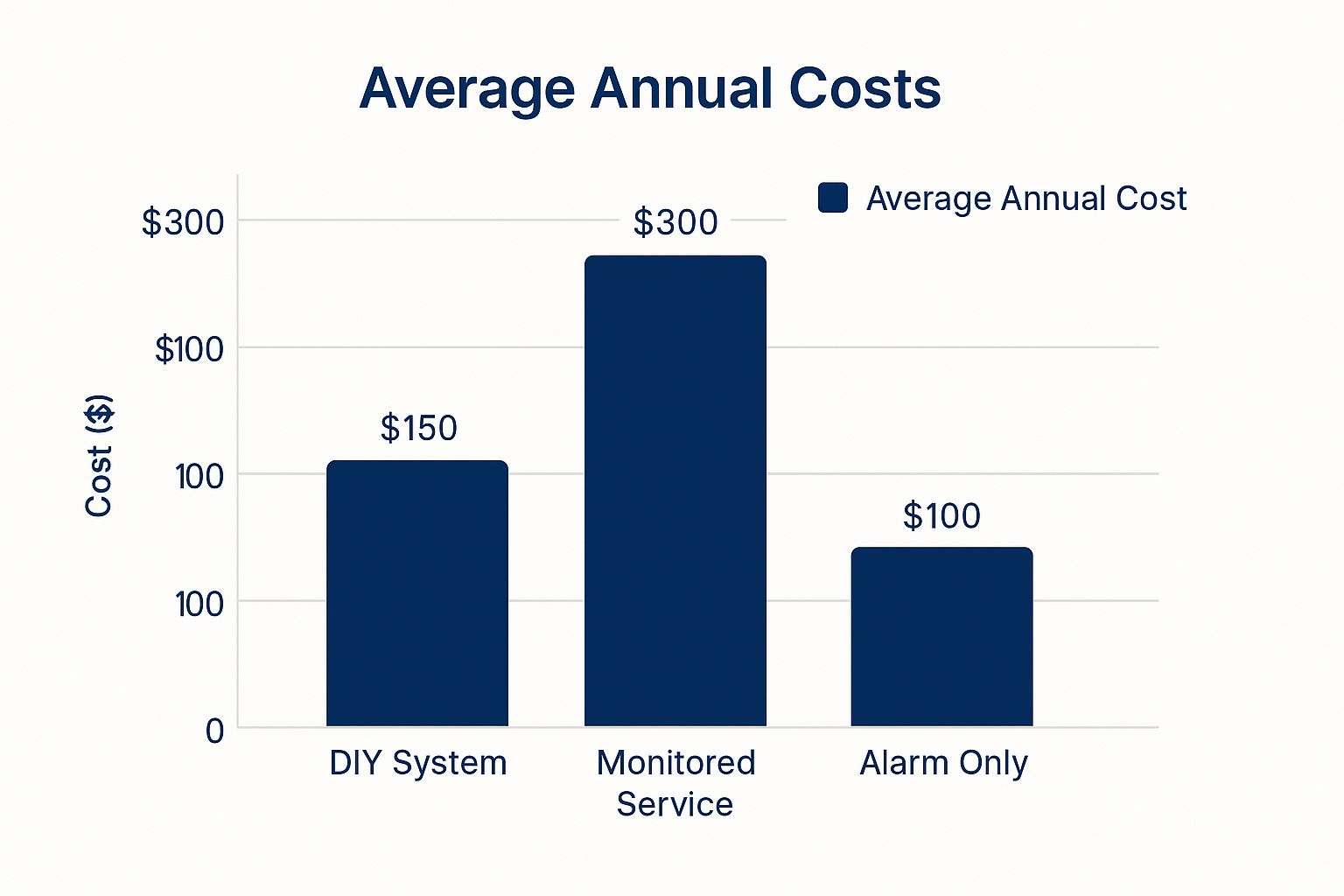
As you can see, a fully monitored service carries the highest annual price tag, while a basic alarm-only system is the most wallet-friendly option in the long run.
The Traditional Heavyweights
First up, you have the big, established names—the companies that have been protecting homes for decades. Their whole model is built around professional, end-to-end service. They’ll send an expert to your place, walk through your property, design a system just for you, and then install it all perfectly. From there, you're connected to their 24/7 back-to-base monitoring centres.
This is the classic "set and forget" option. You’re paying for expertise and the peace of mind that comes from knowing a professional team is always watching over your home. The price definitely reflects this full-service approach.
The New-School DIY Champs
Then you’ve got the newer players who have totally shaken up the industry. These companies put the power (and the screwdriver) right into your hands. They sell security kits directly to you, all designed for a simple weekend install. You buy the gear, stick the sensors on your doors and windows, and connect everything to your Wi-Fi. It's surprisingly straightforward.
While you can often monitor these systems yourself for free through an app, most also offer professional monitoring for a small monthly fee. The best part? They usually don’t lock you into a long-term contract, which is a huge plus for renters or anyone who wants more flexibility.
The No-Subscription Heroes
Finally, there's the "buy it once, own it forever" crew. With these systems, you pay for all the hardware upfront, and that’s it—no more bills. This is possible because all your video footage is stored locally on a hard drive inside your home, not on a company's cloud server. You still get alerts on your phone and can check your cameras from anywhere, but you're in total control.
This is the perfect option for anyone who can't stand the thought of another monthly subscription and really values their privacy. The only trade-off is that you're the one responsible for keeping an eye on things.
To give you a clearer picture, let's look at how some of these models stack up in the real world.
Comparing Popular Security Company Cost Models
Here’s a quick overview of the different pricing structures you'll likely encounter from home security providers across Australia.
| Company Example | Primary Model | Typical Setup Cost (AUD) | Typical Monthly Fee (AUD) |
|---|---|---|---|
| Traditional (e.g., ADT) | Professional Install & Monitoring | $499+ | $30 – $60+ |
| DIY Hybrid (e.g., SimpliSafe) | Self-Install, Optional Monitoring | $250 – $600 (Kit) | $0 – $30 |
| No-Subscription (e.g., Eufy) | Self-Install, Self-Monitor | $200 – $800+ (Kit) | $0 |
As you can see, your long-term costs really depend on whether you prioritise professional oversight or prefer to manage things yourself.
Choosing the right cameras is a huge part of this decision, as they often make up a big chunk of your initial equipment cost. To get a better handle on your options, check out our guide on the best security cameras for your home.
Ultimately, each type of company has its own philosophy. You’ve got the all-inclusive service from the traditionalists, the flexible middle-ground of the DIY crowd, and the fee-free freedom from the hardware-focused brands. Figuring out where they differ is the first step to finding the perfect match for your home.
Why Is Everyone Investing In Home Security?
Let's be real for a moment. Forking out hundreds, or even thousands, for a home security system can feel like a pretty big hit to the budget. It’s natural to look at the home security companies cost and wonder, "Is this really worth it?"
Yet, it seems like more and more Aussies are answering that question with a firm "you bet."
There’s a definite shift happening in neighbourhoods all over, from Sydney to the Central Coast. Home security isn't just a luxury item for sprawling mansions anymore; it's fast becoming a standard feature for the average family home. The reason? People are starting to see it less as an expense and more as a long-term investment in their family's safety and peace of mind.
A Booming Market Tells a Story
This isn’t just a gut feeling; the numbers tell the same story. The Australian home security market is absolutely exploding, spurred on by a growing desire for smarter, more connected ways to protect our homes.
In fact, the market is projected to more than double, rocketing from roughly $97 billion AUD in 2025 to over $200 billion AUD by 2031. That kind of growth points to a massive trend: Aussies are investing serious cash in everything from CCTV cameras and alarms to smart locks and 24/7 professional monitoring. You can dig into more stats on this boom over at Mobility Foresights.
This trend isn't just a reaction to crime stats, either. It’s part of a much bigger move towards the 'smart home' concept, where security is seamlessly integrated into our daily lives. We’re already used to controlling our lights and music from our phones, so why not our door locks and security cameras, too?
A modern security system is so much more than a loud siren. Think of it as a connected hub for your home. It’s what lets you check your front door from a beach in Bali, unlock the door for the kids while you’re at your desk, or get an instant alert if the smoke alarm goes off. It’s about being in control, not just scaring people away.
More Than Just Peace of Mind
While you can’t put a price on feeling safe, a good security system often comes with some tangible financial benefits that help soften the initial outlay. It's not just money going out the door; in many cases, it can lead to real savings and add genuine value to your property.
-
Potential Insurance Discounts: Many Australian home insurance providers will actually give you a discount on your premium if you have a professionally installed and monitored security system. From their perspective, you're actively lowering their risk, and they’ll often reward you for it. It's definitely worth a quick call to your insurer.
-
Increased Property Value: When it comes time to sell, a modern, integrated security system can be a huge drawcard for potential buyers. It’s one less thing for them to worry about and a clear sign that the home has been well-maintained. Features like video doorbells, smart locks, and CCTV are things today's buyers are actively looking for.
Ultimately, putting money into a security system is about creating a smarter and safer home. Our guide on the benefits of smart home security systems dives deeper into how this tech is changing the game. The investment isn't just in the hardware; it’s in buying back a sense of security for you and your family.
How To Nail Your Home Security Budget
https://www.youtube.com/embed/VslBaDdnn28
Right, we’ve thrown a lot of numbers and ideas your way. Now, let’s bring it all together into a practical plan for your place, whether you're in a quiet cul-de-sac on the Central Coast or a busy street in Sydney. Nailing your budget isn't about finding the cheapest deal; it's about finding the smartest one for you.
Think of it like getting your car serviced. You don't just ask for the cheapest option; you get the work done that your car actually needs to stay reliable. Your home security is exactly the same. The best place to start is by walking around your property and thinking like a burglar.
Your Personal Security Checklist
Which areas feel the most vulnerable? Are there any dark spots in the backyard? What about that side window that's always hidden behind the bins?
Answering these simple questions is the key to figuring out what you truly need versus what's just a nice-to-have. This little exercise will stop you from overspending on gear you’ll never really use.
- Assess Your Property: Do you have a lot of ground-floor windows? A detached garage? The more potential entry points, the more sensors you're going to need.
- Consider Your Lifestyle: Are you constantly getting packages delivered and need to watch for porch pirates? A video doorbell is probably a non-negotiable for you.
- Check Your Neighbourhood: Is your area known for opportunistic break-ins? A couple of very visible outdoor cameras can be an incredibly powerful deterrent.
The goal is to build a system that solves your specific worries. Don't pay for features designed for a mansion in Mosman if you live in a cosy apartment in Newcastle. Match the solution to your reality.
Insider Tips For Saving a Few Bucks
Once you have a clear idea of your must-haves, you can start looking for ways to make the home security companies cost a bit more manageable. A little bit of savvy shopping can go a long way.
Keep an eye out for seasonal sales around major holidays like EOFY or Christmas—many companies offer some fantastic bundle deals. And don't be shy about asking for a discount if you’re bundling services, like getting alarms and CCTV installed at the same time. It’s also worth exploring off-grid options to reduce long-term costs; you can learn more about how solar-powered security camera systems work and see if they’re a good fit for your property.
With a clear plan in hand, you can start getting quotes with confidence, knowing you’re the one in control of the budget.
Got Questions About Security Costs? We've Got Answers
Still got a few questions rattling around in your head? You're not alone. When you start digging into the world of home security companies cost, a few common queries always seem to pop up for folks in Sydney, the Central Coast, and Newcastle.
Let's tackle them head-on with some straight-up answers.
Can I Really Get a Security System Without a Monthly Fee?
Absolutely. This is probably one of the biggest myths out there. You can definitely get a fantastic security system without being locked into yet another monthly bill.
These are typically what we call self-monitored or DIY systems, where you buy all the gear upfront. Instead of paying for a 24/7 professional monitoring service, you keep an eye on things yourself through a smartphone app. If a sensor is tripped, you get the alert directly and decide what to do next. It’s a top option if you’re looking to keep those long-term costs right down.
What Happens If My Internet Drops Out?
That's a classic worry, and a fair one, especially with our sometimes-shaky NBN connections. What good is a high-tech security system if it gets knocked offline?
Don't worry, most professionally monitored systems have a clever backup plan called cellular backup. If your Wi-Fi takes a nosedive, the system automatically switches over to a mobile network—just like your phone does. This keeps it connected to the monitoring centre, so you’re never left vulnerable. For many people, this feature alone is what makes the monthly monitoring fee worth it.
It's not just about the dollars and cents; it’s about your personal comfort level. Are you happy to manage alerts yourself to save money, or do you sleep better at night knowing a professional is always watching over your home, no matter what?
Are Wireless Systems Actually Reliable?
You bet they are. Modern wireless systems are incredibly reliable—we've come a long way from the days of dodgy connections and constant battery changes.
Today’s gear uses strong, encrypted signals that are incredibly difficult to interfere with, and the battery life on sensors can often last for years. The biggest plus is the sheer flexibility. You can stick sensors and cameras exactly where you need them without the hassle of drilling holes all over your house.
If you want to dive deeper, our guide on the benefits of wireless home alarm systems has all the details you need.
Feeling ready to get a clear, no-obligation quote that’s built around your home and your budget? The team at Advanced Comtech has been helping homeowners across the Central Coast, Sydney, and Newcastle find the perfect security solution for years. Get in touch with us today at https://advancedcomtech.com.au and let’s make your home safer.