Let's be honest, dodgy Wi-Fi in a busy Newcastle cafe or office is a total nightmare. One minute you're trying to process a payment on Darby Street, the next you're staring at the spinning wheel of doom. Professional data cabling in Newcastle is the central nervous system for your business—it's the hidden framework that keeps everything from your EFTPOS machines to your security cameras running without a single hiccup.
Why Your Newcastle Business Needs Solid Data Cabling
If you've ever had to apologise to a customer because the EFTPOS machine dropped out again, you're not alone. So many Novocastrian businesses start out with a simple Wi-Fi router from a big box store, hoping for the best. It's that classic "she'll be right" attitude. But as soon as your business starts to grow, that single router begins to buckle under the pressure.
Picture a local cafe owner—we’ll call her Sarah. She was running her point-of-sale system, customer Wi-Fi, and music all off a standard wireless connection. During the morning coffee rush, the network would slow to an absolute crawl. Orders got lost, payments would fail, and the whole vibe was more frantic than friendly.
Sarah finally bit the bullet and invested in a proper structured cabling system. A technician came in and ran dedicated cables to her counter, her back office, and even to a few new Wi-Fi access points to give patrons solid coverage. The difference was night and day. Payments became instant, staff could punch in orders without lag, and that daily tech-induced headache simply vanished. Her story is the perfect example of moving from a frustrating, reactive setup to a proactive, reliable one.
The Foundation for Modern Business
In a city that’s quickly becoming a major tech hub, relying on a flaky connection is a huge handicap. Proper data cabling gives you a stable, high-speed foundation for all the operations that actually make you money.
- Reliable Point-of-Sale (POS) Systems: No more awkward apologies when the card machine plays up. A hardwired connection means transactions go through every single time.
- Clear and Consistent Communication: Modern phone systems are completely dependent on a stable network. For a deeper look at this, you can check out the benefits of VoIP phone systems for small business.
- High-Speed Internet Access: Keep your team productive with fast, consistent internet for their computers and servers, completely free from the dropouts you get with overloaded Wi-Fi.
This infographic really breaks down how structured cabling acts as the backbone for any successful business.
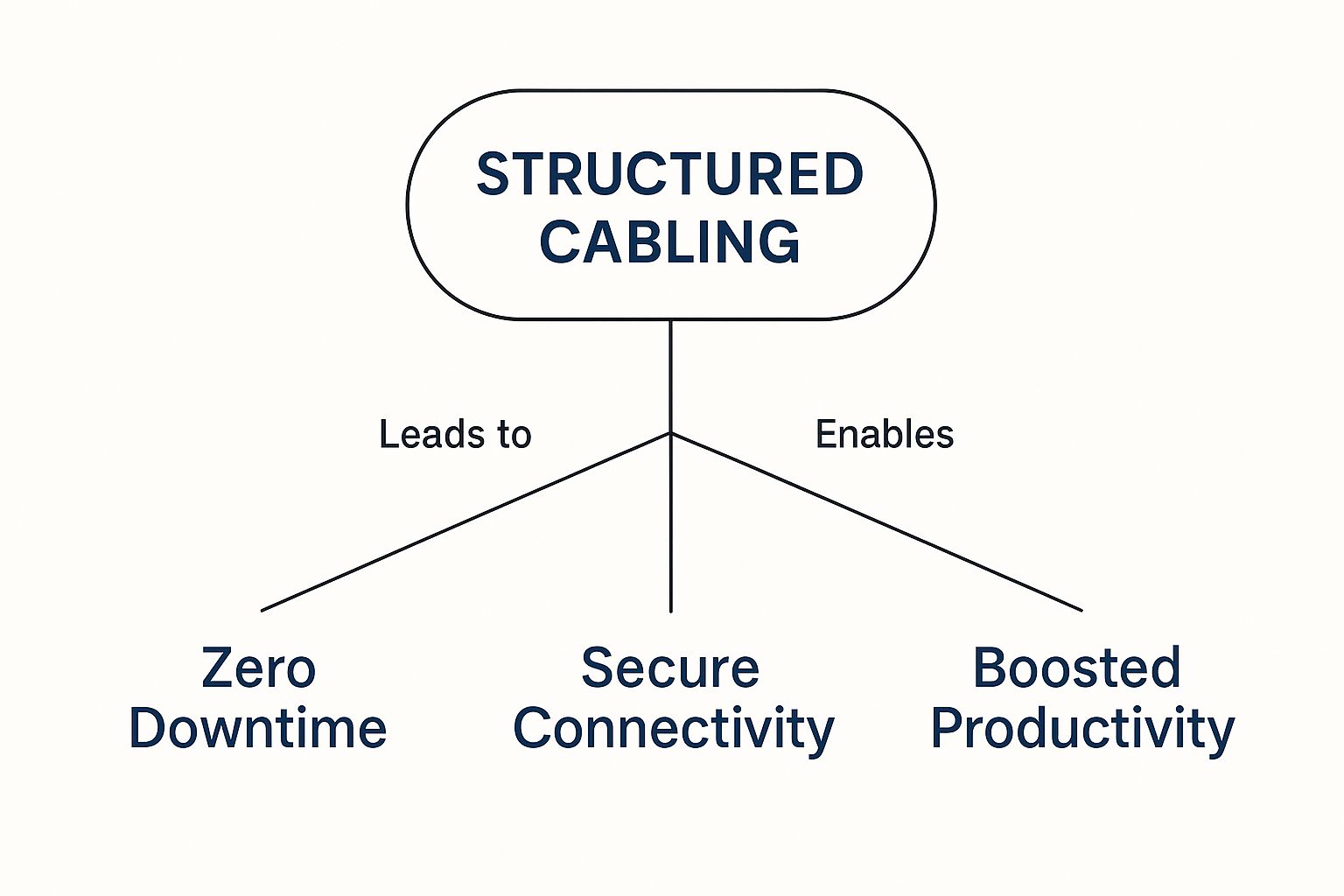
As you can see, it all connects back to the core things that matter: security, productivity, and ultimately, your bottom line.
It's really no surprise that Newcastle is the ninth-largest data centre market in Australia, supported by a massive local connectivity ecosystem. This just goes to show how vital high-speed, reliable data is for any business trying to stay competitive. Upgrading your internal network is how you tap into all that power.
Choosing the Right Cable for Your Business
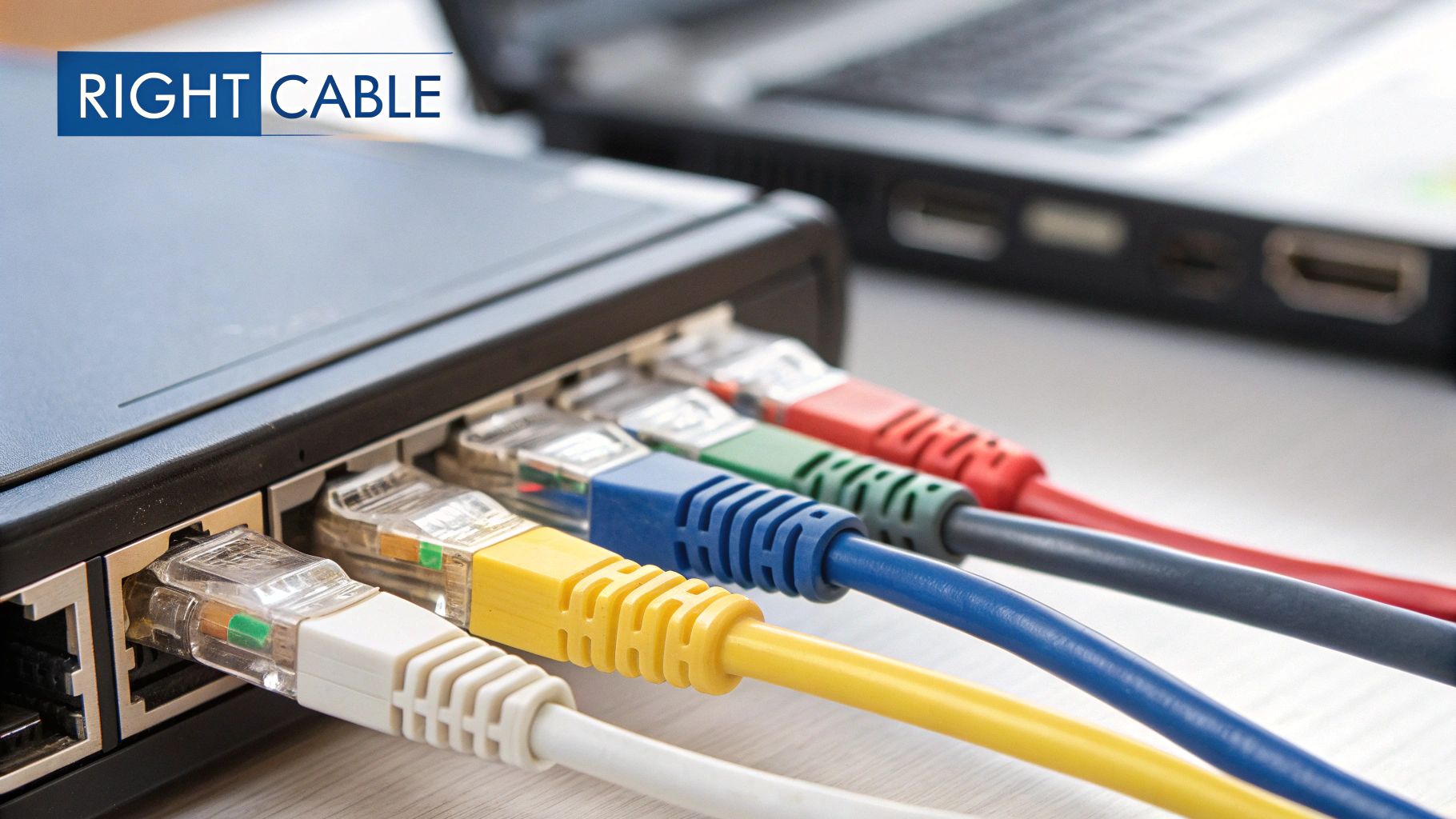
Trying to pick the right data cable can feel a bit like staring at a menu written in another language. Let's cut through the jargon. Think of your network cables like the plumbing in your building. The size and type of pipe you choose directly impacts how much data (the water) can flow through your network, and how quickly.
Getting this right from the start is a game-changer for any business, whether you're running a busy cafe in Cooks Hill or managing logistics in a Carrington warehouse. It's all about matching the cable to what your business actually needs. After all, you wouldn't install industrial-grade plumbing just to run a kitchen sink. The same logic applies to data cabling in Newcastle—the smart choice will save you a world of future headaches and unnecessary costs.
Cat5e vs Cat6: The Copper Workhorses
For most businesses, the decision boils down to two main types of copper cabling: Cat5e and Cat6. They might look similar, but they perform very differently.
Think of Cat5e as your trusty garden hose. It’s reliable, gets the job done for everyday tasks like web browsing, sending emails, and connecting an EFTPOS machine. For a small office or retail shop with light data usage, it’s a perfectly sensible and budget-friendly option.
Now, picture Cat6 as a firefighter’s hose. It’s built with a wider 'pipe,' which means it can handle a much greater volume of data at far higher speeds. This has become the new standard for a very good reason. If your team is constantly on video calls, moving large files around, or relying on cloud-based software, Cat6 is what you need. It handles the heavy lifting with ease and gives your business room to grow.
A smart network isn't just about how fast you are today. It’s about building a solid foundation that can keep up with you tomorrow. Investing in Cat6 cabling is a forward-thinking move that saves you from a costly and disruptive upgrade in just a couple of years.
A Quick Guide to Network Cables
Use this simple comparison to figure out which cable is the right fit for your business needs.
| Cable Type | Best For | Typical Speed | Future-Proofing Level |
|---|---|---|---|
| Cat5e | Small offices, basic internet, light data use. | Up to 1 Gbps | Low |
| Cat6 | Modern offices, video conferencing, cloud apps, large files. | Up to 10 Gbps | Medium to High |
| Fibre Optic | Connecting buildings, data centres, mission-critical systems. | 10 Gbps and beyond | Very High |
As you can see, Cat6 hits the sweet spot for most, but for those with truly massive data needs, there's another level entirely.
When You Need to Bring in the Big Guns: Fibre Optic
Then there’s the final boss of cabling: fibre optic cable. This isn't a hose; this is the main water pipeline for an entire city. Instead of sending electrical signals through copper, it shoots pulses of light through tiny strands of glass. The result? Mind-bending speeds and rock-solid reliability.
So, when does a Newcastle business really need this kind of power?
- Linking Separate Buildings: If your business is spread across multiple buildings on one site, like an office and a separate warehouse, fibre is the only real way to connect them with a lightning-fast, stable link.
- When Downtime Is Not an Option: For operations where every second counts—think financial services or data processing—the near-perfect reliability of fibre is essential.
- Covering Long Distances: Copper cables start to lose their signal strength after about 100 metres. Fibre, on the other hand, can carry a flawless signal for kilometres without breaking a sweat.
While fibre is incredible, a professionally installed Cat6 network is the perfect fit for the vast majority of local businesses. And if you're a hands-on type looking to understand the basics of running cables, our guide on home network cable installation has some great foundational tips.
The True Cost of a Dodgy Cabling Job
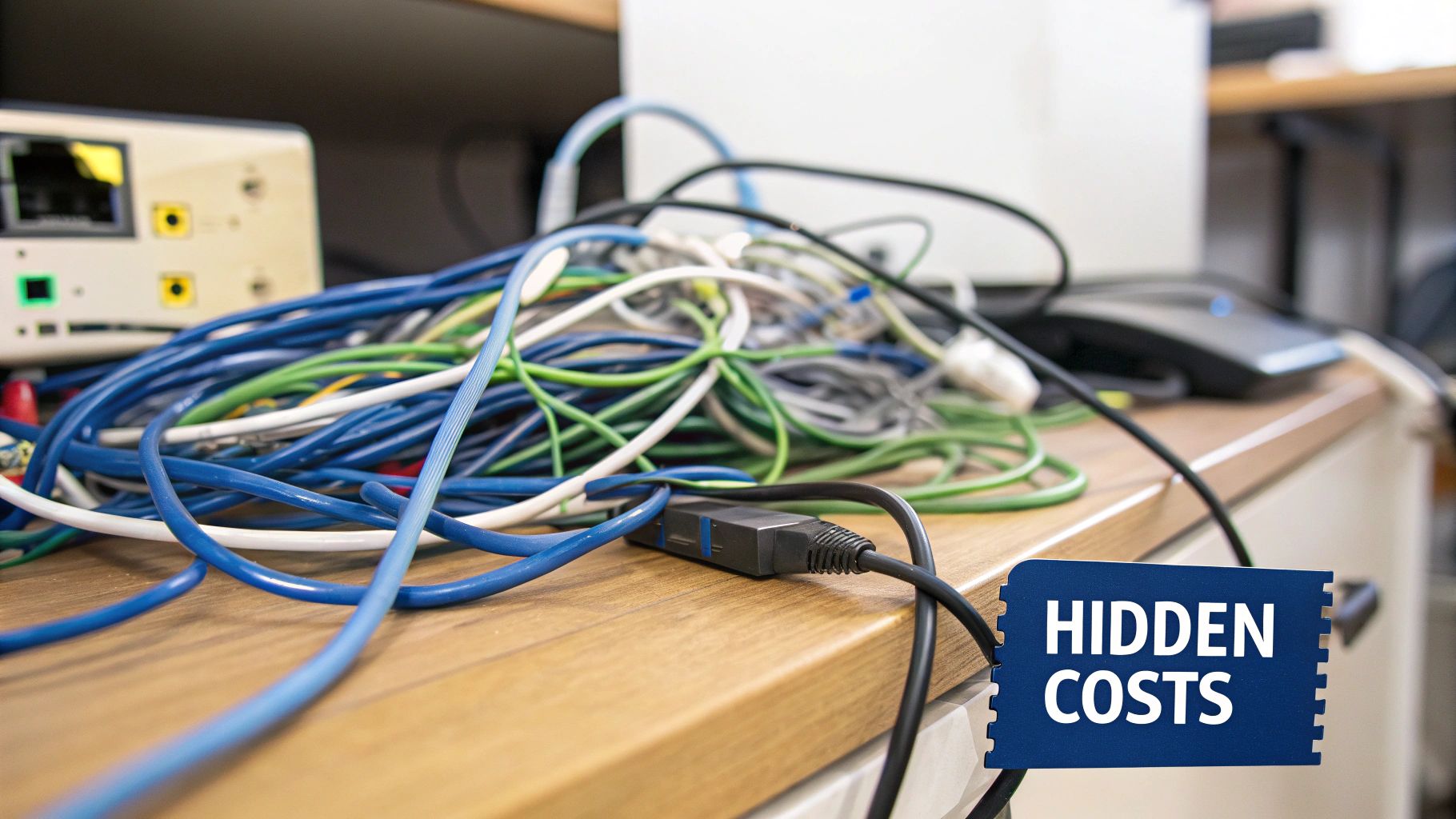
Everyone loves a bargain. But when it comes to your business's network, trying to shave a few hundred dollars off a data cabling in Newcastle quote is a classic case of being penny-wise and pound-foolish. Trust me, it’s a decision that almost always comes back to bite you, costing a fortune down the track.
Let’s paint a familiar picture. You need a few extra data points, so you hire your 'mate of a mate' who reckons he can do it for half the price. At first, you’re chuffed. But it doesn't take long for the gremlins to show up. The connection to the EFTPOS machine starts dropping out during the lunch rush, your main office computer randomly loses internet, and you discover a bird’s nest of spaghetti cabling that looks like a genuine fire hazard.
This is where the real costs start to mount, and they go far beyond that initial cheap invoice.
The Hidden Price Tag of a Bad Install
A cheap job isn't just about a few messy cables; it’s about the ripple effect it has on your entire operation. The most significant costs are the ones you don't see coming.
- Lost Productivity: Every minute your team spends staring at a loading screen or restarting a router is money straight down the drain. Studies have shown that network downtime can cost small businesses hundreds, if not thousands, of dollars per hour.
- Security Risks: Improperly terminated cables or flimsy connections can create gaping holes in your network security, basically rolling out the welcome mat for anyone trying to access your sensitive business data.
- Safety Hazards: That tangle of poorly managed cables isn't just ugly. It’s a trip hazard and, in a worst-case scenario, a very real electrical or fire risk.
Eventually, the frustration boils over. You finally call in a licenced, experienced Newcastle cabler to fix the mess. They take one look, sigh, and deliver the bad news: the whole lot needs to be ripped out and done properly from scratch.
Your network cabling is a foundational investment in your business’s stability and future growth. Getting it done right the first time by a professional isn't an expense; it's insurance against downtime, security threats, and the massive cost of a complete do-over.
Suddenly, you’ve paid twice for the same job. That "bargain" has now doubled your cost and caused weeks of headaches. Investing in a qualified professional from the get-go ensures your network is reliable, safe, and ready to support your business as it grows. It’s some of the smartest money you’ll ever spend.
How to Plan Your Data Cabling Project
A great data cabling job doesn't just happen. It all starts with a smart plan, long before a technician ever shows up to drill holes in your walls. Think of this planning stage as drawing up the blueprint for your business’s digital nervous system.
First things first, do a walkthrough of your space. Grab a notepad or a tablet and pinpoint every single spot that will need a connection. I'm talking about every desk, printer, EFTPOS machine, security camera, and Wi-Fi access point you have in mind. Don't just think about today—project forward two or three years. Are you planning on hiring more staff? Adding another service counter?
It's always, always smarter and cheaper to run a few extra data points now than to call a technician back in a year to cut into walls and pull new cable. Future-proofing is the name of the game.
Mapping Out Your Needs
With your list of locations sorted, it's time to think about the layout itself. A solid plan takes the unique quirks of your building into account. A brand-new commercial unit in Beresfield with easy-access ceilings is a whole different beast compared to a gorgeous old heritage building on Hunter Street with double-brick walls. A seasoned installer knows how to handle these challenges, but having a clear idea of what you need helps them give you a spot-on quote for your data cabling newcastle job.
Here’s a simple checklist to get your thoughts organised:
- Workstation Locations: How many desks need a hardwired connection for computers and phones?
- Shared Devices: Where will you put the printers, scanners, and servers?
- Payment and Service Points: Mark out every spot for EFTPOS machines or point-of-sale terminals.
- Wireless Coverage: Where are the best places for Wi-Fi access points to kill any dead zones?
- Security Infrastructure: Don't forget your IP security cameras or door access panels.
The Brains of the Operation
All these cables have to lead somewhere, and that's your central hub. This is usually a communications cabinet or rack that keeps every connection organised, tidy, and easy to manage. No messy "bird's nest" of cables allowed! This hub is the brain of your entire network, housing your main switch and router. It's an absolute must for any professional setup.
The need for well-structured, high-speed networks is exploding across Australia. The local structured cabling market was valued at up to $468.4 million in 2024 and is on track to hit over $1 billion by 2033, thanks to growing data centres and the demand for rock-solid infrastructure. Planning your project properly from the get-go makes sure your business is ready for that growth, not struggling to catch up. You can read more about the structured cabling market growth to get a sense of just how crucial this foundation is.
A well-thought-out plan really does set you up for a smooth, hassle-free installation. To see what the next steps look like, check out our guide on data points installation for some handy insights.
Finding the Right Installer in Newcastle
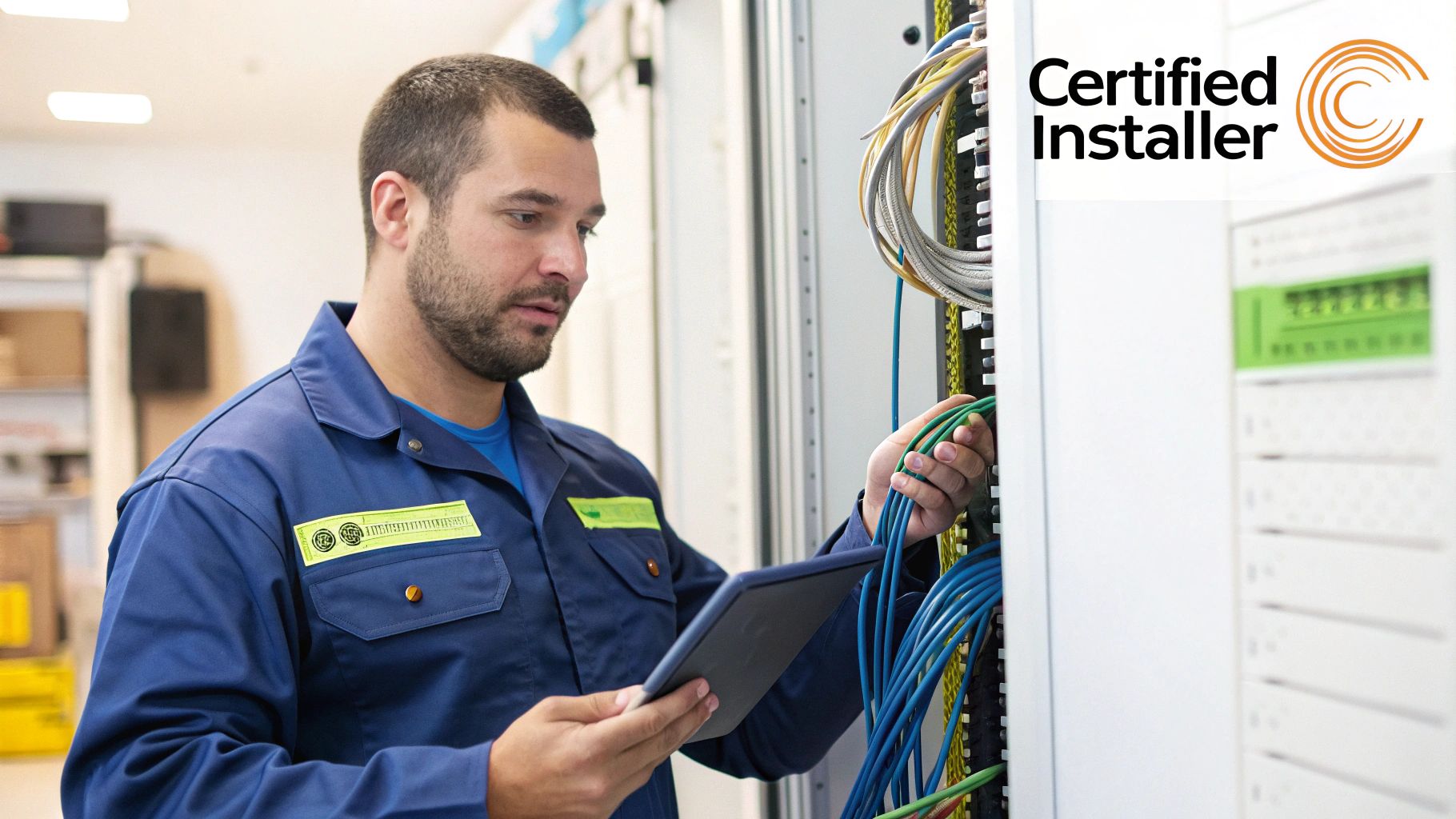
Alright, you’ve got a solid plan and know what your network needs. Now for the crucial part: finding the right tradie to bring it all to life. We’ve all heard those nightmare stories about jobs gone wrong, so picking the right person for your data cabling in Newcastle isn't something to rush.
First things first, let's talk about the absolute deal-breaker: licencing. In Australia, any person touching telecommunications cabling—and yes, that includes your data network—must be an ACMA registered cabler. This isn't just a bit of red tape; it's a legal safeguard ensuring the installer is properly trained to work safely and meet Australian standards. An unlicenced cabler is a massive red flag. Seriously, just walk away.
Questions to Ask Before You Hire
Once you've ticked the licence box, it's time to dig a bit deeper. A true professional will be more than happy to answer a few questions to show they're the right fit for your project.
Here are a few things I always suggest asking:
- Do you offer a warranty on your workmanship? This tells you they back their own work and will sort out any problems that might crop up later.
- Can I see photos of your previous jobs? A good installer is proud of their work. They'll have a portfolio of neat, organised server racks and cable runs to show you.
- What brands of cable and equipment do you use? You want to hear names of reputable brands. Quality gear means better performance and a network that lasts.
- Are you fully insured? Always confirm they have public liability insurance. It’s your protection in the unlikely event of accidental damage to your property.
This initial chat is the perfect chance to get a feel for their professionalism and knowledge. For more great tips, our guide on finding a great data cable installation service near you has some extra advice worth checking out.
Get It All in Writing
Never, ever move forward with a job based on a verbal quote or a figure jotted down on a scrap of paper. A professional installer will provide a detailed, itemised quote that clearly breaks down all the costs. It should spell out the price per data point, the cost of all materials, and the labour charges.
An itemised quote is your best defence against nasty surprises. It ensures you and the installer are on the same page about the scope of work and the final cost before the job even begins.
Getting this foundation right is more important than ever. With Australia's digital economy now contributing 5.1% to our GDP and over 88.2% of the population online, the need for reliable data infrastructure is skyrocketing. A qualified installer ensures your home or business can keep pace. You can learn more about Australia's thriving data centre market to see just how critical this infrastructure is becoming.
By asking the right questions and demanding a clear, written quote, you can confidently pick a local company that will get your network set up perfectly, the first time.
Your Newcastle Data Cabling Questions Answered
We get a lot of questions about data cabling, and fair enough—it can seem a bit complicated when you first dive in. To help clear the air, we've pulled together some straight answers to the most common queries we hear from businesses around Newcastle.
Think of this as a quick chat over coffee, cutting through the jargon to give you the information you actually need.
How Much Does Data Cabling Cost in Newcastle?
This is always the big one, isn't it? It’s the classic "how long is a piece of string" question. Honestly, the cost for data cabling in Newcastle varies quite a bit, but as a rule of thumb, installers will charge on a per-point basis.
You can expect to pay anywhere from $150 to over $300 for each data point. The final price tag really boils down to a few key factors.
The complexity of the job is a huge one. Running cables through a modern office with a drop ceiling is a walk in the park compared to navigating the thick, double-brick walls of a heritage building on Hunter Street. The type of cable you choose also plays a big part; high-performance fibre optic cable is naturally going to cost more upfront than standard Cat6 copper.
The only way to get a true cost is to have a professional come out for a site inspection. Be very wary of anyone who throws a flat price at you over the phone without seeing the space first—it’s often a sign they're about to cut corners.
Can I Just Run the Data Cables Myself?
Look, it's tempting to want to save a few dollars and have a crack at it yourself, especially if you're handy. But when it comes to data cabling in Australia, the answer is a hard no.
It is actually illegal for anyone who isn't an ACMA (Australian Communications and Media Authority) registered cabler to install any kind of permanent telecommunications wiring. This isn't just bureaucratic red tape; it’s a critical rule put in place for safety and network performance.
A DIY job can easily become a fire hazard, not to mention it could fry your expensive network equipment. Even if you avoid that, it will almost certainly underperform, leaving you with a slow, patchy connection that defeats the whole purpose of the upgrade. Always hire a licenced pro—it's non-negotiable for protecting your business, your team, and your investment.
How Long Will the Installation Take?
The timeline for a cabling project depends entirely on the size and complexity of the job. There really is no one-size-fits-all answer here.
A small office out in Warners Bay needing five to ten new data points might be all wrapped up in a single day. On the other hand, a larger, multi-level fit-out in the Newcastle CBD could easily take several days to complete properly.
Any good installer understands you need to keep your business running. They’ll work with you to map out a schedule that causes the least disruption, often offering to tackle the noisy or messy work after hours or on weekends. Once they've done a proper site survey and understand the full scope of your project, they should be able to give you a very accurate timeline.
For more insights and articles on all things cabling, you can explore our data cabling blog category for a wealth of information.
Ready to get your network sorted by a team that knows Newcastle inside and out? Advanced Comtech provides professional, licenced data cabling services designed to keep your business running at full speed. Get in touch today for a no-nonsense chat and a detailed, on-site quote.