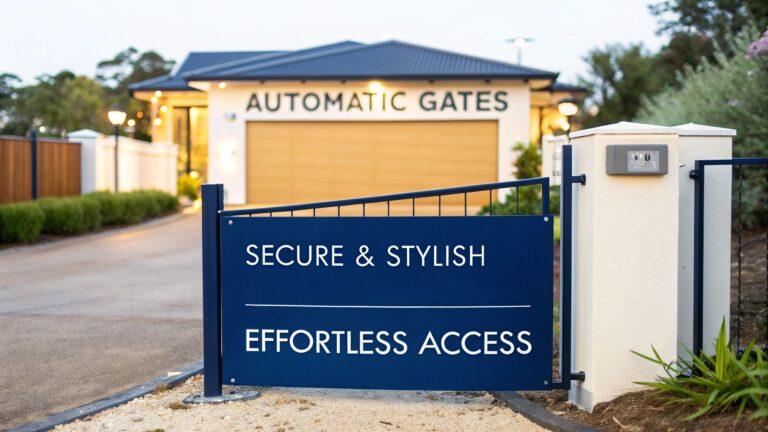
Picture this: you're pulling into your driveway after a long day, probably after getting stuck in the usual snarl on the M1. It's bucketing down, but instead of getting soaked while you fumble for your gate keys, it just glides open as you approach. That’s not a scene from some flash movie; it’s the everyday reality for more and more Central Coast homeowners who’ve nailed the perfect mix of convenience, security, and style.
Why Automatic Gates are Popping Up All Over the Coast
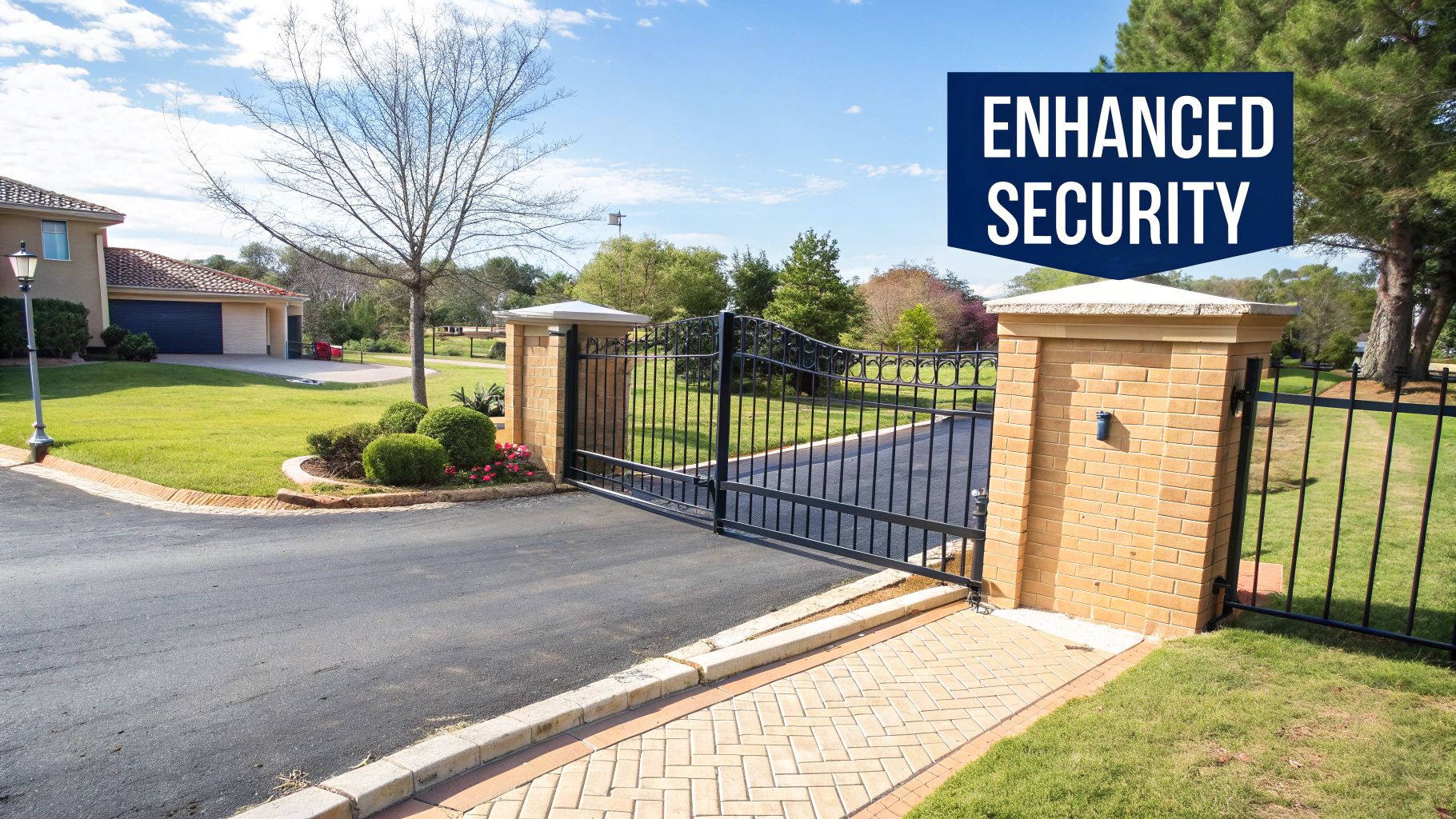
Life on the Coast is bloody brilliant, we can all agree on that. But whether you're tucked away in a leafy part of Holgate or living the dream by the beach in Avoca, you want your home to be your sanctuary. This is where automatic gates really shine, turning your property from just a house into your own personal fortress (a stylish one, of course).
But it's not all about keeping the riff-raff out. It's about adding a bit of class and a huge amount of convenience to your day-to-day. No more hopping out of the car in a torrential downpour or having a mini heart attack wondering if you left the gate open and the dog’s gone walkabout. It’s a simple change that makes a massive difference.
The Rise in Popularity
If you reckon you're seeing more automatic gates on the Central Coast, you're not wrong. This trend has been on the up for years, fuelled by better tech that’s become a whole lot more affordable. In fact, since 2015, the Central Coast has seen automatic gate installations climb by roughly 7-10% each year. This jump really shows how many locals are deciding to invest in their home's security and street appeal.
And this isn't just some passing fad. It’s a genuinely practical solution that fits the modern Coastie lifestyle. The technology behind these gate automation systems is now incredibly reliable, giving homeowners real peace of mind that their biggest investment is properly protected.
What This Guide Covers
Consider this your complete, no-fluff guide to automatic gates. We're going to skip the confusing jargon and give you the straightforward advice you actually need. We'll cover everything from figuring out the different types of gates to dealing with the local council.
Think of this guide as getting advice from a friendly neighbour who just happens to be an expert in home automation. We’ll demystify the tech, break down the real costs, and help you pick the perfect setup for your slice of paradise.
We’re going to walk through everything you need to know, including:
- The great debate: Sliding vs. swinging gates—and which one will actually work for your driveway.
- The bottom line: A realistic look at how much automatic gates cost here on the Central Coast.
- Council red tape: Navigating the world of permits and regulations without getting a massive headache.
- Built for the Coast: Picking materials that can stand up to our salty air and scorching sun.
- Keeping it smooth: Easy maintenance tips to make sure your gate runs perfectly for years to come.
So, grab a cuppa and let’s get stuck into it. It's time to turn your driveway into the secure, convenient entrance you've always dreamed of.
Sliding vs Swinging Gates for Your Coastie Home
So, you've decided an automatic gate is the way to go. Smart move. Now you’ve hit your first big decision, and it’s a bit like choosing between a flat white from your favourite cafe in Long Jetty or a cold beer at the Terrigal Hotel – both are great, but one’s definitely better for the situation. Picking between a sliding and a swinging gate for your home on the Central Coast is exactly like that.
Your property's layout, the slope of your driveway, and even your personal taste will all point you in the right direction. Let's get straight into it and break down the options.
The Sliding Gate: The Space-Saving Champion
Think about those classic suburban blocks in places like Umina or Ettalong, where homes are a bit closer together and you don't have a lot of spare room. Or maybe you're dealing with a steep, sloping driveway up in the hinterland around Matcham. For these spots, a sliding gate is your new best mate.
Sliding gates are the undisputed kings of saving space. They glide along a track parallel to your fence, tucking themselves away neatly without needing any room to swing open. That means you can park your car right up close to the gate without ever worrying about it getting a nasty ding.
- Perfect for slopes: If your driveway isn't dead flat (and let's be honest, many on the Coast aren't), a sliding gate is often the only practical choice.
- Wider openings: They can easily cover much wider entrances, which is a massive plus for properties needing more generous access.
- Modern look: Sliding gates tend to have a sleek, contemporary vibe that fits perfectly with the modern coastal architecture we see so much of around here.
This simple, smart efficiency is why sliding gates are everywhere. They just work so well with our local property styles. And the tech has come a long way too; Aussie manufacturers are now making high-speed operators that can open a gate at up to 940 mm per second. That's lightning fast, especially when you compare it to European models that often max out around 200 mm per second. It really cuts down your waiting time.
The Swinging Gate: The Grand Entrance Extraordinaire
Now, let's picture a different scene. Imagine you’ve bought a place out at Holgate or Somersby. You’ve got a bit of land and a long driveway that deserves a proper entrance. This is where a swinging gate truly shines. There’s something undeniably classic and elegant about a pair of timber or wrought-iron gates swinging open to welcome you home.
Swinging gates can open inwards or outwards, and you can go for a single large gate (a single leaf) or the more common double leaf setup, like a set of French doors. They create a sense of arrival that’s pretty hard to beat.
But they have one non-negotiable requirement: space. You absolutely need enough clear, flat ground for the gate or gates to swing through their full arc without bumping into your car, the garden bed, or the poor postie.
For many homeowners, the traditional appeal of a swinging gate is the deciding factor. It's less about pure function and more about creating a welcoming vibe that complements the character of their home.
Thinking about which one is right for you? Sometimes seeing it laid out side-by-side makes the decision easier.
Sliding vs Swinging Gates: A Central Coast Comparison
Here’s a quick rundown to help you weigh up the two most popular options based on what we typically see on Central Coast properties.
| Feature | Sliding Gates | Swinging Gates |
|---|---|---|
| Best For | Sloping driveways, limited side room, and wide entrances. | Flat, level driveways with plenty of clearance for the gate to swing open. |
| Space Requirement | Needs space along the fence line for the gate to retract into. | Requires clear, flat ground in the arc where the gate swings. |
| Aesthetics | Often seen as modern and sleek, but can be customised to suit any style. | Classic, traditional, and creates a "grand entrance" feel. |
| Installation | Can be more complex due to the need for a perfectly level track and rollers. | Generally simpler and quicker to install, provided the ground is level. |
| Maintenance | The track needs to be kept clear of debris like leaves and dirt. | Hinges may need occasional lubrication. Less affected by ground debris. |
| Cost | Can sometimes be slightly more expensive due to the track and motor system. | Often a little more budget-friendly for a standard installation. |
This table gives you a solid starting point, but the "best" gate is always the one that fits your specific property and needs perfectly.
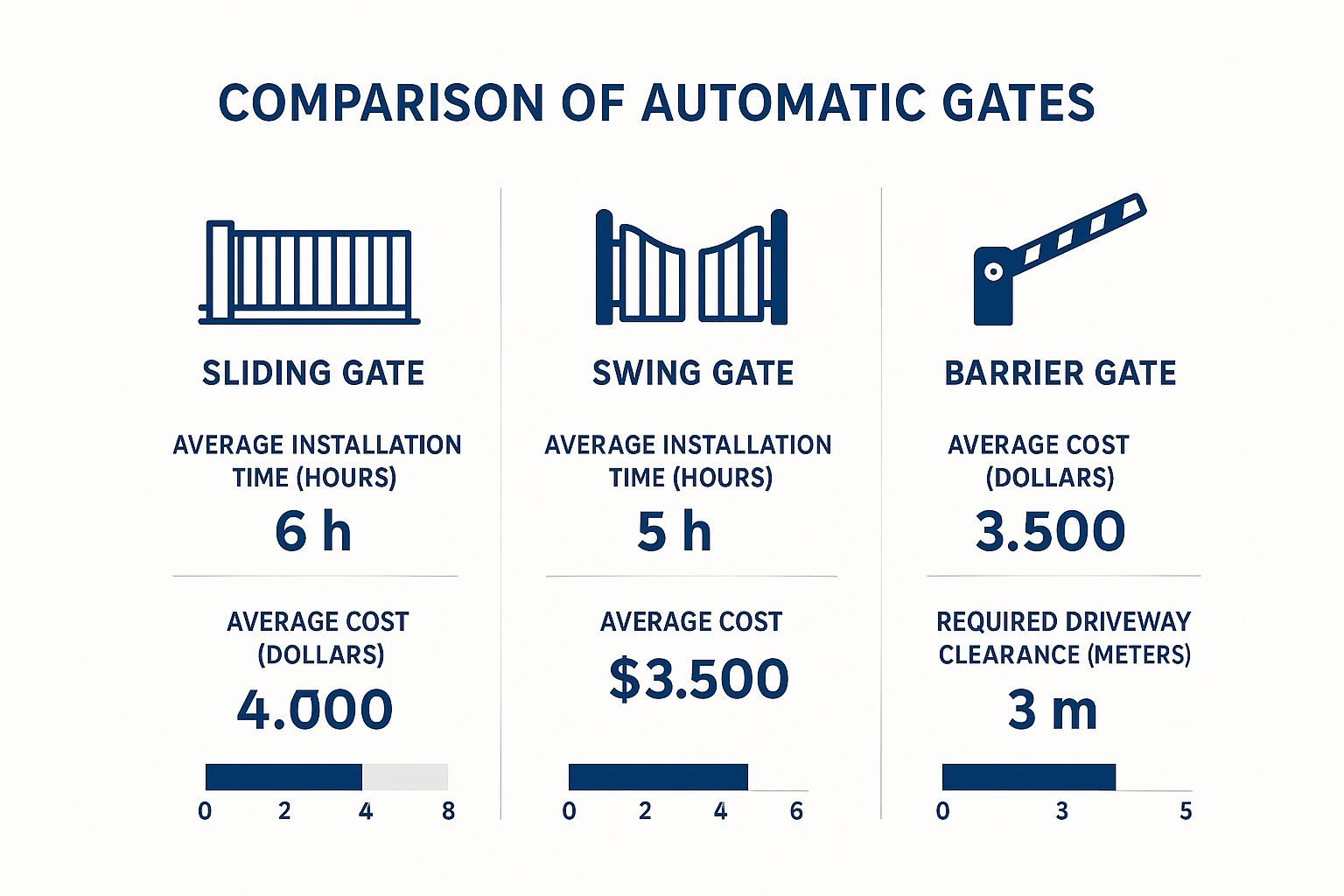
As the infographic highlights, while swing gates might be a bit quicker to install, sliding gates are the clear winner for properties tight on space. No matter which style you choose, both can be kitted out with top-notch security features. To find out more, take a look at our guide on professional access control systems on the Central Coast to see how keypads, intercoms, and other tech can be added to either gate type.
Navigating Central Coast Council Rules for Your Gate
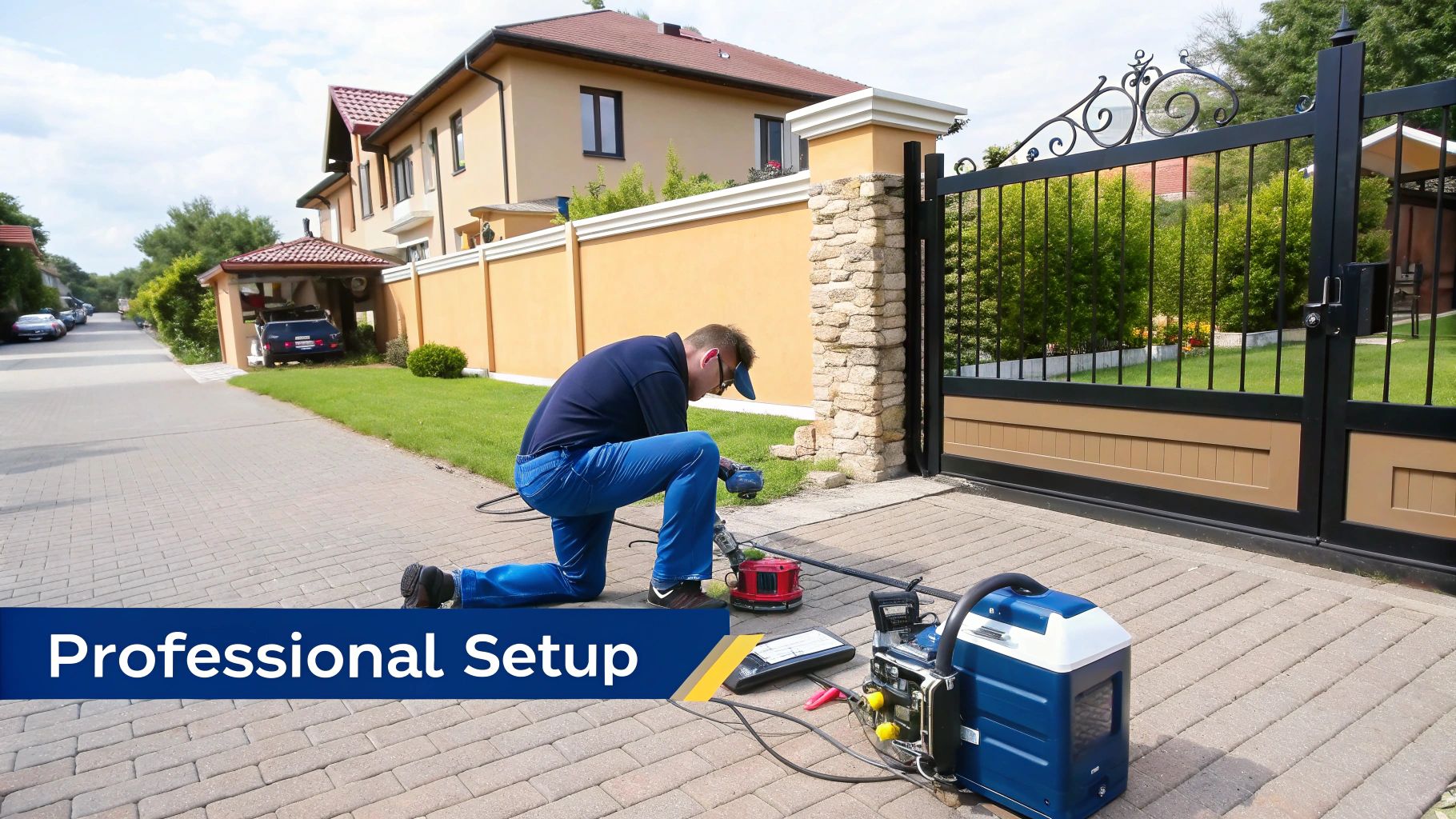
Alright, you've picked your dream gate style and are already picturing how great it's going to look at the front of your property. Before you get too carried away, we need to have a quick chat about the one thing that can stop a project dead in its tracks: council rules.
It’s not the most exciting topic, I know. But getting this right from the start will save you a world of pain later on. A mate of mine learned this the hard way – he put up a gorgeous gate only to get a notice from the council a month later. Turns out, it swung out over the footpath, and he had to fork out to get the whole thing re-engineered. A costly and avoidable headache!
When it comes to installing automatic gates on the Central Coast, you can't just whack one in and hope for the best. The Central Coast Council has a fair bit to say on the matter, and their main goal is always public safety.
Understanding the Public Gate Permit
The key piece of paperwork you'll almost certainly need is a Public Gate Permit. This isn't just bureaucratic box-ticking; it’s a formal process to make sure your gate is compliant and safe for everyone.
Essentially, any gate going up on or near a public road needs this permit before work begins. This process ensures your new automatic gate meets the strict safety and road access guidelines laid out in the Roads Act 1993 and Roads Regulation 2018 of New South Wales. The council simply needs to be sure your gate won't become a public nuisance or a hazard.
Think of the permit as your peace-of-mind certificate. It's official confirmation that your gate has been approved, meaning no grumpy letters from the council, no potential fines, and definitely no orders to tear it all down.
Getting this sorted before installation is non-negotiable. Any good installer will guide you through this, but it’s always smart to know what’s involved yourself.
Key Rules to Keep in Mind
While the official documents can be a bit dense, the rules generally boil down to a few common-sense principles. These are the big ones you absolutely need to factor in for your Central Coast gate.
- Setback from the Road: This is a big one. Your gate absolutely cannot open outwards over a public footpath or road. It must be set back far enough from your property line so a vehicle can pull completely off the road while waiting for the gate to open. This simple rule prevents traffic jams and keeps pedestrians safe.
- Safety Features are a Must: Automatic gates are heavy bits of machinery. Council regulations will require you to have safety mechanisms like photo-electric beams (PE beams) or auto-reverse functions. These sensors detect an obstruction—like a car, a pet, or a person—and stop or reverse the gate’s movement to prevent injury or damage.
- No Nasty Surprises: You can't connect things like electric fence units to your gate. The goal is to control access, not to create a dangerous trap for an unsuspecting visitor or the local wildlife.
Integrating Security the Right Way
Following council rules doesn't mean you have to compromise on security. In fact, a compliant gate is the perfect foundation for a great security setup. Modern safety sensors and access controls work hand-in-hand to create a system that is both incredibly safe and highly secure.
Once your gate is installed correctly, you can seamlessly add other security layers. To see how a well-planned gate fits into a larger strategy, you might be interested in our guide on integrating CCTV and security systems for complete home protection. A properly installed gate is your first line of defence; building on it with other tech is the smart way to go.
What Do Automatic Gates Cost on the Central Coast?
Alright, let's talk brass tacks. Asking what automatic gates cost on the Central Coast is a bit like asking the price of a house in Terrigal—the answer is always, "Well, it depends!"
There’s no one-size-fits-all price tag. Your mate's simple setup in Wyong might be a fraction of the cost of a grand, custom-designed entrance for an acreage in Holgate. The final figure can swing more wildly than a rusty farm gate in a southerly buster.
But don't worry, I won't leave you guessing. Let's break down the key ingredients that make up the final quote so you can see exactly where your money goes.
The Big-Ticket Items That Drive the Price
Your final invoice is really just a sum of its parts. A few key components carry most of the financial weight, and getting your head around these will give you a much clearer idea of what to expect.
First up is the gate itself. What's it made from? A lightweight, powder-coated aluminium gate is usually your most budget-friendly starting point. If you’re leaning towards heavy-duty steel, ornate wrought iron, or beautiful custom hardwood timber, the price tag naturally starts to climb.
Then there's the size and complexity. A standard three-metre sliding gate for a suburban driveway is going to be far less expensive than a five-metre dual-swinging gate with intricate scrollwork. The bigger and fancier you go, the more you can expect to invest.
Motors and Brains: The Automation Gear
Once you've chosen the gate, you need the tech to make it move. This is where the motor and access control systems come in, and their costs can vary massively.
-
The Motor: This isn't a place to skimp. The motor needs to be powerful enough for your gate's specific size and weight. A heavy steel gate needs a much beefier (and pricier) motor than a light aluminium one. A cheap motor might save you a few bucks upfront, but it'll likely cost you a fortune in call-outs and repairs down the track.
-
Access Control: How do you want to open it? A couple of simple remote controls are the standard, affordable option. But if you want to add a keypad for coded entry, an intercom system (either audio or video), or sensors that open the gate as you approach, each of these features adds to the total cost.
The reality is, the automation hardware—the motor, sensors, and controls—can often make up 30% to 50% of the entire project cost. It's the brains of the operation, and investing in quality here is non-negotiable if you want a reliable system that just works, day in and day out.
The Cost of Getting it Done Right
We've covered the gate and the gear, but you also need to account for the professional installation. Labour costs for automatic gates on the Central Coast really hinge on how tricky the job is. A straightforward installation on a flat, pre-prepared site will naturally be quicker and cheaper.
However, if your driveway needs to be excavated to lay a track for a sliding gate, or if a trench needs to be dug for electrical cabling, those labour costs will increase. This is why getting a detailed, on-site quote is absolutely essential—it's the only way to get the full picture and avoid any nasty surprises.
To give you a clearer idea, here's a sample budget that shows how the costs can break down for a typical project.
Estimated Cost Breakdown For Automatic Gates
This table gives a ballpark idea of how different components contribute to the total cost of an automatic gate installation on the Central Coast.
| Component | Lower End Estimate (AUD) | Higher End Estimate (AUD) |
|---|---|---|
| Gate Material & Fabrication | $2,000 | $7,000+ |
| Motor & Automation Kit | $1,500 | $4,000 |
| Access Control (Remotes, Keypad, etc.) | $300 | $2,500 |
| Installation Labour & Site Prep | $1,200 | $5,000+ |
| Total Estimated Cost | $5,000 | $18,500+ |
As you can see, the range is huge! It all comes down to your specific choices and the conditions of your property.
Thinking about how your new gate fits into your overall property security plan is a smart move. For a broader perspective, you can learn more about what to expect from the cost of home security companies in our detailed guide.
Choosing Materials That Survive the Coastie Climate

We love living on the Central Coast, don't we? Stunning beaches, a laid-back lifestyle… but there's a catch. Our beautiful coastal environment is an absolute punisher for anything left outside. That salty air we love, drifting in from Wamberal or The Entrance, is a silent killer for metal.
So, when you're looking at automatic gates on the Central Coast, the material you choose isn't just about looks—it's a survival strategy. Pick the wrong one, and you’ll have a sad, rusty mess on your hands in just a few short years. Let’s talk about the top contenders that can handle a proper Coastie summer.
Aluminium: The Rust-Proof Champ
If there was a gold medal for gate materials in a coastal town, aluminium would be wearing it. It’s the number one choice for one very simple reason: it does not rust. This is a massive advantage when your property is getting a daily dose of corrosive salt spray.
Aluminium is also surprisingly lightweight. That’s not just handy for the installers; it means way less strain on the gate motor over its lifespan, which usually translates to fewer maintenance hassles for you. Plus, you can get it powder-coated in pretty much any colour you can dream up, so you're not sacrificing style for durability.
For homes anywhere near the water, from Patonga right up to Budgewoi, aluminium is almost always the smartest long-term investment. Think of it as the "set and forget" option for fighting off our relentless coastal climate.
Steel: The Heavy-Duty Hero
Sometimes, though, you just need that extra bit of oomph. For pure strength and security, nothing beats steel. It's tougher and far more impact-resistant than aluminium, giving you that ultimate peace of mind.
But here’s the trade-off: steel rusts. And it rusts badly here. To make steel work on the Coast, it must be properly protected. This isn't just a suggestion; it's non-negotiable. The steel needs to be hot-dip galvanised (which means it's coated in a protective layer of zinc) and then finished with a high-quality powder coating. This two-layer defence is the only thing standing between your strong, beautiful gate and a future as a pile of orange dust.
Must-Have Features for a Coastie Gate
It's not just about the gate itself. The hardware and extra features you pick are just as critical for a long, happy life. Our unique environment means you need to think about a few specific things.
-
Corrosion-Resistant Motors: Don't forget the brains of the operation! Your gate motor is just as exposed as the gate. You'll want to look for motors that have stainless steel parts and high IP (Ingress Protection) ratings. This basically means they’re properly sealed against moisture and salt.
-
Solar Power Options: If you've got one of those bigger properties out in Matcham or Somersby, running mains power all the way down a long driveway can be a massive and expensive headache. Solar-powered gate motors have come a long, long way and are now a super reliable and cost-effective solution for rural or acreage blocks.
-
Smart Home Integration: Let's be honest, traffic on the Central Coast Highway can be a nightmare. Being able to open your gate from your phone while you’re still stuck at the Kariong interchange is a game-changer. It's the kind of modern convenience that just makes life easier.
Nailing the right combination of materials and features is what makes all the difference. It's how you get an automatic gate that not only looks fantastic but also stands up to everything our beautiful, but brutal, coastal climate can throw at it.
Keeping Your Gate Running Smoothly on the Coast
Your new automatic gate is a bit like your car. You wouldn't just drive it for years without a service, right? The same logic applies here. A little bit of regular TLC is the secret to keeping your gate working perfectly and avoiding those frustrating—and often expensive—emergency call-outs.
Think of it as a quick job for a Sunday arvo. A few simple checks can make a massive difference, especially with the wild weather we get here on the Central Coast. After a big southerly buster blows through, your gate will definitely thank you for the attention.
Honestly, regular upkeep is the best way to make sure your gate remains a reliable part of your property’s security. A bit of consistent care stops small issues from spiralling into major mechanical failures, which means you get to keep your peace of mind.
Your Simple DIY Maintenance Checklist
You don't need to be a technician to handle the basics. Here’s a straightforward checklist you can run through every couple of months to keep your Central Coast automatic gate in top shape.
- Clean the Tracks: For sliding gates, this is non-negotiable. Leaves, dirt, and all sorts of gunk love to build up in the track, which can easily jam the gate or even burn out the motor. A quick sweep or a blast with the leaf blower is all it takes.
- Check the Sensors: Your safety sensors (those little PE beams) are crucial. Give them a wipe to make sure they're clean and check that they’re properly aligned. If one gets knocked out of place, your gate might refuse to close because it thinks something is in the way.
- Lubricate Moving Parts: Hinges on swinging gates and wheels on sliding gates need a bit of grease to keep moving freely. A quick spray of a suitable lubricant will get rid of that horrible squeaking noise and reduce wear and tear.
- Inspect for Rust and Wear: Give the whole gate a good once-over. Look for any bubbling paint or early signs of rust, which is a common issue for steel gates near the coast. Catching it early means you can treat it before it becomes a real headache.
When to Call in the Pros
While these DIY checks are great, some jobs are definitely best left to the experts. It's the difference between topping up your car's oil and getting a major service. You should plan on getting a professional service every 12 to 18 months.
A professional tune-up is an investment, not an expense. An expert technician can spot underlying issues you might miss, adjust motor settings, test safety features properly, and ensure your system is working at its peak performance and efficiency.
They have the right tools and the know-how to service the complex electronic and mechanical parts. If your gate starts making strange grinding noises, seems to be moving slower than usual, or just feels a bit "off," it's time to pick up the phone. Don't wait for it to fail completely.
Proper maintenance is a core part of any solid security plan. To see how a well-maintained gate fits into the bigger picture, have a look at our guide on automatic security systems that work together to protect your home.
Got Questions About Automatic Gates?
Thinking about a big upgrade like an automatic gate? It’s completely normal to have a few questions rattling around. You’re definitely not the only one.
We hear the same things from folks on the Central Coast all the time, so we've put together answers to the most common queries we get.
How Long Does Installation Actually Take?
This is always a big one, and honestly, it’s usually quicker than most people think. For a straightforward job where the site is already prepped, a professional team can often get a standard automatic gate system up and running in just one to two days.
Of course, things can take a bit longer if the job is more complex. Say, if we need to run new electrical lines, pour concrete footings for the posts, or do some digging for a sliding gate track. In those cases, it might stretch out to three or four days. Any good installer will walk you through a clear timeline before they even start, so you'll know exactly what to expect.
What Happens if the Power Goes Out?
Ah, the classic Central Coast blackout question! It’s a great one, especially when storm season rolls around. Don't stress, though – you won't be trapped inside your property or locked out.
Every single automatic gate system is built with a manual release mechanism. It's usually a special key or a simple lever that disconnects the motor from the gate. This means you can just push it open or closed by hand, exactly like a manual gate, until the power flicks back on.
Your installer will show you exactly how the manual release works when they hand everything over. It’s a dead-simple process, and knowing how to do it gives you total peace of mind that you’ll never get stuck.
For that extra layer of convenience, you can also add a battery backup system. This is a brilliant little add-on that kicks in the second the power cuts out, letting your gate run like normal for a bunch of cycles.
Can I Just Automate the Gate I Already Have?
We get asked this all the time, and in many cases, the answer is a big yes! Putting a motor on a manual gate you already love can be a fantastic way to keep costs down.
It really all comes down to the condition of your current gate. For an automation kit to work properly, the gate itself needs to be:
- Structurally Sound: It has to be solid and rigid, with no major rust, rot, or warping. An old, sagging gate puts a massive amount of strain on a brand-new motor.
- Moving Freely: The gate must swing or slide smoothly without catching, dragging, or sticking. If it’s a pain to move by hand, a motor is going to have a hard time.
- Properly Installed: It needs to be level and plumb. A professional can pop out and assess your gate to see if it’s a good candidate for a retrofit.
Often, a few small repairs or adjustments are all it takes to get an existing gate ready for a motor. It’s a great way to get all the perks of an automatic system without splashing out on a brand-new gate.
Ready to make your property more secure and convenient? The team at Advanced Comtech are your local experts for automatic gates on the Central Coast, from initial design to flawless installation. Find out how we can help at https://advancedcomtech.com.au.