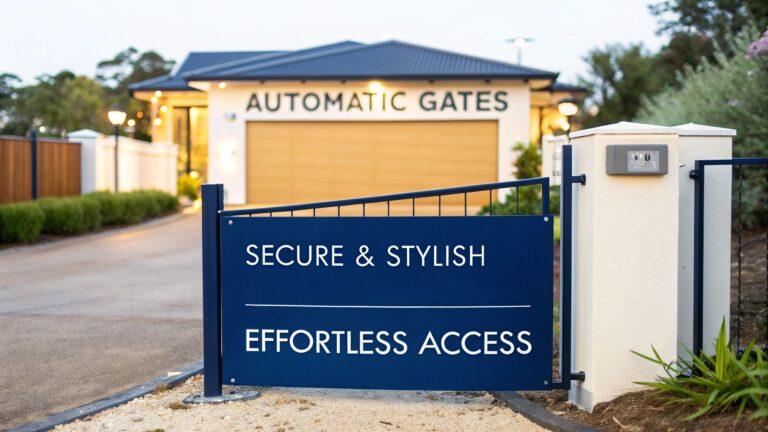
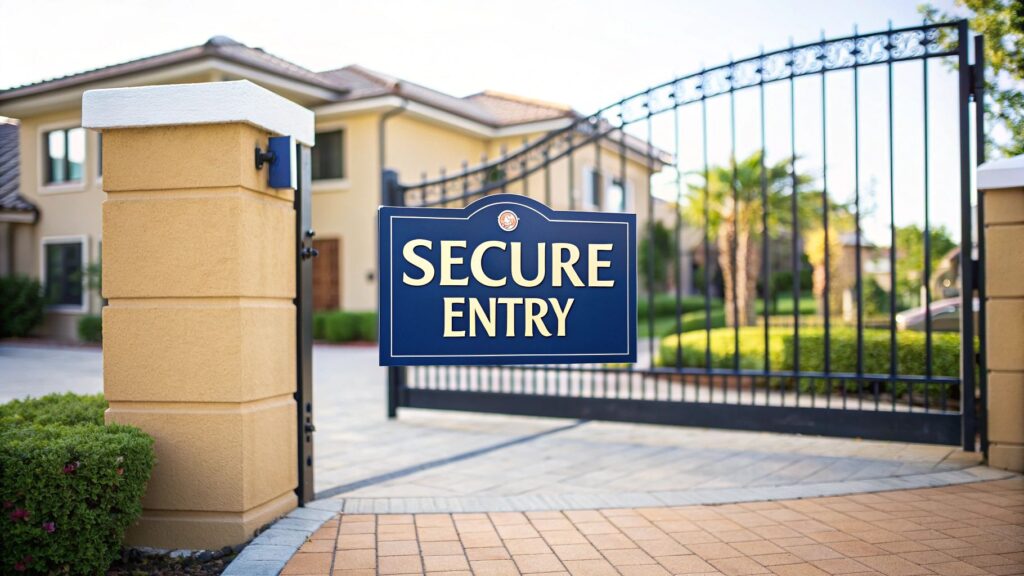
Let's be honest, we all want to feel safe and sound in our own homes. A residential security gate is your property's first line of defence, giving you control over who comes and goes and adding a serious layer of security. It’s more than just a barrier; it's the modern-day drawbridge for your castle.
Securing Your Slice of Paradise
The idea of a big, imposing security gate can seem a bit over the top for some. But for homeowners everywhere, from the busy streets of Sydney to the quiet suburbs of Newcastle and the Central Coast, it’s becoming less about making a statement and more about pure peace of mind. Think of it as drawing a clear line in the sand—this is where the public world stops, and your private sanctuary starts.
I have a mate in Terrigal who was always on edge about his tools getting pinched from the ute he parked in his driveway. After one too many close calls, he put in a simple automated sliding gate. The difference was night and day. He’s now the most relaxed bloke on the block, and that one installation turned his home from a source of stress into a genuine haven.
And it's not just about stopping determined criminals. A good gate solves plenty of those smaller, everyday annoyances too.
- Deters Opportunistic Thieves: Most break-ins aren't elaborate heists. A visible security gate is often all it takes for a thief to decide it’s too much hassle and move on to an easier target.
- Stops Unwanted Visitors: Say goodbye to random cars using your driveway for a three-point turn or pesky door-to-door salespeople ruining your weekend.
- Creates a Safer Space for Family: It establishes a secure boundary, giving you the confidence that kids and pets can play safely in the yard without wandering towards the road.
This infographic really breaks down how a residential security gate helps create that secure bubble.
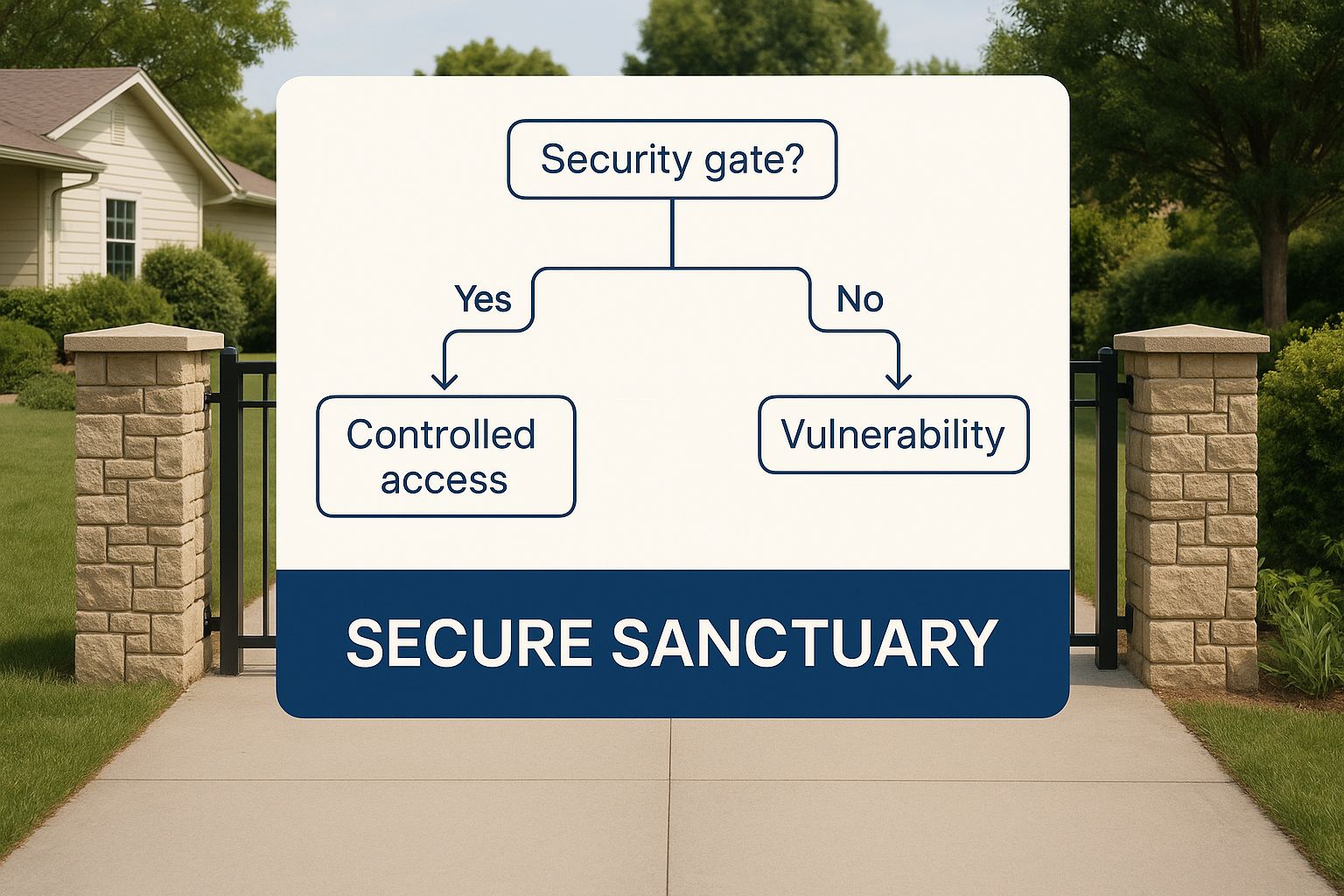
The main point here is that a gate is a proactive security measure, not just a reactive one. It puts you firmly in control of your property's perimeter.
Taking Control of Your Property
Ultimately, installing a residential security gate is all about taking control. It’s the first piece of the puzzle in creating a complete shield around your home.
When you pair it with other measures, you create a seriously robust defence system. For a closer look at how to protect your home from all angles, have a read of our guide on local home security systems that can work hand-in-glove with your new gate. It’s all about making your home the one place where you and your family can completely switch off, knowing you're safe and sound.
Sliding Gates vs Swinging Gates
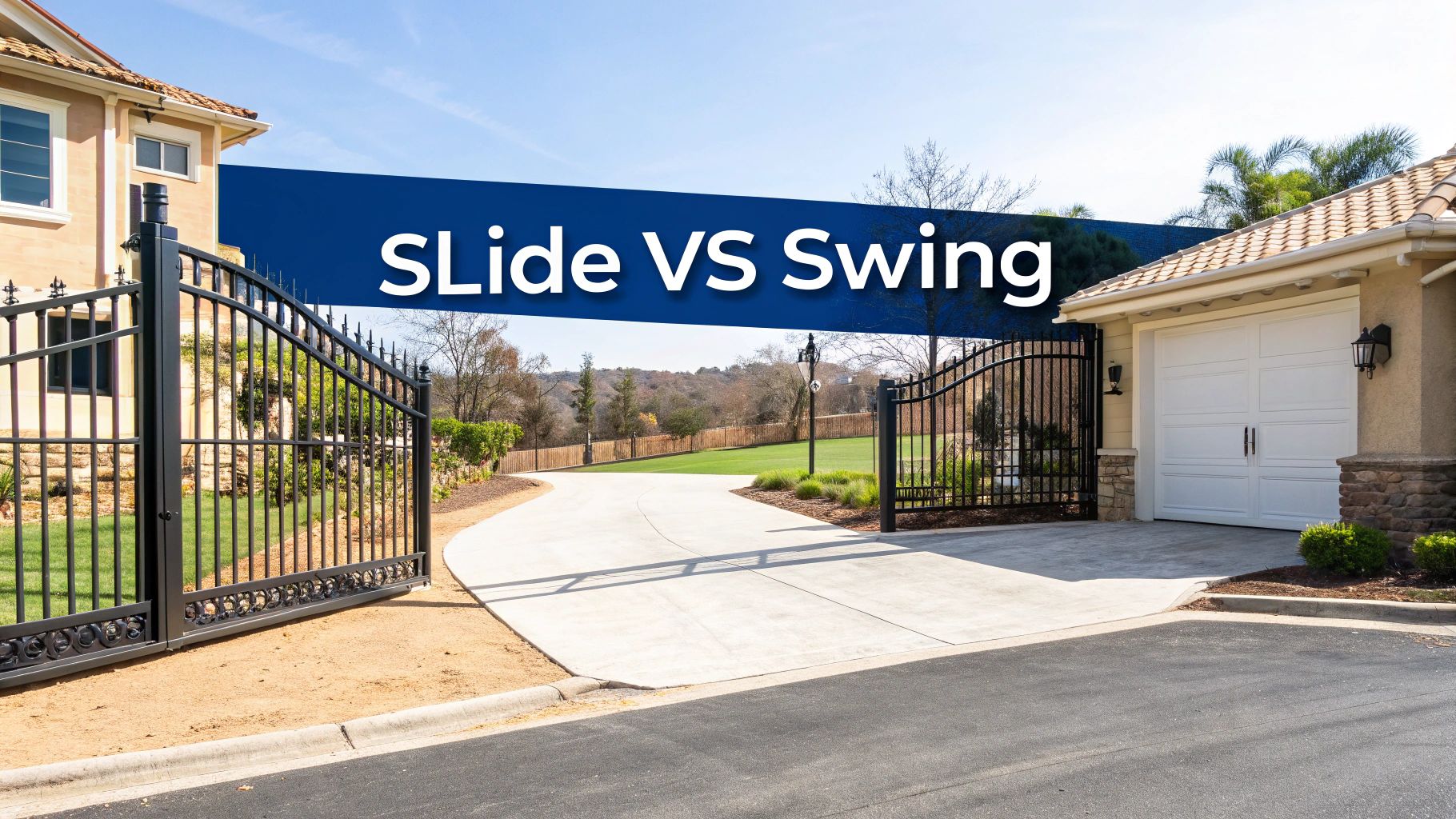
Alright, let's get into the first big decision you'll face: do you want a gate that slides sideways, or one that swings open like the grand entrance to a country manor? This choice isn't just about looks; it’s one of the most practical decisions you'll make for your property.
Think about it. If you've got a steep driveway snaking up a hill in Newcastle, a classic swinging gate could be a nightmare. It would either scrape along the ground or just refuse to open all the way. This is where you need to put your engineer’s hat on and think about what will genuinely work for your patch of land.
The Space-Saving Slider
Sliding gates are the unsung heroes of tricky properties. They glide along a track that runs parallel to your fence, meaning they don’t eat up any of your precious driveway space by swinging inwards or outwards.
This makes them an absolute godsend for homes with short driveways, limited street frontage, or those awkward sloping entrances you see all over the Central Coast. A slider simply tucks itself away to one side, leaving your driveway's entire width clear. They're also often considered more secure, as the locked-in bottom track and powerful motor make them incredibly tough to force.
The Grand Entrance Swing
Swinging gates, on the other hand, are all about making a statement. There's just something undeniably impressive about a pair of double gates swinging open to welcome you home. They bring a touch of classic elegance, whether you’re in a leafy Sydney suburb or on a sprawling property.
But they have one big demand: space. A swinging gate needs a clear area—the "swing arc"—to open into without clobbering a parked car, a garden bed, or the kids' bikes. They're also not the best pick for very wide entrances or windy areas, where a huge gate can act like a sail, putting massive strain on the hinges and motor.
The biggest mistake I see homeowners make is falling in love with a gate's style without considering if it physically fits their driveway. Function has to come before fashion here, or you'll regret it later.
To lay it all out, here’s a quick table to help you compare the two head-to-head.
Sliding vs Swinging Gates At a Glance
Here’s a quick comparison of the main residential security gate types to help you decide which is right for your property.
| Gate Type | Best For | Space Required | Typical Cost (Installed) |
|---|---|---|---|
| Sliding Gate | Sloping or short driveways, wide entrances, and high-security needs. | Requires clear space along the fenceline equal to the gate's width. | $5,000 – $12,000+ AUD |
| Swinging Gate | Flat driveways with plenty of room for the gate to swing inwards. | Needs a clear "swing arc" inside the property. | $4,500 – $10,000+ AUD |
For those really tight spots, don't forget about bi-fold gates. They fold in on themselves like an accordion and need about half the swing room of a standard swinger. They're less common but can be a brilliant problem-solver for unique properties.
Ultimately, the perfect choice is the one that balances the reality of your land with the security and style you're looking for.
Finding the Right Gate Material
Choosing the material for your security gate is a huge decision. It's not just about looks; you're picking something that has to stand up to whatever the Aussie weather decides to throw at it, day in and day out. This choice dictates how long your gate will last, how secure it really is, and honestly, how many of your future weekends will be spent on upkeep.
Let's face it, a material that's perfect for a quiet, leafy street in Newcastle might completely fail on a property copping sea spray up the coast. You've got to match the material to your home's style, sure, but more importantly, to its location and how much maintenance you're willing to put in.
The Old-School Strength of Steel and Wrought Iron
When you imagine a truly imposing, secure gate, steel or wrought iron is probably what comes to mind. These are the traditional heavy-hitters for a reason. They offer unmatched strength and security, creating a serious barrier that commands respect. Think of those elegant, ornate gates on a classic heritage home—they just belong.
But that brawn comes with a bit of a trade-off. Steel and iron are prone to rust, a real problem in our coastal climate. To keep them looking their best, you'll need to stay on top of maintenance. We're talking about sanding back any rust spots and giving them a fresh coat of protective paint every few years. They're a fantastic choice for maximum security, but only if you're prepared for the upkeep.
Aluminium: The Low-Maintenance Winner
If the idea of regular sanding and painting sounds like a nightmare, let me introduce you to aluminium. It’s light, impressively strong, and best of all, it simply doesn't rust. This makes it the go-to choice for anyone living near the water, where salty air is a constant battle. It’s the definition of a set-and-forget solution.
You can also get aluminium gates powder-coated in virtually any colour you can dream of, giving you heaps of design freedom. While it might not have the same raw, heavy-duty feel as solid steel, a well-made aluminium gate provides more than enough security for the average home. It’s the smart, practical pick for people who'd rather be enjoying their weekends than doing chores.
"For our clients, the choice between steel and aluminium nearly always comes down to the coastal environment. That salt air is just relentless, and the long-term, low-maintenance advantage of aluminium is a massive selling point that's hard to ignore."
Timber for Natural Warmth and Charm
There's something about a timber gate that just feels right. It has a natural warmth and beauty that metal can't replicate, blending in perfectly with gardens and landscaping. It offers a softer, more inviting look and is brilliant for privacy if you go with a solid-panel design.
However, wood demands the most TLC. It needs to be regularly sealed or stained to protect it from warping, splitting, and rotting under our harsh sun and rain. Hardwoods like Merbau are a popular bet because they're tougher and more resilient. A timber gate is a stunning feature, but think of it as a long-term commitment that requires consistent care to keep it looking great.
The Magic of Gate Automation
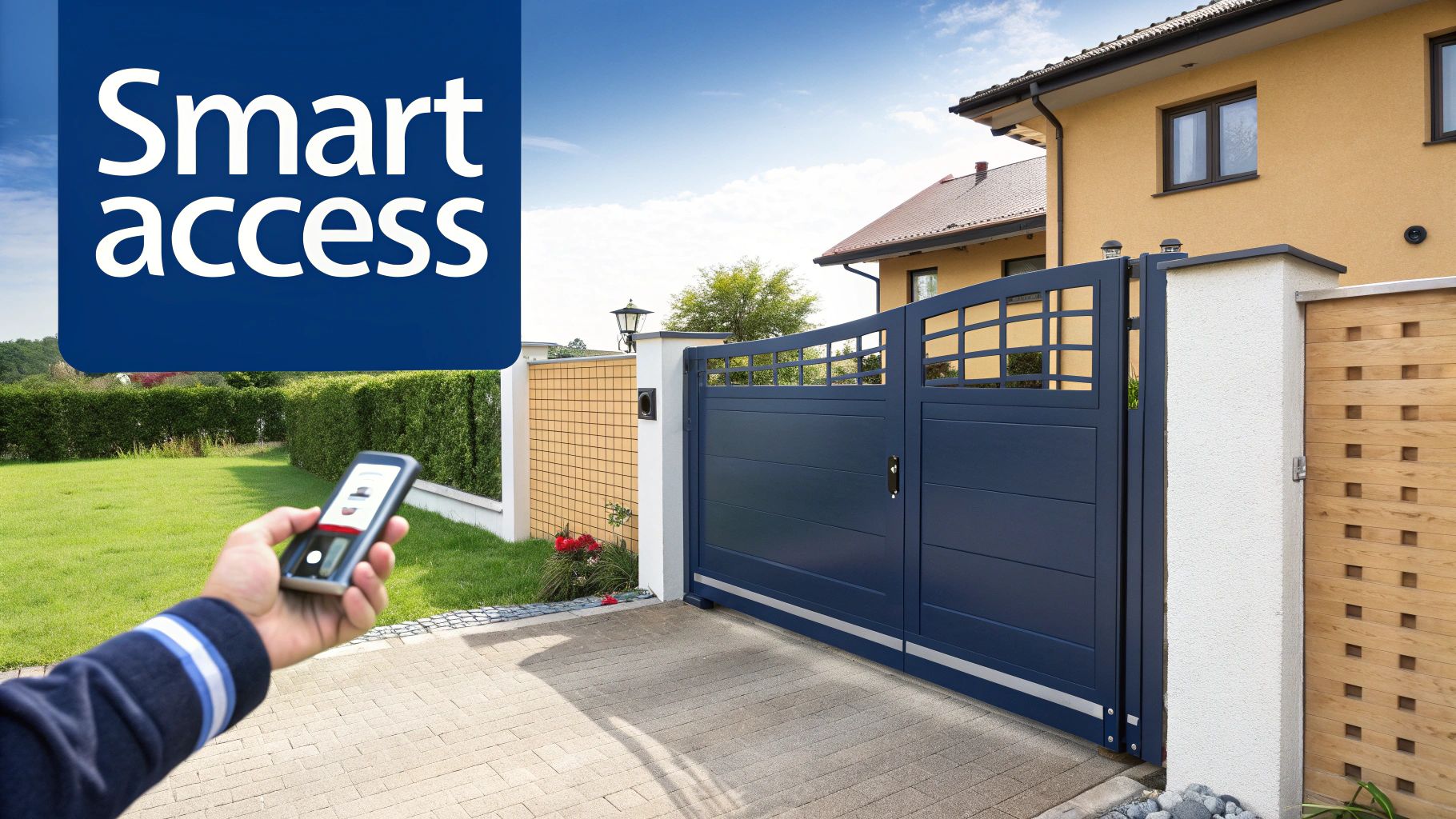
Let's be honest, a manual gate is a decent starting point. But an automated one? That's when your gate stops being just a barrier and becomes a genuinely brilliant piece of tech that makes your life easier.
Picture this: no more jumping out of the car in the middle of a classic Sydney downpour just to get into your own driveway. Now that’s what I call a game-changer.
This is the real magic of gate automation. It turns a clunky physical task into a seamless part of your daily routine, boosting both your security and your day-to-day convenience in one fell swoop. It’s less about being lazy and more about smart, modern living.
Beyond the Basic Remote Control
The humble remote clicker you keep in your car is really just the beginning these days. Modern residential security gates can now be automated in ways that feel like they're straight out of a movie, giving you a level of control and peace of mind we could only have dreamed of a decade ago.
The options are seriously impressive and are designed to fit how we all live now. Here are some of the most popular features making waves across the Central Coast and Newcastle.
- Smartphone Control: This is a big one. You can open or close your gate from literally anywhere in the world using an app on your phone. Stuck in traffic but need to let a tradie in? No dramas. Just tap a button.
- Keyless Entry Pads: Absolutely perfect for families. Instead of handing out remotes that are bound to get lost, the kids can just punch in a PIN code to get inside safely after school.
- Video Intercoms: This feature lets you see and speak to visitors before you even think about letting them in. It’s like having your own virtual security guard right at the entrance, which adds a massive layer of security.
The biggest shift we've seen is homeowners wanting their gate to be part of their connected home, not just a standalone feature. It needs to work with their lifestyle, offering convenience that feels effortless.
This idea of integration is a massive trend. The Australian market is seeing a huge uptake in smart home features. People don't just want a gate that opens and closes anymore; they expect it to link up with their existing security, allow for keyless entry, and provide secure access through their phones.
Creating a Smarter, Safer Entrance
The real beauty of modern gate automation is how everything can sync up with your wider home security setup. Your gate doesn't have to be an isolated island; it can be the first, crucial link in your home's chain of protection.
Imagine a delivery driver presses the intercom. You get a notification on your phone, see their face on the video feed, and let them in. At the same time, your CCTV camera logs them entering and leaving the property. This is how smart systems work together to create a secure bubble around your home.
For a deeper dive into the mechanics, you might be interested in our overview of how gate automation systems work.
This interconnected approach is really the future of home security. It's about building a system that’s not only strong but also incredibly smart, making our homes both safer and far more convenient.
Planning Your Gate Installation
So, you've picked out the perfect style and material for your dream gate. Fantastic! But before you get too carried away, we need to talk about the most crucial part of the whole process: the installation.
This is where the rubber really hits the road. It’s definitely not a weekend DIY job you can knock over after a quick trip to Bunnings, particularly when you’re dealing with automation and electricals.
Getting it right from day one saves you a world of headaches later on. A wonky installation can lead to a gate that scrapes, jams, or just flat-out refuses to work, quickly turning your shiny new security feature into a massive frustration. Honestly, proper planning is everything.
Navigating the Pre-Installation Checklist
Before a single tool comes out of the ute, there are a few boxes you absolutely have to tick. Sorting these things out first ensures the entire job goes smoothly, safely, and legally. Skipping these steps is a recipe for disaster—and can even land you a nasty fine from the local council.
Here are the non-negotiables:
- Check Council Regulations: This one’s a biggie. The rules can be surprisingly different between councils in Sydney, Newcastle, and here on the Central Coast. You’ll need to get clear on requirements for gate height, how far it needs to be set back from your property line, and whether it might affect public sightlines. A professional installer will know the local ropes and can often handle this for you.
- Sort Out the Power Supply: Your automated gate needs juice. This means a licensed electrician has to run the proper cabling from your house to the gate motor, making sure it’s all safe and up to Australian standards.
- Plan for Proper Drainage: The last thing you want is your gate’s track turning into a mini-dam every time it rains. A good installer will check your driveway’s slope and make sure proper drainage is in place. This prevents water from pooling around the foundations or, even worse, frying the motor.
"A professional installation is non-negotiable. We've seen DIY jobs where safety sensors were skipped or the gate wasn't properly secured. It's not just about making the gate work; it's about ensuring it's 100% safe for your family."
This shift towards properly installed, integrated security is happening all over the country. In 2024, the Australian home security systems market was valued at AUD $3.1 billion, and it's expected to jump to a massive AUD $7.9 billion by 2033. That really shows how seriously Aussies are taking the safety of their homes. You can read more about the booming home security market in Australia.
Why a Pro Installer Is Worth Every Cent
At the end of the day, getting a professional in guarantees that every part of your new system works together perfectly. This is especially true when you start adding features like intercoms, keypads, and safety sensors into the mix. A qualified team makes sure your gate doesn't just boost your security, but actually fits smoothly into your daily life.
For those on the Central Coast looking for a completely seamless setup, it’s worth thinking about how a professionally installed gate can tie into broader access control systems for your home. This turns your gate from a simple barrier into a smart, reliable investment that will protect your family for years to come.
Budgeting for Your Security Gate
Right then, let's talk about the money side of things. Trying to nail down the exact cost of a residential security gate can be tricky, as the price range is huge.
A basic, manual gate could set you back a few thousand dollars to start. But once you start looking at automation, high-end materials, and all the bells and whistles, that number can climb pretty quickly.
What Goes Into the Final Price?
So, what are you actually paying for? The final bill is really a mix of a few key ingredients:
- Size and Material: A larger, more ornate wrought iron gate will cost significantly more than a smaller, simpler aluminium one.
- The Motor: The complexity and power of the automation system play a big role in the price.
- Labour: A tricky installation on a steep, sloping block is going to involve more work and therefore cost more than a simple job on a perfectly flat driveway.
- The Extras: Features like video intercoms, safety sensors, and keypads all add to the total.
It's easy to get fixated on the initial number, but it's smarter to think long-term. A quality, professionally installed gate is a real investment in your property's security and kerb appeal—not just another bill to pay.
Looking down the road, everything is heading towards smarter integration. We're seeing more gates that use contactless technology, seamlessly connecting to your smartphone and the rest of your home security setup. For a deeper dive into what home security systems can cost, have a look at our guide on what home security companies charge.
Got Questions About Residential Gates? We've Got Answers
Alright, let's get into the nitty-gritty. When homeowners across Sydney, Newcastle, and the Central Coast start seriously considering a new security gate, a few key questions always pop up. Let's tackle them head-on.
Do I Need Council Approval for a Gate in NSW?
This is the big one, and the honest answer is a classic: "it depends."
For the most part, if your proposed gate is under a certain height (usually somewhere between 1.2 to 1.8 metres) and doesn't interfere with public pathways or traffic sightlines, you might not need to go through a full approval process.
But here's the catch: rules can vary quite a bit from the Central Coast Council to a local council in Sydney. Things like heritage overlays or your property's specific zoning can really complicate matters. My best advice? Always check with your local council before you do anything. Even better, let your professional installer handle the paperwork – they know the process inside and out and can save you a world of headaches.
How Much Upkeep Does an Automatic Gate Really Need?
While modern automatic gates are built tough and are surprisingly low-maintenance, they aren't completely a 'set and forget' piece of equipment. Think of it like servicing your car.
We strongly recommend getting a professional to give it a once-over once a year. They'll check the motor, test the safety sensors, and make sure all the moving parts are lubricated and working as they should.
Day-to-day, you can help by simply keeping the tracks clear of leaves, dirt, and other debris. A quick wash every few months also goes a long way, especially if you live near the coast where the salty air can be pretty unforgiving on metal.
What Happens if There's a Power Outage?
Great question, and don't worry – you won't be trapped! Every compliant automatic residential security gate sold in Australia is required to have a manual release mechanism.
Typically, this involves a special key that allows you to disengage the motor, turning your automatic gate into a manual one so you can push it open or closed by hand.
For that extra layer of convenience and security, you can also opt for a battery backup system. This will keep your gate operational for several cycles after the power goes out, giving you plenty of time to get your car in or out without a fuss. These backups can be part of a much larger integrated setup, which you can read more about in our guide to smart home security systems.
Feeling clearer on your options? The team at Advanced Comtech is ready to help you design the perfect, secure entrance for your home. Get in touch for a friendly chat about what you need. https://advancedcomtech.com.au