Home automation systems in Australia are the central command for a modern house. They let you run everything—lights, security, air conditioning, even your TV—all from an app on your phone or with a simple voice command.
The whole idea is to get different devices talking to each other over your home Wi-Fi network. When they work together, your life becomes easier, safer, and a whole lot more energy-efficient.
What Exactly Is a Smart Home Anyway?
Picture this: you're rugged up on the couch in your Newcastle home on a freezing winter's night, and you realise you left the upstairs light on. Or you're stuck in the usual M1 traffic heading south and that classic Aussie panic hits: "Did I actually lock the front door?"
This is precisely where the magic of home automation kicks in.
It’s not about turning your house into something out of The Jetsons (unless that's your thing, of course!). At its core, a smart home is all about making your day-to-day life a bit simpler, a bit safer, and maybe even saving you a few bob on those ever-increasing power bills.
More Than Just a Gadget
Think of it like giving your home a central brain that you can talk to from your phone. Whether you're grabbing a flat white in Terrigal or halfway to Sydney for a meeting, you stay connected. It’s the power to tell your house what to do, and have it actually listen.
A truly smart home takes care of the little things you do every single day, which frees up your time and headspace. Here’s what that really looks like:
- Convenience: Imagine your blinds gliding open automatically to let the morning sun in, your favourite Spotify playlist starting up, and the coffee machine beginning to brew—all before your feet even hit the floor.
- Security: Get a notification on your phone the moment the kids get home from school, or check in on your security cameras from the other side of the world for genuine peace of mind.
- Energy Savings: A smart system can learn your daily patterns, automatically switching off lights in empty rooms and tweaking the thermostat so you’re not wasting power when nobody is home.
A smart home doesn’t just respond to your commands; it starts to anticipate what you need. It’s about creating a living space that seamlessly fits your lifestyle, from the moment you wake up to when you lock the doors at night.
Your Home, Your Rules
The best thing about setting up a smart home is that it's completely tailored to what your family actually needs. You don't have to automate everything in one go.
A lot of people on the Central Coast start small, maybe with a few smart lights or a video doorbell, and just add to it over time.
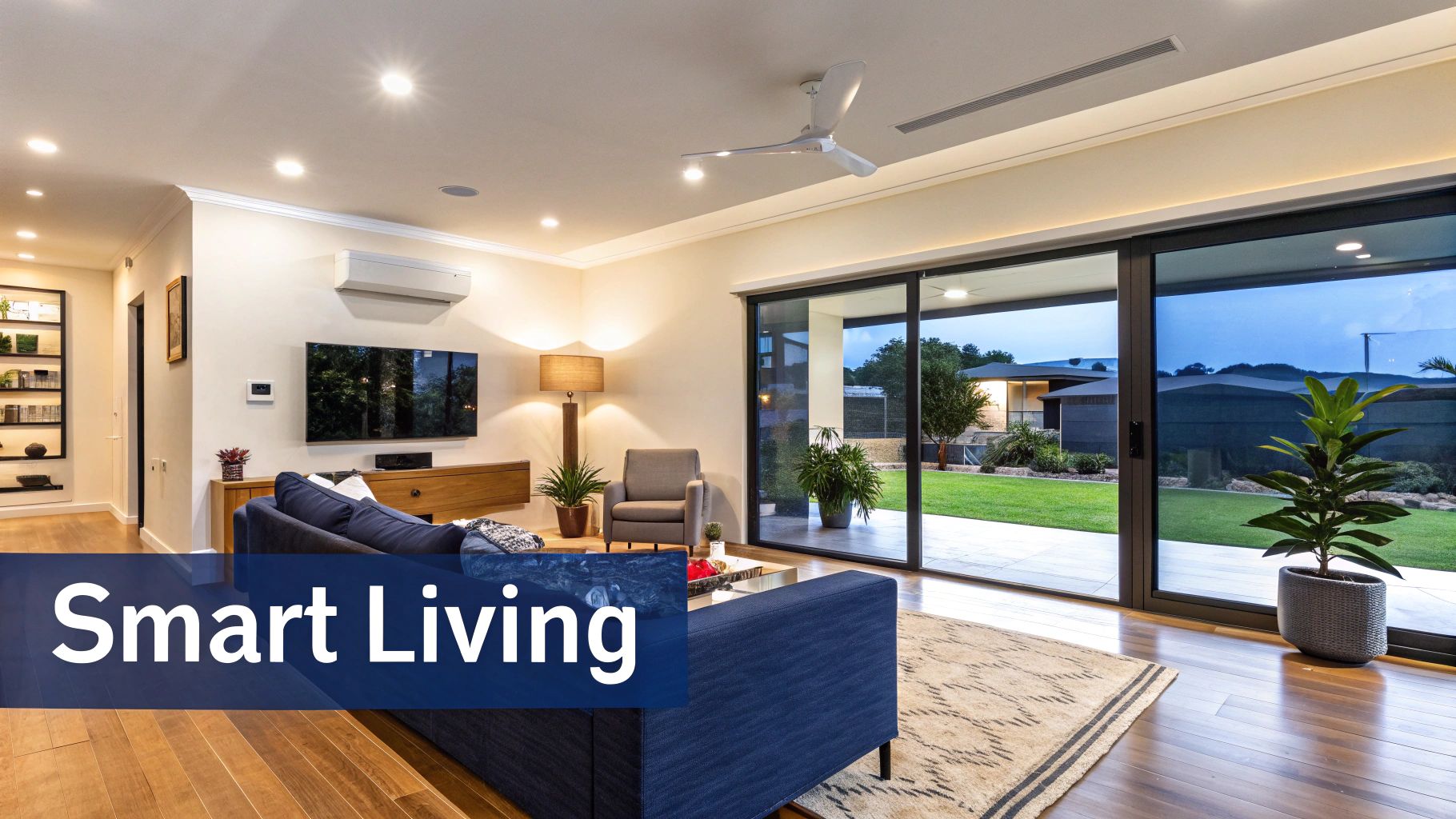
It’s really about solving those little everyday frustrations. Want to create the perfect movie night atmosphere with dimmed lights and surround sound at the press of a single button? Easy. Need to let a tradie in while you're stuck at work? Done.
As you figure out what's most useful for you, your system can grow with you. To see more on how this tech can improve daily routines, check out our guide on smart homes for better living. This is the real essence of modern home automation systems in Australia—practical solutions designed for real families.
How Your Smart Home Hub Works
Alright, let’s peel back the curtain and see how all this smart home magic actually happens. It’s simpler than you might think.
Every proper smart home needs a central ‘brain’ to connect all your different gadgets. Think of it as the friendly publican at your local Central Coast pub—they know everyone, keep the conversations flowing, and make sure everything just works together smoothly.
This brain is what we call a hub or a controller. It’s the mission control for your entire setup. Without it, your smart lights wouldn't know when to turn on, and your security camera would have no way of telling your smart lock to bolt the door. It’s the single point of contact that makes the whole system cohesive.
This central hub is the key difference between a collection of standalone smart gadgets and a truly integrated home automation system in Australia. It brings everything under one roof, so you're not juggling ten different apps on your phone just to run your house.
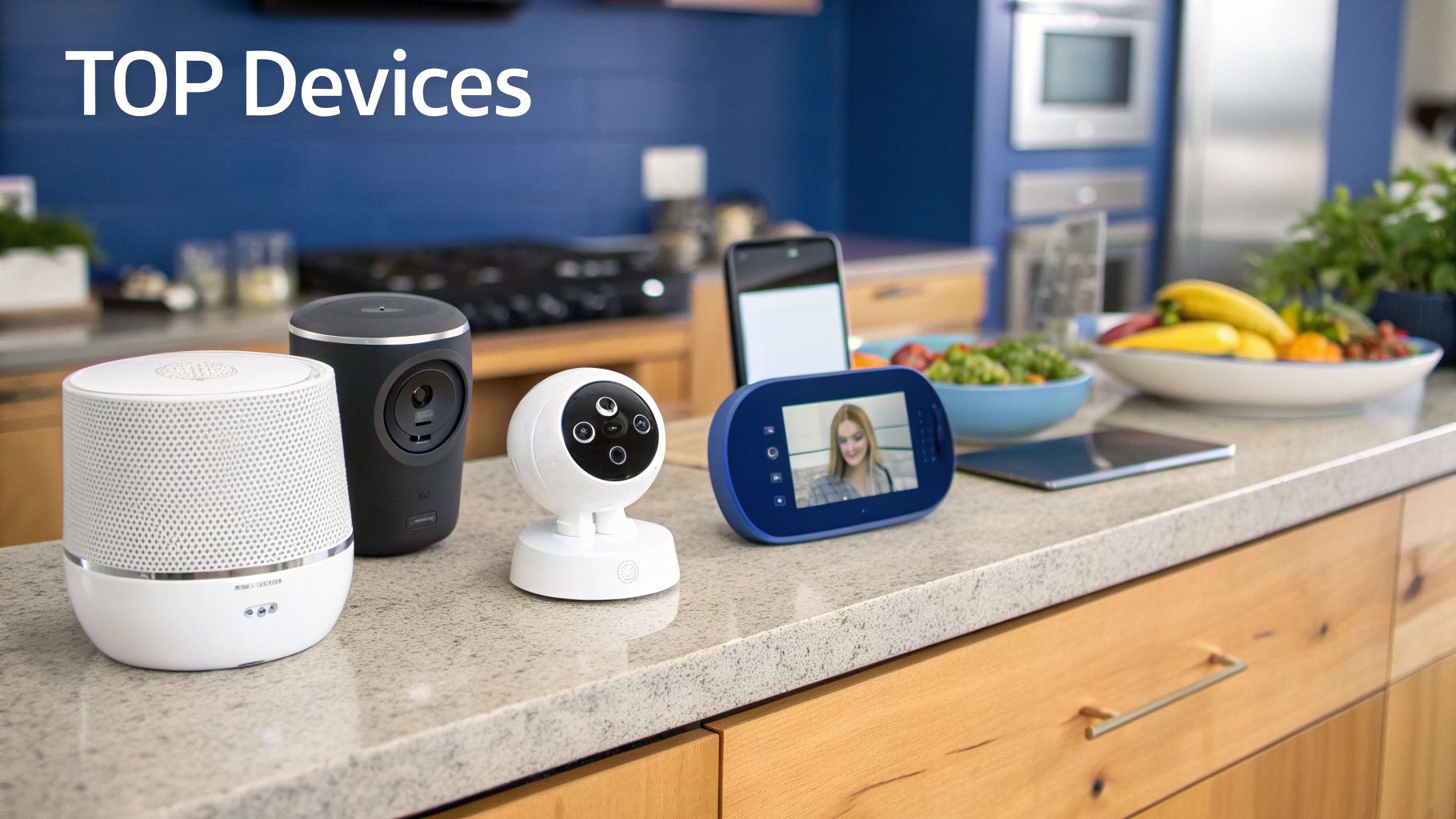
The Main Players in Aussie Homes
When you start looking around, you’ll notice a few big names pop up time and again. These are the most common hubs you’ll find in homes from Sydney to Newcastle, and each has its own strengths. At the end of the day, though, they all aim to do the same job: simplify your life.
The three main ecosystems you'll bump into are:
- Google Assistant: Perfect for anyone already deep in the Google world. It’s brilliant at answering questions and works like a charm with devices like Nest cameras and speakers.
- Amazon Alexa: This one's famous for its massive library of 'skills' and its ability to connect with an almost endless list of third-party devices. If a gadget has smart capabilities, you can bet it probably works with Alexa.
- Apple HomeKit: The go-to for Apple fans. It’s highly regarded for its rock-solid focus on security and privacy, creating a very locked-down and reliable system for those in the Apple ecosystem.
The real trick to a great smart home isn't just buying fancy devices; it's choosing a central hub that speaks the same 'language' as everything else. This ensures all your components can communicate effectively without any frustrating glitches.
Speaking the Right Language
Imagine your hub is a multilingual translator. Your smart lights might speak one language, say "Zigbee," while your smart lock speaks another, like "Z-Wave." On their own, they can't communicate. The hub, however, understands both and translates commands so everyone is on the same page.
This is the core of how it all works. When you say, “Hey Google, good morning,” your Google Nest Hub hears you. It then sends out a series of translated commands over your home network.
It tells your Zigbee-powered lights to gently fade on, sends a signal to your Wi-Fi coffee machine to start brewing, and cues your smart speaker to start playing the latest ABC news podcast. It’s a beautifully coordinated dance, and the hub is the choreographer.
To dive deeper into the nuts and bolts, you can learn more about the different home automation control systems and find the one that fits your needs. This seamless interaction is what turns a house full of gadgets into a genuinely smart home.
Building Your Smart Home One Step at a Time
Getting started with home automation can feel a bit like standing in front of a gelato counter with fifty different flavours—it looks amazing, but where on earth do you begin? The good news is you don’t need to automate your entire house in one go. The smartest way to build a smart home is by solving one real problem at a time.
Think about the little daily frustrations. Is it getting up to turn off a light you just realised you left on? Or maybe it’s that nagging feeling you’ve left the air con blasting while you’re out. Tackling these small annoyances is the perfect entry point into the world of home automation systems in Australia.
A Central Coast Story
Let’s imagine a typical family living on the Central Coast, just outside of Gosford. Their journey into home automation didn't start with a massive, all-in-one system. It started with a simple goal: create the perfect vibe for family movie nights and stop the kids from leaving every light in the house on.
They began with a few smart light bulbs and a smart speaker. Suddenly, with a simple command—"Hey Google, it's movie time"—the living room lights would dim to a soft glow, creating an instant cinema feel. It was a small change, but it was a winner. The kids loved it, and the parents loved seeing a dip in their next electricity bill.
This small success got them thinking about what else they could improve.
Adding Layers of Convenience and Security
The next step was tackling peace of mind. With both parents working and the kids old enough to let themselves in after school, a smart lock was the logical next addition. Now, instead of worrying about lost keys, they get a notification on their phones the second the front door is unlocked. They can even grant temporary access to a tradie or a family friend from their desks in Sydney, no spare key required.
From there, the system grew naturally. A smart thermostat was installed to handle those wild four-seasons-in-one-day weather swings we get on the coast. It learned the family’s routine, warming the house before they woke up on chilly mornings and dialling back the air con when everyone was out, saving a packet on energy costs.
This step-by-step approach is exactly how most people build a system that truly works for them. Each new device solves a specific problem, making life progressively easier. Here are some common starting points:
- Smart Lighting: Perfect for setting moods, improving security, and saving energy.
- Smart Security: Video doorbells and smart locks provide excellent peace of mind.
- Climate Control: Smart thermostats offer both comfort and significant energy savings.
- Automated Blinds: A fantastic way to control natural light and help regulate your home's temperature without lifting a finger.
The best home automation system isn’t one you buy off a shelf; it’s one you build piece-by-piece to fit your family’s unique lifestyle. Start with what will make the biggest difference to your day, and grow from there.
This gradual adoption is a huge part of why the market is booming. The Australia home automation market was valued at about $2.54 billion in 2024 and is expected to climb to $8.33 billion by 2033. This growth is largely driven by homeowners wanting more control over rising electricity costs and a desire for greater convenience and security in their daily lives.
Ultimately, the goal is to create a home that supports you. By starting small and focusing on your biggest needs first, you can slowly build a powerful, intuitive system without the initial overwhelm. For some inspiration on what to add next, check out our guide on the best smart home devices currently available.
The Real Benefits Beyond Just Being Fancy
Alright, let's be honest. Having your lights dim and your favourite playlist start with a voice command is undeniably cool. But the real value of home automation systems in Australia goes way beyond just impressing your mates. It's about tangible, day-to-day wins that make life easier, safer, and a bit lighter on the wallet.
Once you look past the flashy party tricks, you'll find three massive benefits that genuinely improve your lifestyle. We're talking about saving serious coin on power bills, gaining genuine peace of mind, and clawing back precious time from boring, repetitive tasks. This is why smart homes are quickly becoming the new standard for savvy homeowners from Sydney to Newcastle.
Slashing Those Pesky Energy Bills
Electricity prices in Australia are no joke, and every power bill that lands in your inbox feels like a bit of a gut punch. This is where home automation delivers its first big win. It’s not about sitting in the dark; it's about using energy intelligently.
Imagine your air conditioner automatically adjusting itself when a scorching summer afternoon hits the Central Coast, working just hard enough to keep things comfortable without running flat-out. Or your blinds lowering themselves on the western side of your house to block the hot sun, giving your air con a much-needed break. These small, automated tweaks add up.
A smart system can:
- Learn your schedule: It knows when you're home and when you're out, adjusting the climate control so you're not cooling an empty house.
- Respond to the environment: It can use sensors to turn off lights in unoccupied rooms or dim them based on the amount of natural daylight.
- Optimise your heavy hitters: It ensures power-hungry appliances only run when absolutely necessary, which is a welcome relief for any household budget.
Security and Genuine Peace of Mind
The second major benefit is something you can't put a price on: peace of mind. A smart home acts as your ever-vigilant watchdog, whether you're down at the local shops or holidaying up the coast.
Think about the comfort of being able to pull up a live feed of your security cameras on your phone anytime, anywhere. Or receiving an instant alert if a window or door is opened unexpectedly while you're out. It’s about being connected to your home in a way that provides real reassurance.
A smart home security system transforms your property from a passive building into an active guardian. It doesn’t just record events; it alerts you in real-time, allowing you to act immediately, whether it’s checking on a delivery or deterring a potential intruder.
With an integrated system, you can lock your doors remotely, speak to visitors through a video doorbell, and even have your lights turn on and off randomly to make it look like someone’s home. For a deeper dive, check out our guide on the best smart home security systems to protect your family.
This visual below highlights just how Aussies are using this tech, comparing costs against the long-term savings.
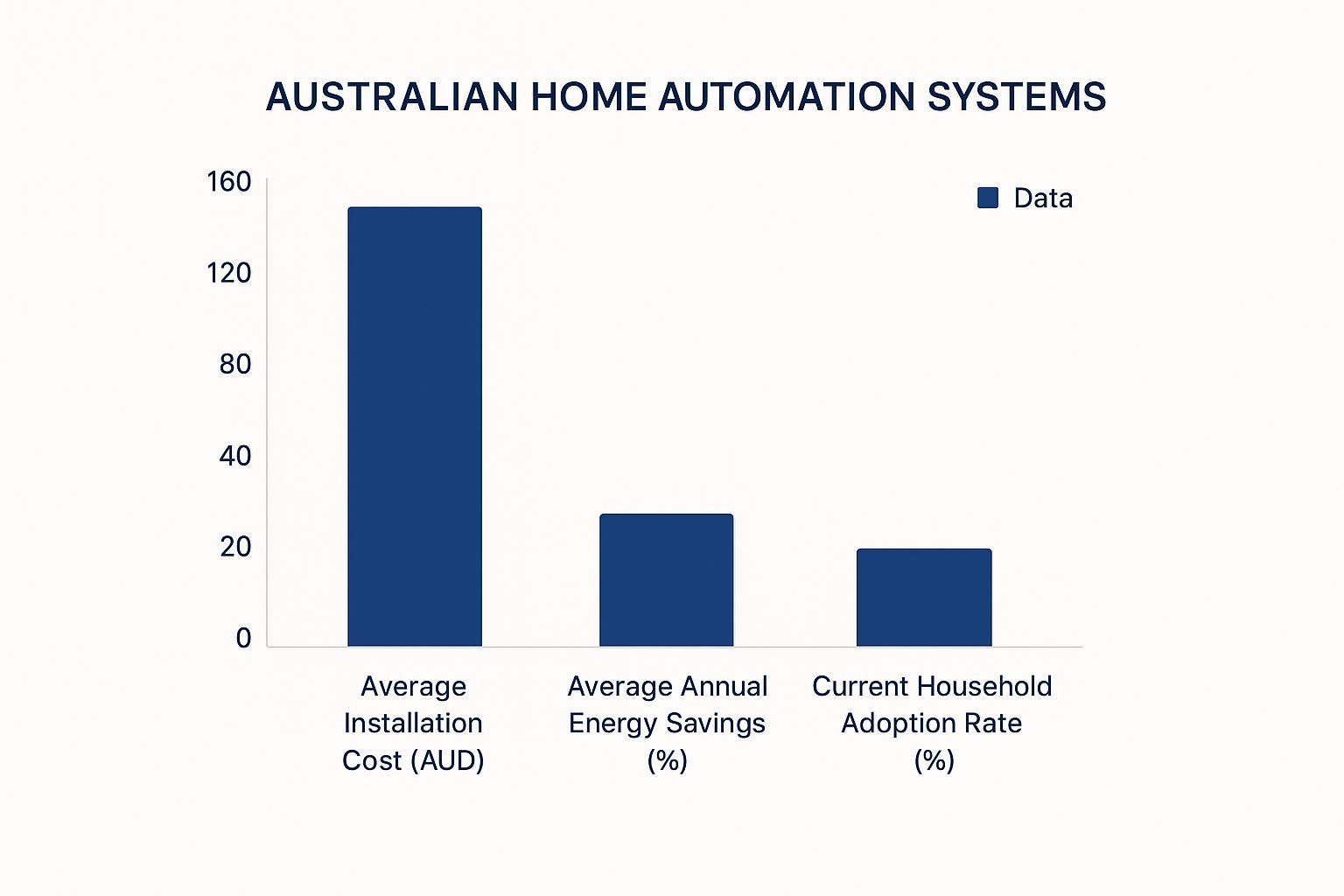
As you can see, while there's an upfront cost, the potential for significant yearly energy savings makes it a compelling investment for the long haul.
Giving You Back Your Time
Finally, let’s talk about convenience. This isn’t about being lazy; it’s about automating the mundane tasks to free up your time for more important things. It's about making your home work for you, not the other way around.
Imagine your garden sprinklers automatically checking the weather forecast and deciding not to turn on because rain is predicted. Or your robot vacuum doing its rounds while you’re at work, so you always come home to clean floors. These aren't futuristic dreams; they are practical applications available right now.
Here’s a quick look at common smart devices and the primary problem they solve for Aussie households.
Smart Home Feature and Its Main Benefit
| Smart Device | Main Benefit | Typical Use Case in a Sydney/Newcastle Home |
|---|---|---|
| Smart Lighting | Energy Saving & Convenience | Automatically dimming lights in the evening or turning them off when a room is empty. |
| Smart Thermostat | Cost Reduction | Pre-cooling the house before you arrive home from work on a sweltering 35°C day. |
| Security Cameras | Peace of Mind | Checking on your property from your phone while on holiday on the Gold Coast. |
| Video Doorbell | Security & Convenience | Seeing who’s at the door and speaking to them, even if you’re not home. |
| Robot Vacuum | Time-Saving | Keeping the floors clean of sand and dust after a trip to Bar Beach. |
These little efficiencies add up, giving you back precious hours in your week.
This demand for convenience is driving huge growth, with the Australian smart home market valued at around $3.1 billion in 2023 and projected to hit nearly $12.7 billion by 2030. It’s clear this technology is quickly becoming a mainstream part of Australian homes.
How Much Does Smart Home Tech Cost in Australia?
Alright, let's get down to brass tacks and talk dollars and sense. When you start exploring home automation, one of the first questions on everyone's mind is, "So, what's this actually going to set me back?" The honest answer? It varies wildly, a bit like the weather in Melbourne.
The cost of a home automation system in Australia can be anything from a few hundred bucks for a simple setup to tens of thousands for a fully integrated smart mansion. It all comes down to how deep you want to go. To make sense of it all, let's break it down into a 'good, better, best' scenario to give you a clearer picture of where your budget might fit.
Good: A Simple and Smart Start
Getting your foot in the smart home door doesn't have to break the bank. This is the perfect starting point if you want to dip your toes in the water without committing to a full renovation. It’s all about high-impact, low-cost gadgets that solve a specific problem.
Think of this as the Bunnings sausage sizzle of home automation—cheap, cheerful, and it gets the job done.
- What you get: A smart speaker (like a Google Nest or Amazon Echo) and a handful of smart light bulbs.
- What it does: You get voice control over your lights, can play music, ask questions, and set timers. It’s a simple but seriously satisfying taste of what automation can do.
- Estimated Cost: You could get this up and running for around $200 – $400.
Better: The Sweet Spot for Most Homes
Now we're talking. This is where things get more interesting and you start building a truly connected home. The 'better' option moves beyond single devices and brings in a central hub that gets all your gadgets talking to each other. This is for the homeowner who wants real convenience and a solid security upgrade.
You’re adding layers that make a genuine difference to your daily routine, like a smart lock for keyless entry or a thermostat that learns your habits.
This is the level of automation where you really begin to see a return on your investment, not just in convenience but also in potential energy savings and beefed-up security. It’s a balanced approach that delivers significant lifestyle improvements without going over the top.
- What you get: A central smart hub, a smart lock, a video doorbell, a smart thermostat, and more smart lighting throughout the house.
- What it does: Your home becomes more secure and energy-efficient. You can control who comes and goes, see who's at your front door, and automate your heating and cooling from anywhere with your phone.
- Estimated Cost: Expect to invest anywhere from $1,500 to $3,500 for this kind of integrated setup.
Best: The Fully Automated Dream Home
Welcome to the top tier. This is for those who want the full, seamless experience where every part of the home works in perfect harmony. We’re talking about professionally designed and installed systems that cover everything from lighting and security to climate control and multi-room audio-visual entertainment.
This is the kind of setup you see in architectural magazines, where the technology is so well integrated it practically feels invisible. It definitely requires professional planning and installation, especially for hardwired components.
- What you get: A powerful, centralised control system (from brands like Crestron or Control4), integrated lighting schemes, motorised blinds, whole-home audio, advanced security, and multiple climate zones.
- What it does: Pretty much everything you can imagine. Your home anticipates your needs, with preset ‘scenes’ for waking up, entertaining, or locking down for the night at the touch of a button.
- Estimated Cost: For a comprehensive, professionally installed system, costs typically start around $10,000 and can easily sail past $50,000, depending on the size of your home and the complexity of the install.
Don't Forget the Hidden Costs
Finally, just remember to factor in a few extra costs that can sneak up on you. Some devices, especially security cameras, require ongoing monthly subscriptions for cloud storage to save your footage.
Also, any hardwired device—like a smart light switch or thermostat—legally requires a licensed electrician (a 'sparky') for installation. In Australia, this is non-negotiable for safety and compliance.
Installing Your System: DIY or Calling a Pro
Alright, you’ve picked out your gear and you’re ready to get this smart home show on the road. Now you’re facing that classic Aussie dilemma: do you give it a crack yourself this weekend, or is it time to call in a professional? The answer really depends on what you're installing.
For the simple plug-and-play stuff, you can absolutely get it sorted in an afternoon. If you’ve bought a Google Nest Hub, some Wi-Fi smart plugs, or a few Philips Hue light bulbs, it’s usually as simple as plugging them in, downloading an app, and following the prompts. It's designed to be user-friendly, and you’ll be asking your speaker to play some Cold Chisel in no time.
When to Roll Up Your Sleeves
Going the DIY route is perfect for getting a feel for home automation without a big commitment. It’s a great way to start building your system and see what you actually like using day-to-day.
Here's when it makes sense to handle the installation yourself:
- Wireless, Plug-In Devices: Anything that doesn't touch your home's electrical wiring is fair game. This includes smart speakers, standalone security cameras, and smart light bulbs.
- Battery-Powered Gadgets: Devices like smart sensors for doors and windows are typically peel-and-stick, making them an easy five-minute job.
- Simple Hub Setups: Connecting a central hub like a SmartThings or Homey hub to your router is a straightforward task you can knock over yourself.
When to Call a Professional
This is the important bit. As soon as a device needs to be hardwired into your home’s electrical system, it's no longer a DIY job in Australia. It’s a legal requirement to have a licensed electrician—or a ‘sparky’—do the work.
This isn’t just bureaucratic red tape. It's about protecting your home from electrical faults and potential fires. More importantly, DIY electrical work can void your home insurance, leaving you high and dry if something goes wrong.
It’s always smarter and safer to call a local expert from the Central Coast, Sydney, or Newcastle for jobs like these:
- Smart Light Switches and Dimmers: These have to be wired directly into your lighting circuits.
- Integrated Security Systems: Hardwired cameras and sensors need a professional touch to ensure they're reliable and correctly powered.
- Smart Thermostats: Connecting these to your HVAC system is a job for a qualified technician.
- Complex Integrated Systems: For a seamless, whole-home system (like Control4 or KNX), you need a specialist integrator who can design, install, and program everything to work together perfectly.
Think of it this way: you wouldn't do your own dental work, so why risk it with your home's wiring? A professional ensures your home automation systems in Australia are installed safely, correctly, and are guaranteed to work as they should, giving you complete peace of mind.
Your Smart Home Questions Answered
We get asked a lot about the nuts and bolts of setting up a smart home. So, we've put together the most common questions we hear from folks around Sydney, Newcastle, and the Central Coast and answered them in plain English.
What Happens if the Internet Goes Down?
It's the classic Aussie fear, isn't it? The NBN drops out right when you need it most. Does your smart home suddenly become a "dumb" one? Not necessarily.
Many home automation systems in Australia, especially those that run on networks like Zigbee or Z-Wave, can still chat with each other locally without the internet. This means your smart lights will still turn on from the switch, and any schedules you’ve set will probably keep ticking along just fine.
What you will lose is remote control from your phone when you're out and about. Voice commands that need the cloud to work, like asking Google for a weather update, will also be out of action until you're back online.
Are These Systems Actually Secure?
That's a very fair question. The idea of your home being connected to the internet can feel a bit exposed if you're not careful. The good news is that keeping things secure comes down to a few straightforward steps.
- Choose reputable brands: Stick with well-known companies that have a good track record of releasing security updates for their products.
- Use strong, unique passwords: Please don't reuse your Facebook password for your smart front door lock! Create something unique for your system.
- Lock down your Wi-Fi: Your home network is the main gateway. Make sure it’s protected with a strong password and modern encryption (look for WPA2 or WPA3).
A professionally installed system gives you a massive head start on security. An expert will make sure everything is configured correctly from the get-go, closing potential security gaps and making your entire setup as tough as possible.
Can I Mix and Match Different Brands?
You absolutely can, but it pays to do a little homework first. You can’t just grab any smart gadget off the shelf and assume it will play nicely with everything else. The key is making sure all your devices are compatible with your central hub, whether that's Google Home, Amazon Alexa, or Apple HomeKit.
It helps to think of your hub as a multilingual translator. As long as a new device can "speak" to your hub, you can bring products from dozens of different brands together into one slick, unified system.
Ready to build a smart, secure, and connected home without all the guesswork? The team at Advanced Comtech has the local know-how to design and install a system that fits your lifestyle perfectly. Let's chat about your project today!